
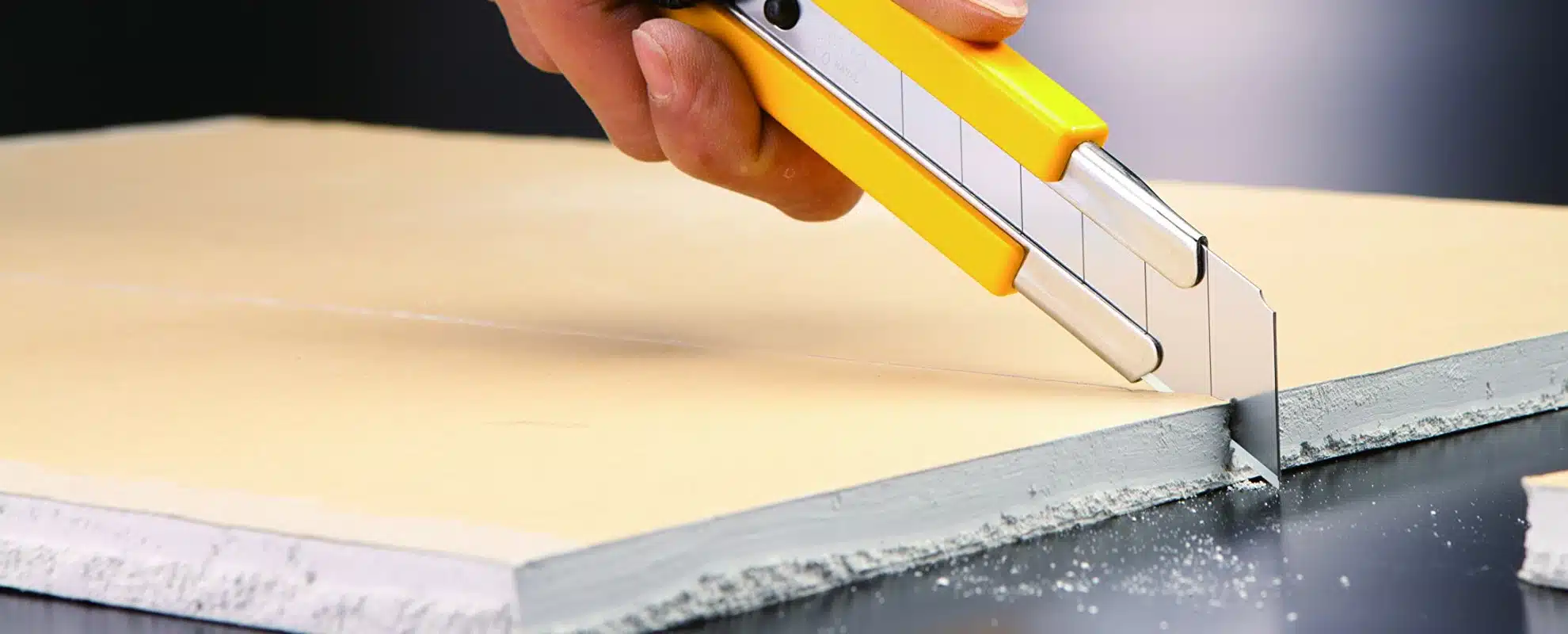
Cutter knives for professionals
Differences and buying advice: cutter knives with 25, 18 and 9 mm snap-off blades and carpet knives – with a guide to blade, handle and slider.
Cutter knives by blade width


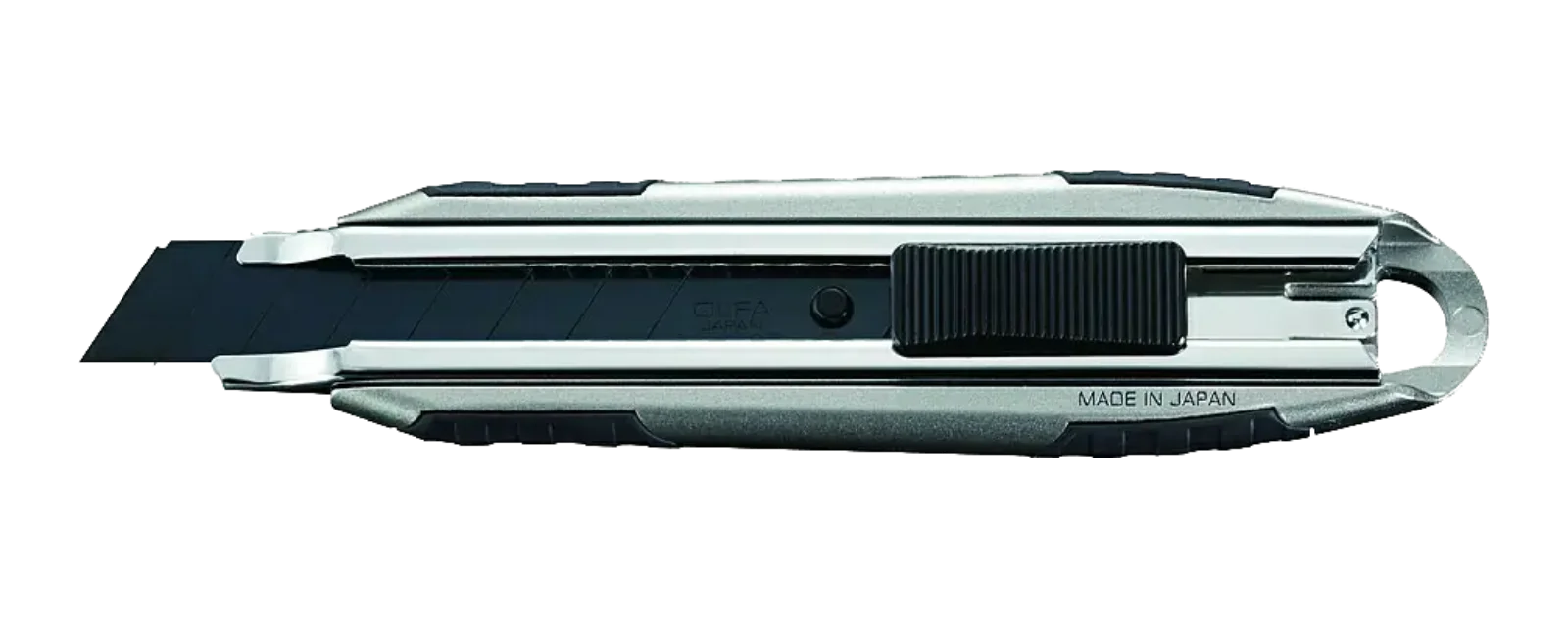 MXP – AutoLockblade retracted manuallyCutting depth 80 mmBlade change possible€15.87 excl. VAT
 View CMXP
 Secunorm 380automatic blade retractionCutting depth 76 mmBlade change possible€14.34 excl. VAT
 View UM380001
 QuickBack 2 in 1automatic blade retractionCutting depth 76 mmBlade change possible€9.11 excl. VAT
 View U006
 Secubase 383blade retracted manuallyCutting depth 73 mmBlade change possible€14.34 excl. VATView UM383001
 DC560 – AutoLockblade retracted manuallyCutting depth 80 mmBlade change possible€7.16 excl. VATView C061
 L5-AL – AutoLockblade retracted manuallyCutting depth 71 mmBlade change possible€8.59 excl. VATView C064
 L5-DL – with dial lockblade retracted manuallyCutting depth 71 mmBlade change possible€8.59 excl. VATView C064DL
 L1 – with dial lockblade retracted manuallyCutting depth 71 mmBlade change possible€8.39 excl. VATView C065
 Basic – AutoLockblade retracted manuallyCutting depth 71 mmBlade change possible€2.97 excl. VATCURTView C062
 XL-2 – with dial lockblade retracted manuallyCutting depth 71 mmBlade change possible€17.12 excl. VATView CXL-2
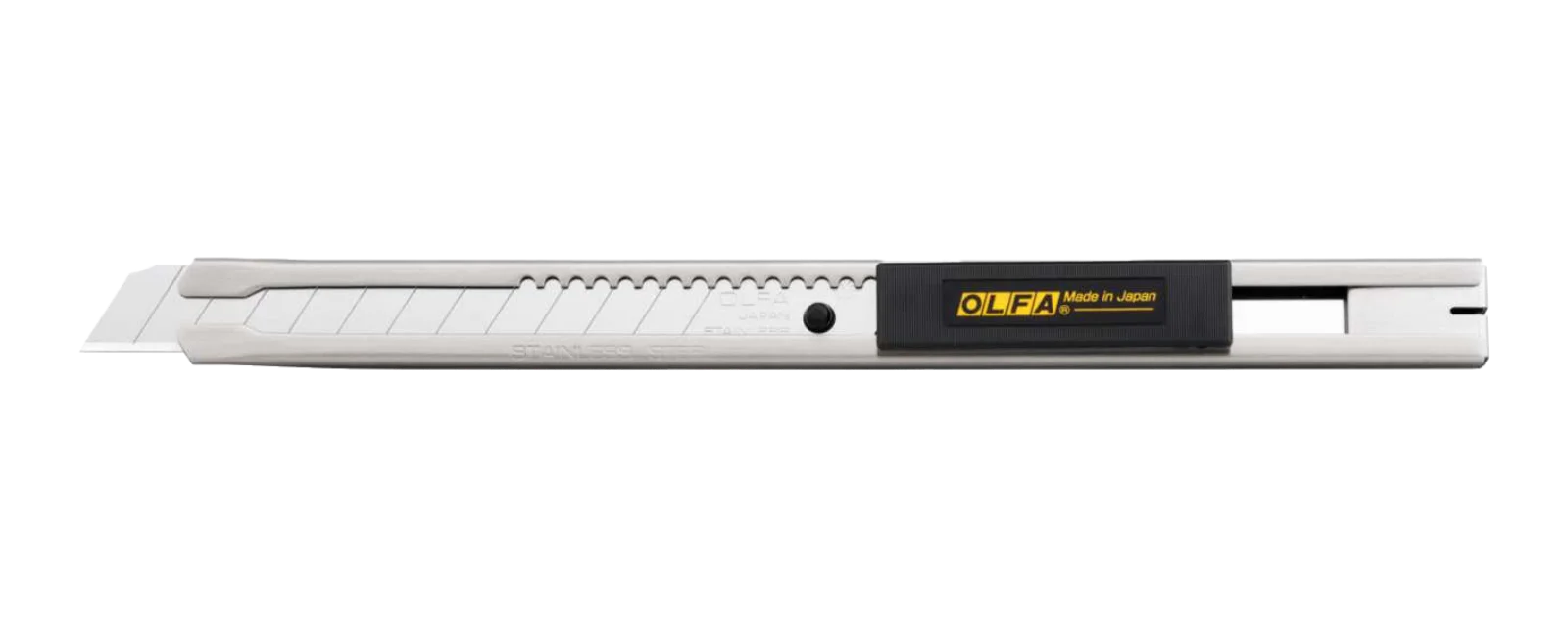 SVR-2 – AutoLockblade retracted manuallyBlade change possible€7.80 excl. VATView CSVR-2
 Safe 22automatic blade retractionCutting depth 40 mmBlade change possible€17.40 excl. VAT
 View USK022Safe 23automatic blade retractionCutting depth 60 mmBlade change possible€17.40 excl. VATView USK023
 S11 – AutoLockblade retracted manuallyCutting depth 71 mmBlade change possible€5.81 excl. VATKDSView C068
 SAC-1 – AutoLockblade retracted manuallyCutting depth 61 mmBlade change possible€5.81 excl. VATView C072
 A-1 – AutoLockblade retracted manuallyCutting depth 73 mmBlade change possible€5.53 excl. VATView C070
 A-5 – AutoLockblade retracted manuallyCutting depth 64 mmBlade change possible€5.53 excl. VATView C071
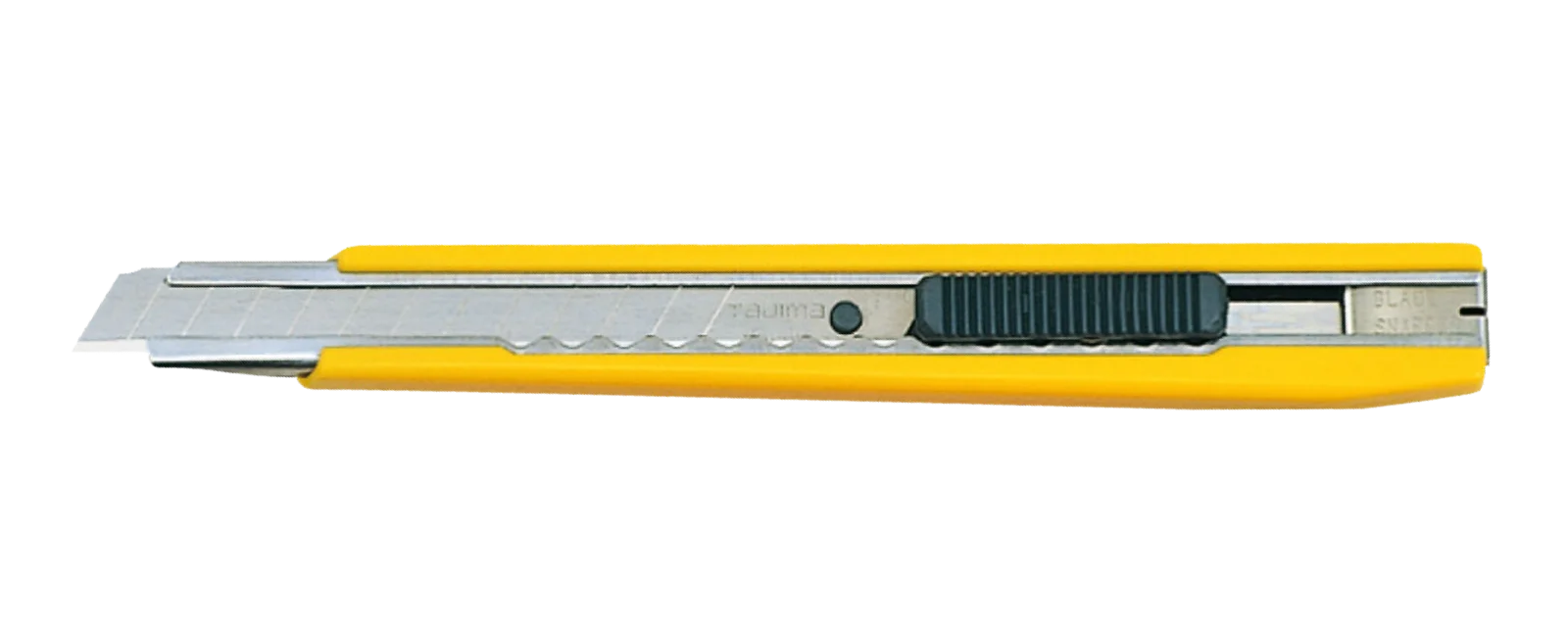 LC303 – AutoLockblade retracted manuallyCutting depth 65 mmBlade change possible€2.61 excl. VATView C069
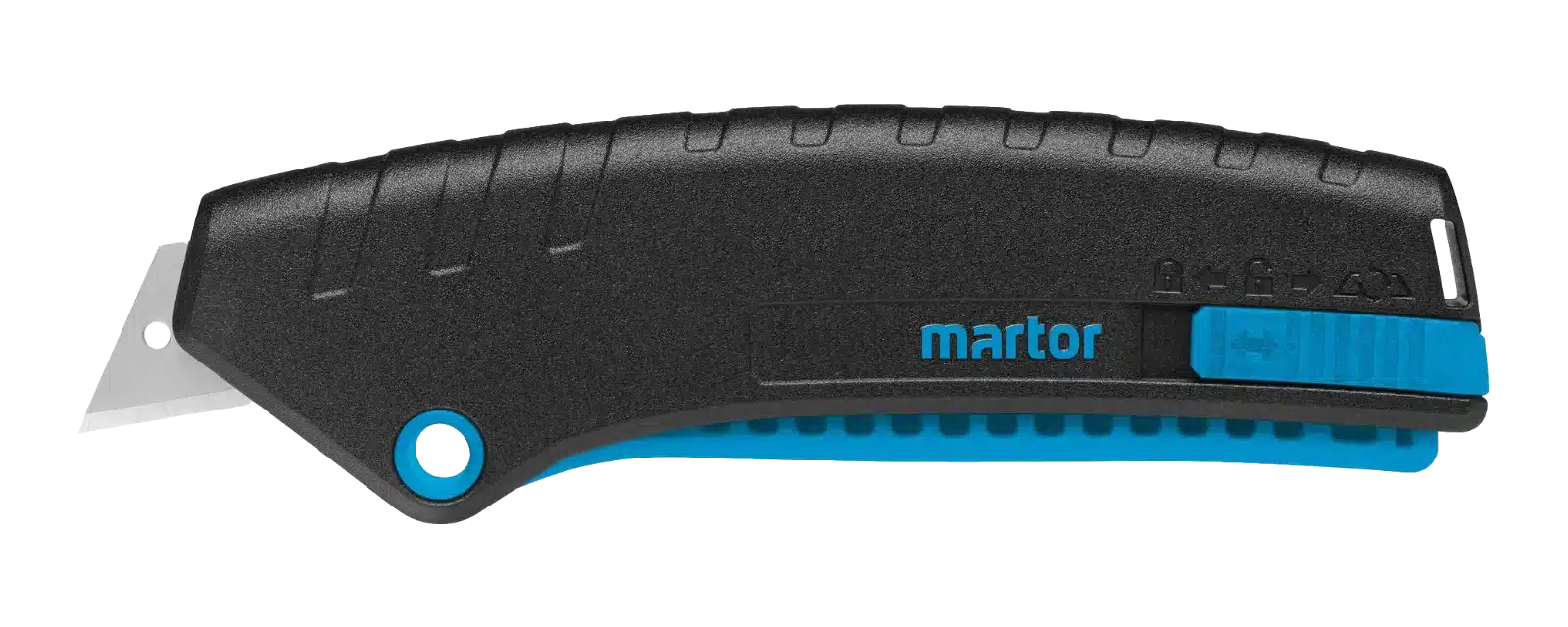 Secupro Mizarautomatic blade retractionCutting depth 15 mmBlade change possible€10.00 excl. VATView UM125001
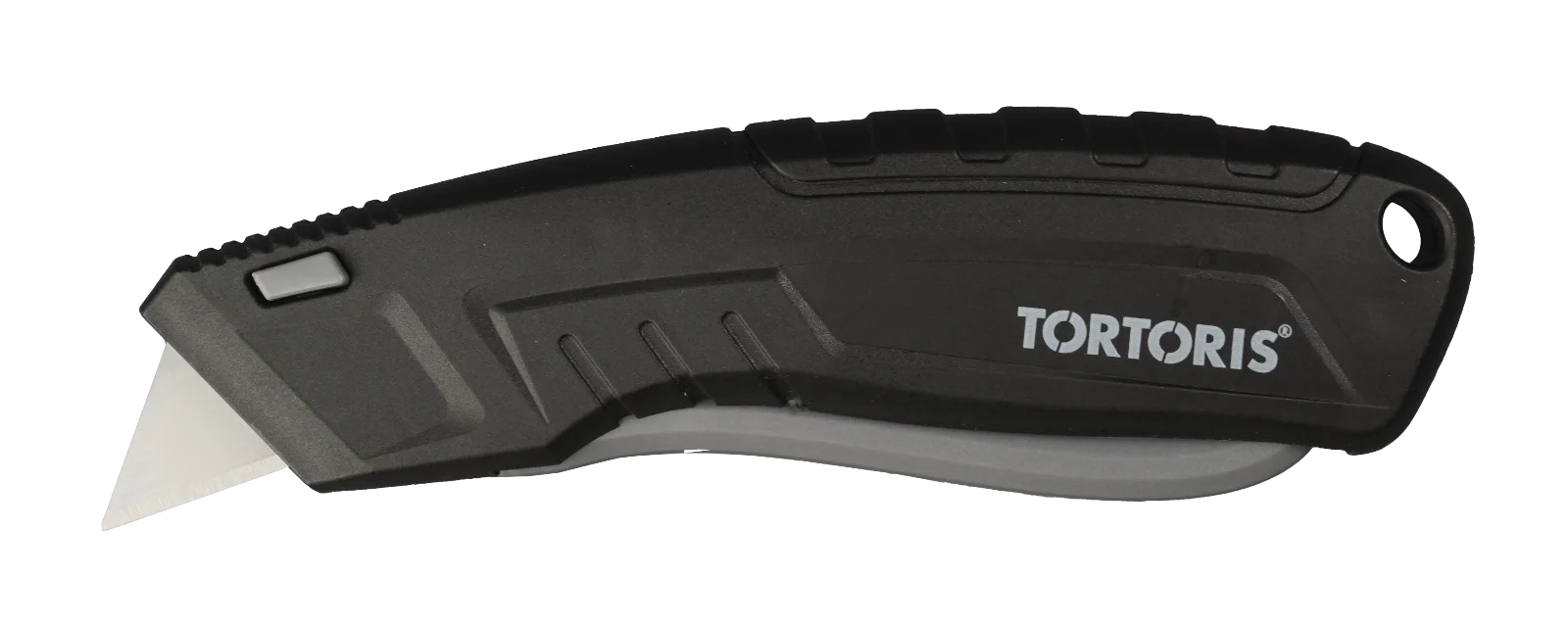 Safe 24automatic blade retractionCutting depth 18 mmBlade change possible€8.09 excl. VATView US24
 VRex 102Cutting depth 21 mmBlade change possible€10.44 excl. VATView U018
 Carpet knife standardblade retracted manuallyCutting depth 21 mmBlade change possible€7.60 excl. VATCURTView U017
Guide: cutter knives
High-quality cutter knives: differences and features.
There are over 800 different cutter knives, safety knives, carpet knives and cutters. In this 2026 guide we show,
- how cutter knives differ,
- which features there are,
- what to look for when buying a professional cutter knife and
- which, in our view, are clear purchase recommendations.
Definition and delimitation
The essentials in brief
Cutter knives – also called cutters, utility knives or tradesman’s knives – are universal knives with a snap-off blade. There is no generally valid definition of cutter knives. This article describes cutter knives with an exchangeable snap-off blade, usually 18 mm high. These universal knives are suitable for a wide range of applications in the fields of:
- commercial applications
- trades
- crafts
- DIY
For years, the topics of home improvement, tools and do-it-yourself have been very much in vogue. According to the market research institute IfD Allensbach, about two thirds of Germans were interested in these creative kinds of DIY in 2017.
Which knives are also called cutter knives?
A distinction should be made between:
- Cutter knives – snap-off blade
- Carpet knives – trapezoid blade
- Safety knives – trapezoid blade + automatic blade retraction
- Carton knives – various shapes of safety knives
- Film knives – with protective hook in front of the blade
- Craft knives | Scalpels – pen shape with short, sharp blades
In this article we go into detail on cutter knives with snap-off blades.
Special feature of the cutter knife
The 18 mm cutter knife – 18 mm because the blade is 18 mm high – is by far the most widespread working knife in the world. Originally invented by OLFA, almost every manufacturer of universal knives today has at least one version of its own in its range. The main features are:

- Snap-off blade A snap-off blade with several segments and predetermined breaking points. When the front segment is dull, it is snapped off and the next, still sharp one is used.
- Metal rail Usually a metal rail built into the handle in which the blade is guided and which gives the cutter knife its necessary robustness.
- Slider | Wheel A slider (Auto Lock) or dial wheel (Dial Lock) with which the blade is extended and locked.
- Handle | Holder A handle that is as ergonomic as possible, usually made of plastic.
Applications – with cutter knives
Because of their long blade, cutter knives with snap-off blades are extremely flexible and popular. They are used by tradespeople such as electricians, painters, plumbers and window fitters as well as by DIYers and still by many businesses in manufacturing and processing. Wallpaper, paper, cable sheathing, film, tapes, fabrics, plastic, carpet and much more can be cut. Thanks to the blade of up to 8 cm in length, professional cutter knives can also cut foam.
The biggest disadvantage is the lack of safety of cutter knives, since the edge is often extended longer than necessary and the blade breaks more quickly because of the predetermined breaking points. This often leads to serious injuries. Cuts are one of the most common causes of accidents at work, and cutter knives with snap-off blades or fixed blades are usually the cause.


Quality – how to recognise a professional cutter knife
Cutter knives in a test: what matters. Anyone looking for a cutter knife test usually finds individual tests of just a few models. We check cutter knives against the same criteria you will find in the checklist below: Does the metal rail bend or shift? Does the blade sit firmly when extended? Does the handle still feel good in the hand after hours of use? Does the blade cut cleanly and stay sharp for a long time? With cutter knives, these four points matter more than the price.
With cutter knives with snap-off blades, the blade quality, the handle quality and the type of blade slider are the three most important distinguishing features. The higher the quality of the cutter knife, the longer it lasts and the more pleasant it is to operate.


Blade quality
Cutter knives with snap-off blades are distinguished primarily by their height. The 18 mm blade, i.e. 18 mm high, is by far the most commonly used. Relatively well-known variants are the 9 mm and 25 mm heights (see illustrations below). The 22 mm and 12.5 mm heights play absolute special roles. Besides height, blades also differ in thickness, material, sharpness, coating, number of snap-off segments and special shapes. You will find more information on other cutter knife blades such as trapezoid blades in our cutter knife blades overview. Here we go into cutter knife snap-off blades in more detail.


The dimensions shown above are the standard dimensions of long snap-off blades. At NT the 9 mm version is also available in 0.25 mm thickness. The 18 mm version is also available at Stanley and NT in 0.6 mm thickness. In addition, Tajima has the special height of 22 mm (thickness 0.65 mm) and OLFA and NT the height 12.5 mm (thickness 0.25 or 0.45 mm).
Quality of a cutter knife blade
The quality of the blade, i.e. how long it stays sharp enough – the blade life – is the most important thing about a cutter knife snap-off blade; after all, you want to cut with the tool. Unfortunately no single manufacturer gives any information on how good its respective blade is. We are also aware that blade life is influenced by many factors. If you cut aluminium sheeting with the long blade, for example, the same blade lasts many times shorter than if you cut adhesive tape. But also
- the grind,
- the blade material,
- the cutting angle,
- the speed,
- the force or
- the coating
have an influence on blade life. We go into all the individual factors in detail in our cutter knife blades overview.
Sharpness of a cutter knife blade
With sharpness it is very important to distinguish between initial sharpness and blade life. Initial sharpness can be measured: how thinly is the cutting edge ground? However, initial sharpness usually drops considerably with the first three cuts. For you as a user, what matters much more is how long the blade is sharp enough to cut your specific material. That is the blade life of the long blade. As soon as it no longer cuts but rather tears, or the cut no longer meets your requirements for a clean cut – cut retention – the blade is dull.
Coating of cutter knife snap-off blades
Either to reduce friction or above all to increase blade life, many manufacturers such as Lutz, Mozart, OLFA, Tajima or Stanley, for example, offer coated blades. A very thin layer of material, usually titanium nitride (TiN), is vapour-deposited. This can in some cases double the blade life, especially with soft cutting materials such as film, vegetables, adhesive tapes etc. A very well-known coating is also the black cutter knife blades. This coating, however, does not serve to improve blade life but to differentiate in marketing. The black blades are ground somewhat sharper, so they usually have somewhat higher initial sharpness. Other coatings are, for example, ceramic, Teflon, titanium or tungsten carbide (TiC) and titanium aluminium nitride (TiAlN). If you have to cut a lot of film, we recommend the TiN coating. For most standard applications with a snap-off cutter knife, however, you do not need any of these coatings. Instead we recommend choosing a blade made of high-quality material with good workmanship, for example from OLFA, NT or Tajima.


Material
“All that glitters is not gold” – this applies especially to blade material and workmanship. From the outside the difference cannot be seen with the naked eye, and yet there are serious differences in the material composition and the processing of the blade steel. In processing, essentially the heat treatment, the material structure and the hardness (in Europe usually measured in Rockwell – HRC) are influenced. This can have dramatic effects on blade life, initial sharpness and cut retention. High-quality long blades must fulfil three essential properties:
- high hardness (61–65 HRC)
- high concentration of evenly distributed, fine hard particles (carbides)
- good toughness (stiff, but not brittle)
All blades with a carbon content of clearly less than 0.95 % are not suitable for commercial use, as they become dull very quickly and thus lead to higher costs for blade changes and an increased risk of injury. Blades made of C100 (0.95 %) or, better still, C125 (1.25 % carbon) are clearly preferable. Unfortunately none of the manufacturers publishes these values on the retail packaging. You can usually only ask the specialist trade for them. We go into bimetal, ceramic and stainless steel (INOX) in more detail in the article Cutter knife blades.
Handle quality of a cutter knife
Most cutter knives have a plastic handle with a metal rail fixed in it. The blade moves in this rail. The cheapest cutter knives have no metal rail at all, just a plastic housing. Some manufacturers additionally rely on a metal handle around the metal rail. In our view that is pure marketing, because professional cutter knives with sensible plastic and a good metal rail are almost indestructible even with rough handling.
Why a metal rail? First, so that the whole cutter knife is more stable, e.g. against dropping or twisting, but also so that you can make powerful cuts without worry that the handle breaks. Second, so that the housing in the front area, where the blade emerges, does not wear down a little more with every cut. With pure plastic cutters the housing eventually wears down so far that even with the blade completely retracted a tip still sticks out.
With metal rails there are unfortunately also large differences in quality: first in the anchoring in the housing and second in thickness or material. The rail is usually locked in the plastic handle by means of small metal pins or, more rarely, with a screw as a stop.
Either tinplate or stainless steel is used as material. Tinplate, at usually 0.1–0.2 mm, is very thin and bends very easily. If you use the front edge of the rail as a lever or scraper just once, tinplate bends immediately and jams the blade. So look for a stable rail: simply press the front of the rail against a hard object – it must not bend. Professional cutter knives have rails made of stainless steel and at least 0.4 mm thick. Tajima’s rails, for example, at 0.7 mm and high-quality stainless steel, are so stable that they are even certified as auxiliary screwdrivers.
The most important points for ergonomics are an easy blade change, a secure hold, no disturbing edges or buttons, light weight – about 60–90 g is ideal –, a slim design and a smooth-running slider.
Our recommendation: Besides blade quality, it is above all ergonomics in permanent use that decides whether you like using the cutter knife or not. Even 1–2 € make a great difference here at purchase.
Quality of the slider
Besides the quality of the blade and the handle, in our view the slider is the third element for assessing cutter knife quality. First you should decide whether a dial wheel (Dial Lock) or a slider (Auto Lock) is better suited to you. In Europe, unlike in Asia, the Auto Lock mechanism is much more popular. The slider is pushed forwards or backwards by simply pressing and locks automatically into up to 16 positions. With good cutter knives the locking of the step is also so good that it does not adjust itself under pressure or pull on the blade. The dial-lock wheel is an advantage if you need an exact cutting depth and the blade must not have any play forwards or backwards.
Furthermore, the slider should be smooth-running and have good grip.
Checklist for the quality of a high-quality cutter knife
Robustness
- Metal or plastic housing – metal offers no added value in practice, but is heavier and usually more expensive
- Metal rail present – a must for professional applications
- The metal rail does not bend when pressed against a hard object
- Remove the blade and look into the housing where the rail locks into the plastic part: does it look robust and reliable?
Auto Lock vs. Dial Lock
- Slider or dial as blade adjustment? For most applications a slider is more practical
- Smoothness of the slider
- Does the slider lock firmly in both directions?
- How much play does the slider have?
Ergonomics
- How easily can the blade be changed?
- Handiness – no disturbing parts
- Weight
Blade
- Quality of the blade – since it can only be tested in use, you either have to try it out or rely on brand blades, e.g. from OLFA, Tajima or NT
Extras
- Which extras do you still need? (see overview of extras)
Extras – “special equipment” of a cutter knife

Most “modern” cutter knives have elements with 2K SoftGrip, i.e. softer two-component plastic that promises more grip and a more pleasant feel. In our view nice, but not a must. There are excellent cutter knives without SoftGrip, such as the OLFA L-1 or the NT L500.

Almost all cutter knives have an eyelet at the back for attachment. The cutter knife can thus be attached, for example, to a lanyard (key strap) or to a chain.

Many cutter knives have a plastic cap behind the slider, a kind of closure at the back. However, this cap is very often lost quickly, since on very few cutter knives it is securely fixed to the handle by a screw closure or a good snap closure. Most professional cutter knives do without a cap.

Having spare blades in the handle of the cutter knife? Many models offer that. Usually two to three blades are stored on a plastic slider below the metal rail. Quite practical for DIYers and tradespeople.

On the slider there is a mechanism with which the slider can be secured so that it is not moved by accident. Our opinion: Cutter knives do not belong in a trouser pocket; they either lie at the workplace or are put in a cutter knife pouch (holster/belt pouch).

With the dial wheel the blade can be adjusted and locked continuously. This technology has its fans above all in Asia. Make sure that under the dial a metal plate rather than plastic works as the lock.
In America and Europe the Auto Lock mechanism is usually the first choice. The slider can be pushed easily forwards and backwards with one finger. It locks automatically into various positions of the rail, with which the cutting depth can be regulated. On professional cutter knives it locks in both directions. The slider should also be smooth to operate – your thumb will thank you in the long run.

An extension of the metal rail at the rear end that can be used for levering, turning, scraping etc. Our opinion: Anyone who has worked with one does not want a cutter knife without it any more.

Some cutter knives have a dial on the back in the front area. With it the blade can be fixed at a certain length. Our opinion: If you need this, rather choose a dial-lock cutter. The OLFA L-1, for example, is great.

Up to six further blades are stored in the rail so that they are loaded automatically. When your blade is dull, simply push the slider all the way forward and remove the blade at the front. Then pull the slider all the way back again, whereupon the next blade is fed in automatically. Our opinion: Nothing is as sturdy as a high-quality professional cutter knife.

We cannot mention it often enough: if you are looking for a professional 18 mm cutter knife, then test the metal rail. It must not bend and must not shift. Then the cutter knife will go through thick and thin with you.
Changing the blade on a cutter knife
Even when you buy a cutter knife, you should look for an easy blade change. In professional use, cutter knife blades have to be changed very often, sometimes several times a day. The cutter knife should therefore be designed so that blades can be changed easily, safely and quickly.
Shortening cutter knife blades
Snap-off blades have the special feature that they have predetermined breaking points. That means you always cut with the front end of the snap-off blade until it is dull. Before you replace the whole blade, simply snap off the front, i.e. dull, segment. There are four methods for this:
1 · With a clip
Some cutter knives have a cap or a clip at the rear end. It can be pulled out or pushed out. In the cap there is often a thin slot with which you can snap off the snap-off blade at the predetermined breaking point. To do this, extend the blade forward far enough that the front predetermined breaking point lies as exactly as possible above the front edge of the metal rail. Now push the cap with the slot on from the front and snap the blade off away from your own body. To do this, turn the cutter knife and the cap so that the cap is bent towards you. The blade can fly quite far, so there is always a risk of injury.
2 · With pliers
Cutter knives for industry often must not have a removable cap at the rear end, since it could come loose unintentionally and then fall into the production process. To snap off the snap-off blades on these handles anyway, you can use combination pliers or flat pliers. To do this, extend the edge again with the front predetermined breaking point to the end of the metal rail. Now grip the front segment firmly with the pliers and snap it off. Since the pliers hold the dull blade segment, the risk of injury here is very low.
3 · With a blade box
The safest variant is using a blade box. It is offered by some manufacturers as inexpensive accessories. These collection boxes have a thin slot at the top or on the side into which the dull blade segment is inserted. Then hold the blade box firmly with one hand and the cutter knife with the other. With a bending movement of the cutter knife, simply snap the blade off. The snapped-off segment cannot fly away here, which is why this method is particularly safe. In addition, all old and dull blade parts are safely stored in the blade box. This way nobody can get injured by them any more.
4 · Snapping off on a hard object
Snapping the blade off on a solid object is very popular, above all with tradespeople. To do this, extend the blade again with the predetermined breaking point over the edge of the metal rail. Then press the snap-off blade against a hard object, e.g. a wall, and snap off the front segment with a slight levering movement of the handle. If you use this unsafe method, always place your hand over the blade, preferably protected by a glove. Otherwise the flying blade can cause nasty injuries.
Recommendation: If your cutter knife is in use every day and the blade has to be snapped off often, you should buy a cutter knife holster with blade box. That way the blade can always be snapped off quickly and safely. You also do not have to worry about blade segments lying around that could injure you or your colleagues.
Replacing the whole blade on a cutter knife
When you have used up all the segments of the snap-off blade, you have to replace the complete blade, or what is left of it. This works the same way on almost all cutter knives. The slider with the blade is pushed backwards out of the housing. If there is a protective cap at the rear end of the handle, it has to be removed first. Now it is best to carefully grip the slider or carriage with your right hand so that thumb and index finger are at the front end of the slider when it comes out of the housing. This way you can hold the blade so that it does not fall out by accident. Then carefully take the rest of the blade off the cam of the slider. It is best to hold the blade by its upper, blunt side, the blade back, so that you do not injure yourself on the sharp edge when changing the blade. It is best to dispose of the dull blades safely in a blade box. Place the new blade on the slider from the left with the sharp edge facing down. Then carefully push both back into the handle until the slider clicks into place or the protective cap fits onto the end of the handle again.
Some cutter knives have a blade magazine with additional blades in the handle. These lie in a passive slider under the metal rail. You can pull it out and use the new blades.
The easiest, however, is an auto loader. Here up to five new blades are usually stored in the handle. When your blade is dull, simply push the slider all the way forward, often over a resistance. Then you can pull the dull blade out at the front. Then pull the slider all the way back again, and the next blade from the internal magazine is loaded automatically. If you now push the slider forward again, the new blade is ready for use.
Safety with a cutter knife
Safety is the great weakness of a cutter knife with a snap-off blade. Even if you choose a professional cutter knife that follows the recommendations of our checklist exactly, you still have a snap-off blade. By definition it must break off more easily than a blade without snap-off segments. That means every blade breaks off above a certain side pressure, but snap-off blades relatively quickly. How can you increase safety when cutting with a cutter knife?
- By choosing a high-quality cutter knife (handle, slider, blade).
- By using a cutter knife that is appropriate for your application, e.g. not a 9 mm cutter with a blade only 0.38 mm thin for cutting up three-layer corrugated board, but rather the 18 mm or even the 25 mm cutter knives, which have a snap-off blade 0.5 or 0.7 mm thick.
- By using blades without snap-off segments. At first glance that is a contradiction, since the main advantage of cutter knives is precisely the snap-off blade. But if what matters to you is not the economy of the blade through regularly snapping off dull segments but the long blade exposure, then a polystyrene blade is an extremely practical solution for increasing safety.
- By using an automatic blade retraction. Here the transition to the safety knife is fluid. But there are also a few safety cutter knives with a long (over 40 mm) blade and automatic or partly automatic blade retraction, e.g. the Tajima QuickBack or the Martor Secunorm 380. But no question: if automatic blade retraction is one of the decisive features for you when buying, please check whether a safety knife with a trapezoid blade is not the better choice.
- By retracting the blade into the handle again after cutting. At customers’ sites we keep seeing users leave the blade extended long when they do not need the knife for a while between two cuts.
- Train your employees in occupational safety and in handling cutter knives. Use the operating instructions or ask us about on-site training.
Weapons law
Now and then customers ask, perhaps rather jokingly, whether cutter knives fall under the weapons law. No, they do not. Even so, it may be forbidden in your company or business to use cutter knives with snap-off blades. This is even the case in most companies in manufacturing or production. Those are then internal rules, possibly on the advice of the employers’ liability insurance associations (BG) or from audits. Occupational safety is very present almost everywhere, and cutting accidents are still one of the most common causes of accidents at work.
Cutter knife accessories
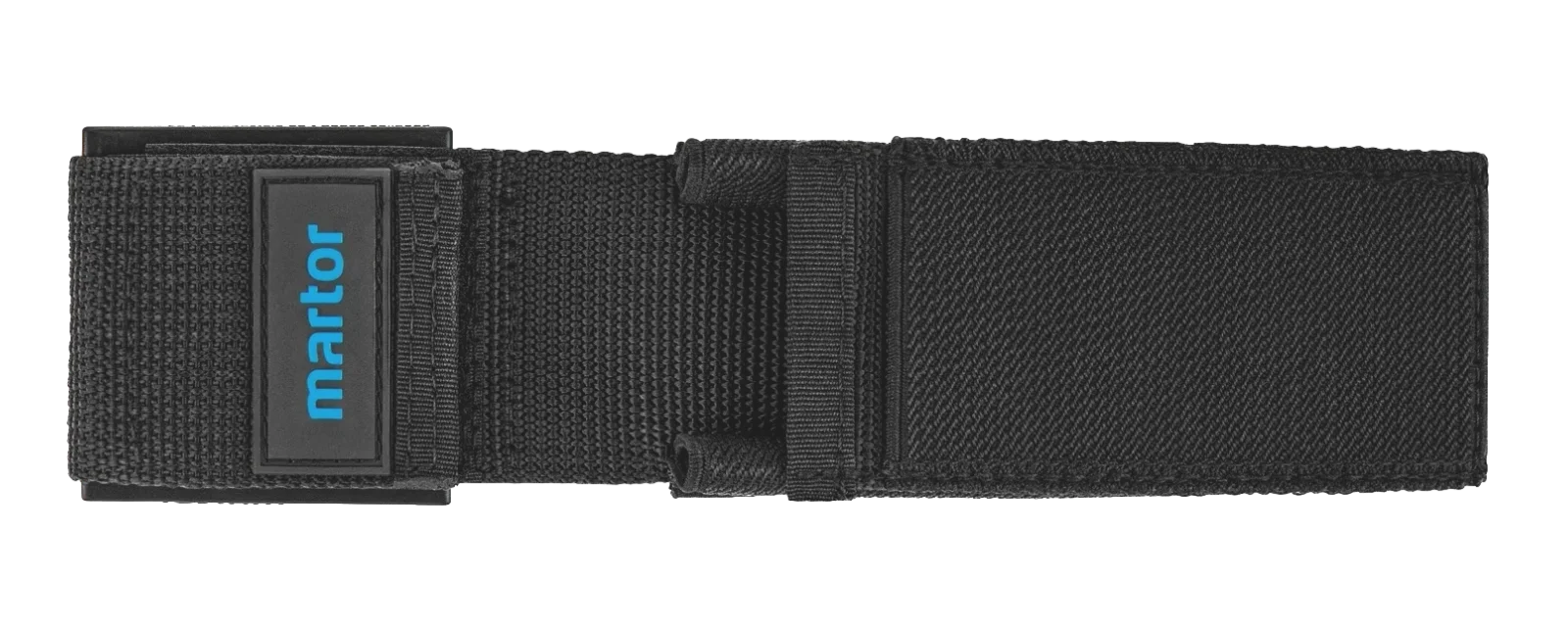
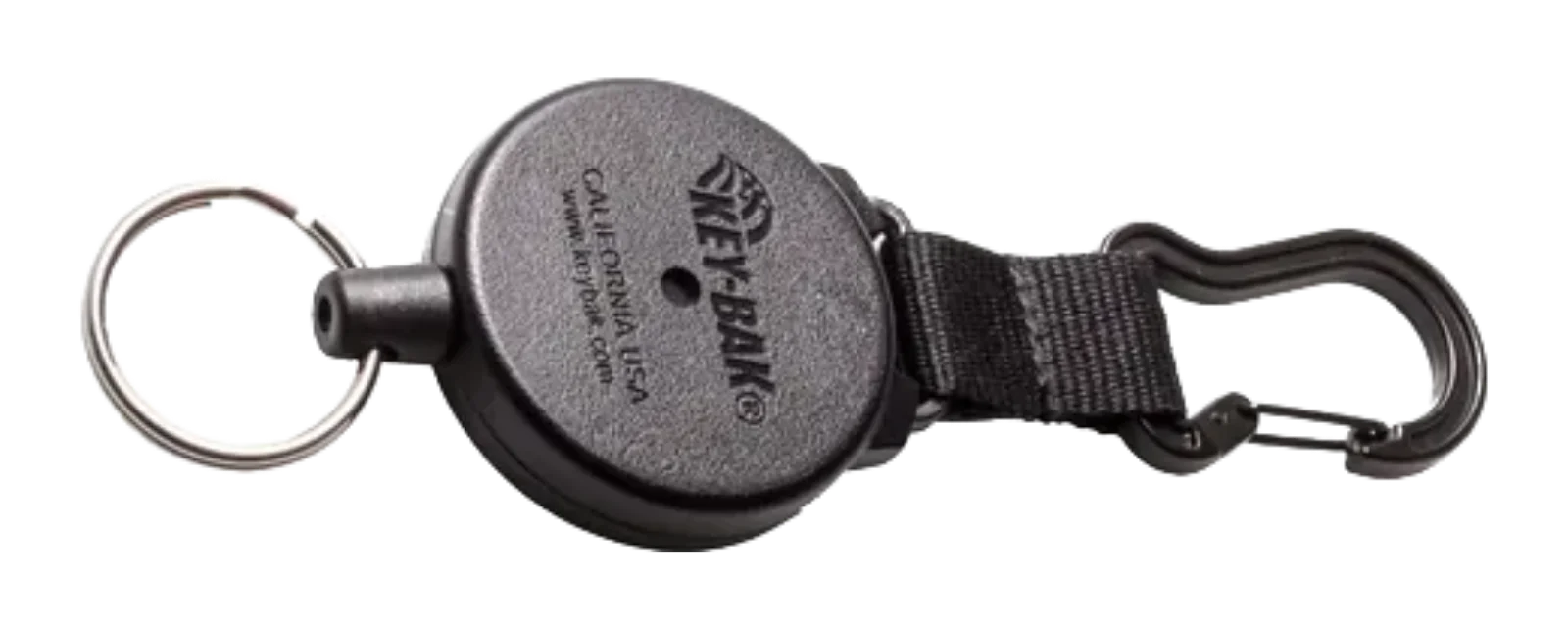
The upstream and downstream processes must also be considered. Where is the cutter knife before and after the cut? Does it lie open on a work table or in a special holder? Has the user attached the knife to a fixture, e.g. a lanyard or a cord? Is the cutter knife carried in a belt pouch or holster or in the trouser pocket after all? How is the blade change done? Many of our customers carry out the blade change at a central place, for example, so that the whereabouts of the blades is ensured. The dull blades are then disposed of in special blade or collection boxes so that nobody can get injured by them any more. When using cutting rulers, attention should be paid to the quality of the ruler. A sharp blade cuts into wood or thin plastic relatively easily. It is better if a cutting ruler has a specially hardened cutting edge and a finger guard.


Cutter knife manufacturers
As a specialist retailer for safety knives and cutter knives we work with almost all manufacturers and test and evaluate their cutter knives. For cutter knives with snap-off blades the best-known manufacturers and brands are OLFA, Tajima, NT Cutter, Stanley, Martor, Wedo, Wolfcraft, Fiskars and Würth – although Wolfcraft, Wedo, Fiskars and Würth are not manufacturers. If you want to rely on the brand alone when choosing, go for OLFA, Tajima, NT Cutter or Stanley. But note: these manufacturers naturally also have different quality levels for different target groups.
 Manufacturer page
OLFA
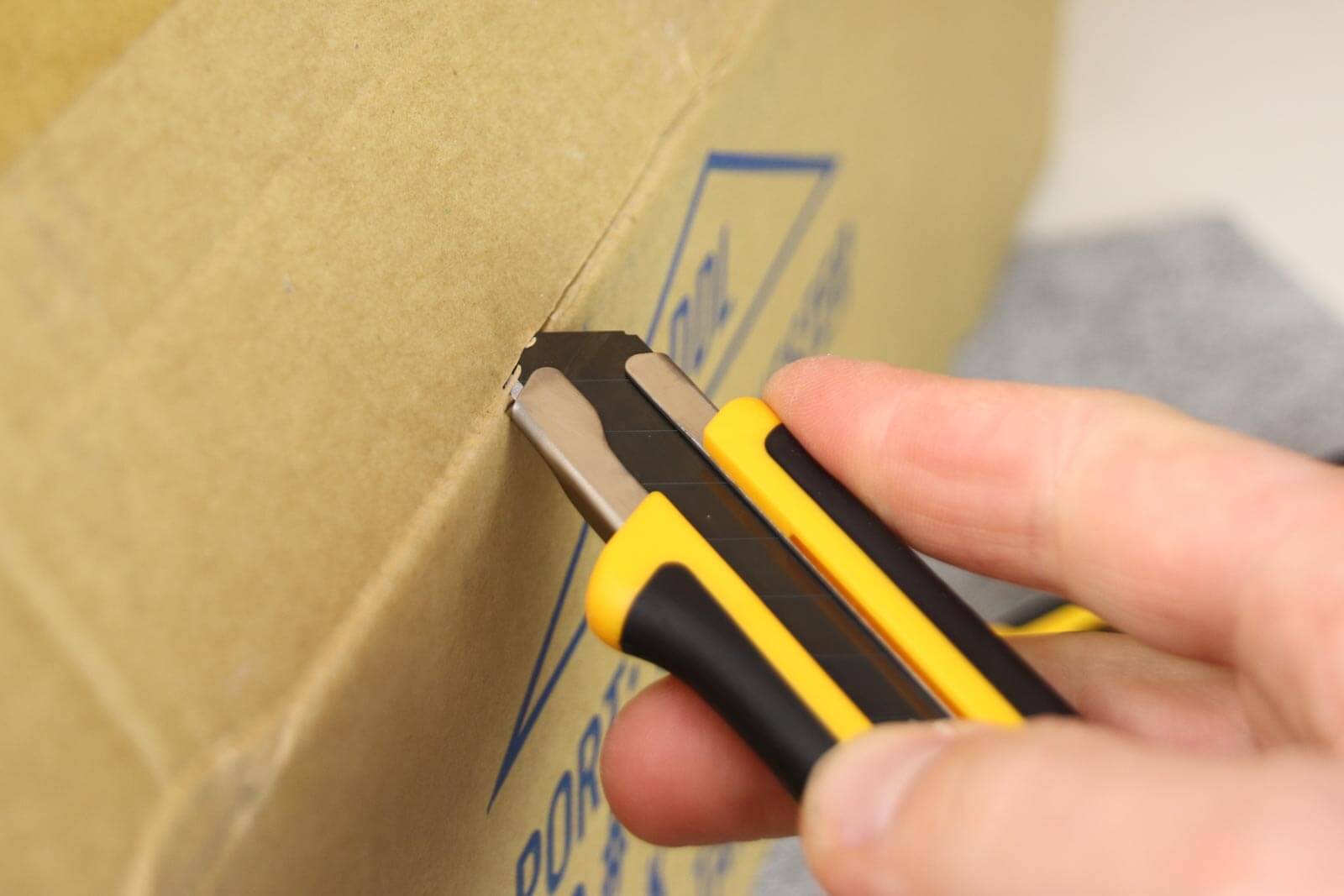
OLFA is the inventor of the cutter knife with a snap-off blade and offers some of the best you can get here. The OLFA L-1 is one of the classics among 18 mm cutter knives. Among the newest models we can particularly recommend the OLFA L5.
To the manufacturer page →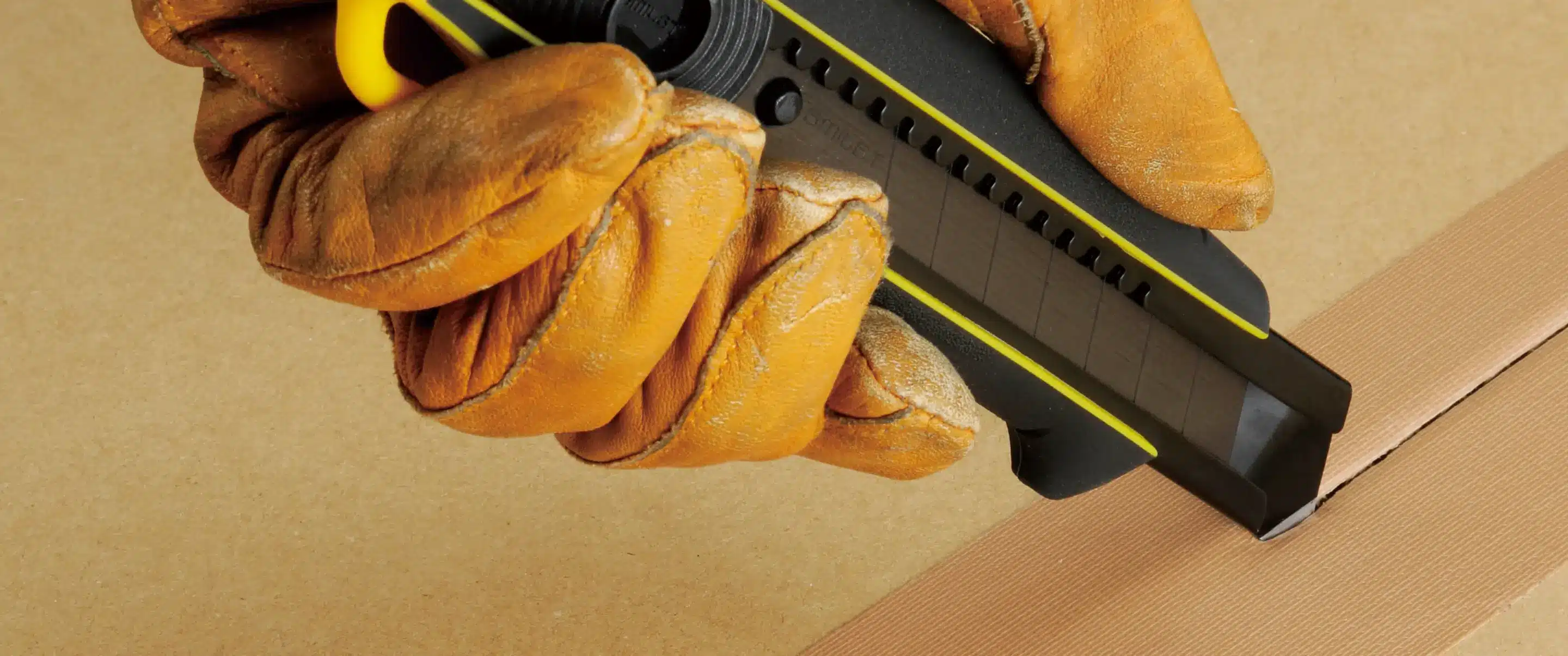
 Manufacturer page
Tajima
Tajima, like OLFA, is a Japanese manufacturer of cutter knives and places extremely great value on top quality. Outstanding products are the DC560 Driver, the AC500 and the QuickBack 2 in 1.
To the manufacturer page →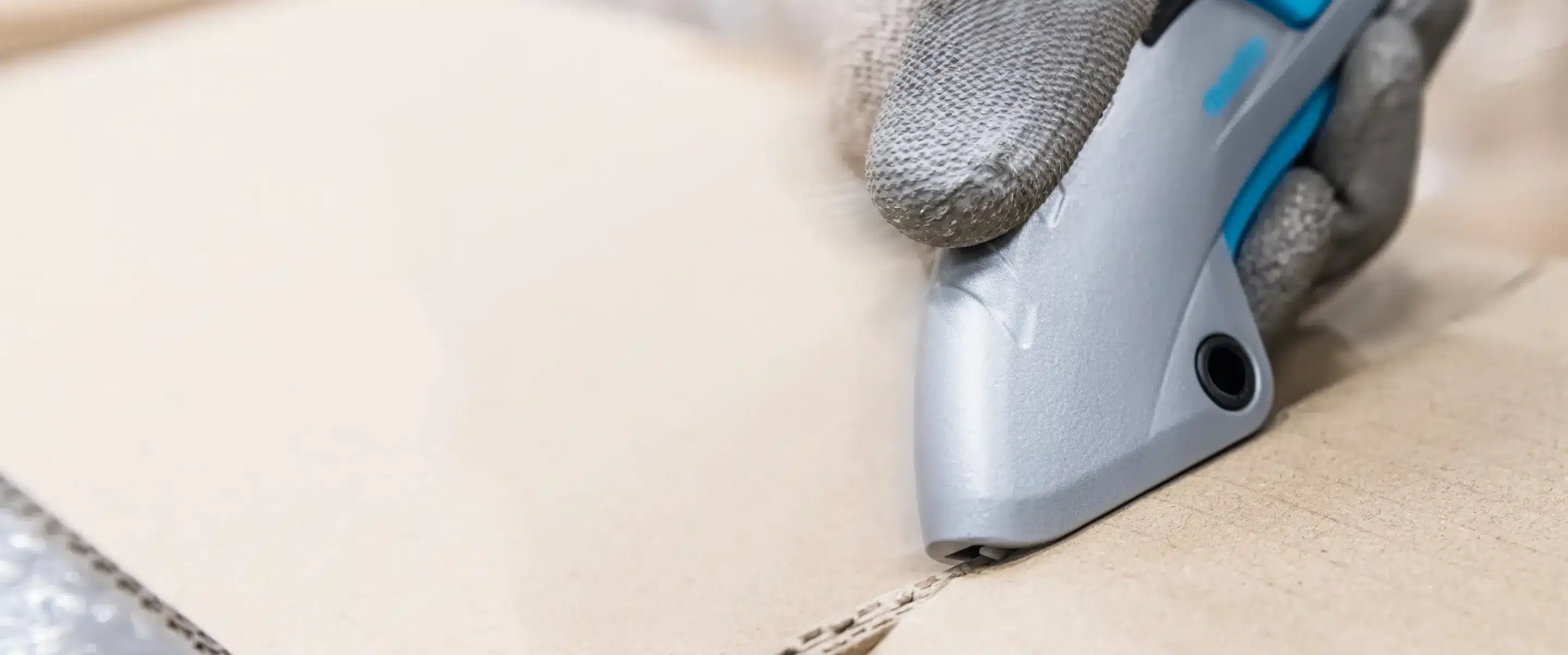
 Manufacturer page
martor
Martor is the market leader for safety knives in Europe, but also has a few cutter knives in its range. Since the focus of the Solingen family business is clearly on safety knives, the selection of cutter knives is very small.
To the manufacturer page →NT Cutter – Japan
High-quality cutter knives are firmly in Japanese hands. The third in the group is the company NT Cutter, like OLFA from Osaka. Besides many precision knives for the craft and paper sectors, NT Cutter also has a wide range of professional cutter knives and of simple cutter knives. The outstanding models are the Evo 1, Evo 2, L300, L500 and the probably best-known 9 mm cutter knife worldwide, the A300.
Stanley Black & Decker
The US company Stanley is headquartered in New Britain in the US state of Connecticut. Stanley produces almost all kinds of hand tools and, with its subsidiary brands Black & Decker and DeWalt, also high-quality power tools for hobbyists and DIYers. In cutter knives Stanley still offers the classic, the Interlock. Professional cutter knives run under the FatMax series.
Brands without their own production
There are quite a number of retail brands for safety knives. These include, for example, Würth safety knives, Wedo safety knives, Fiskars cutter knives, Lux safety knives, Obi cutter knives, Wolfcraft cutter knives, Orion safety knives or Hahne safety knives. And for the B2C sector Amazon and Ebay are of course large sales platforms for cutter knives.