This page is an automatic translation of the German original. The German text is the binding version. View German original
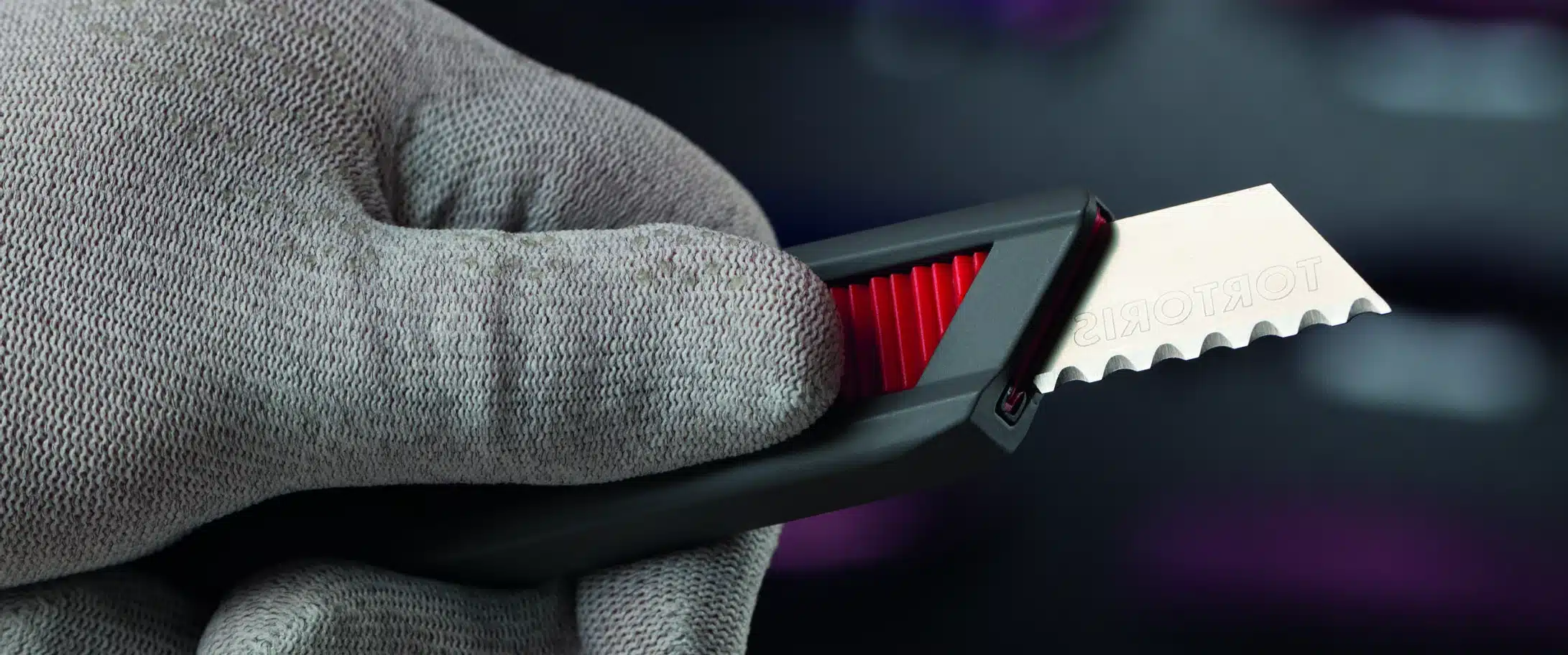
Tortoris S11 safety knife in a hand wearing a work glove
Guide · Cutting by material

Tips and tricks for cutting

Three rules apply to every cut: no part of your body in the extension of the cutting line, a knife with safety technology, and only as much blade as the material is thick. On top of that come seven techniques for cartons, strapping and reels, with reference values from the CURT test lab.

Guide

Tips and tricks for cutting

Three rules apply to every cut: no part of your body in the extension of the cutting line, a knife with safety technology, and only as much blade as the material is thick. On top of that come seven techniques for cartons, strapping and reels, with reference values from the CURT test lab.

Anyone who cuts every day saves effort and time with the right techniques, and protects hands and goods. The tips come from work in warehouses, logistics and the trades.

Source of the reference values: CURT test lab — our own tests and many years of practical experience. The values are guidance, not a standard.

Basic rules

Three rules for every cut

They apply regardless of the material: to cartons in the warehouse just as to insulation on a building site.

Cartons Line of fire You stand to the side, the cut runs past your body free hand
01 · Line of fire

No part of your body in the line of the cut

“Line of fire” means the imaginary extension of your cutting direction. If the blade slips, it travels exactly there.

  1. 1

    Turn the carton or workpiece so that the cut runs past your body to the side.

  2. 2

    Stand at an angle to the cutting direction, not behind it.

  3. 3

    The free hand holds the material behind the blade, never in front of it.

  • Example goods receipt: if the carton is directly in front of your stomach, turn it by 90°. Then the cut runs past your body.
UES44 · Level 2
02 · Personal protection

A knife with safety technology

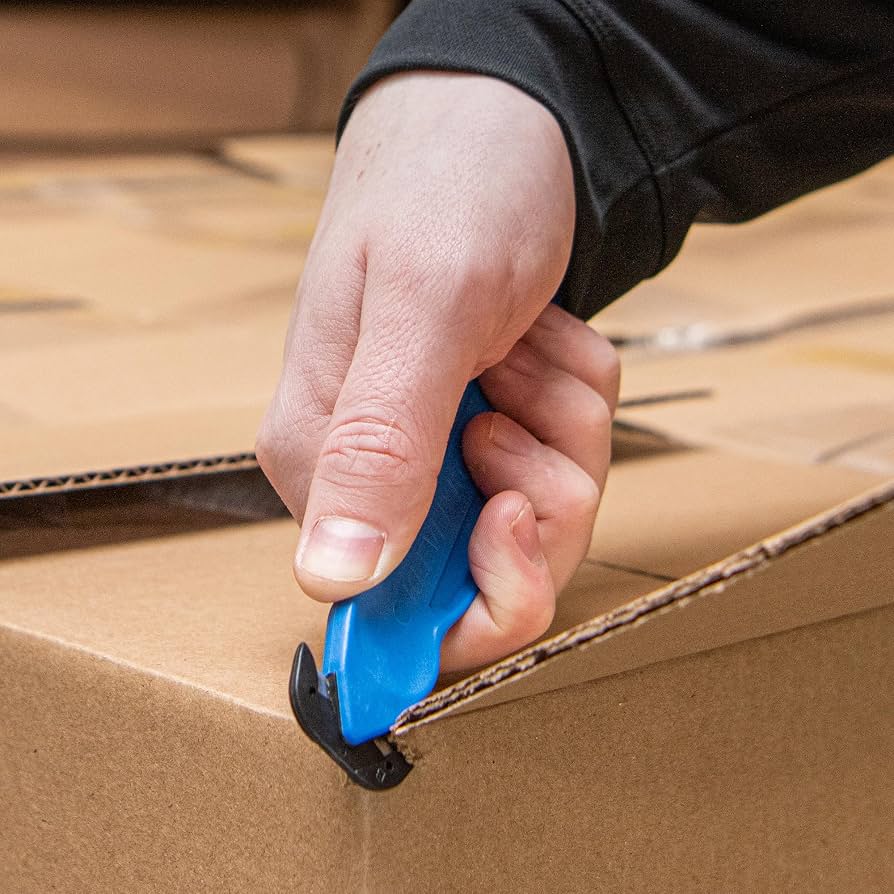
An open blade injures even after the cut, for example when putting the knife down or handing it over. Safety knives prevent that. We classify them in four levels:

  • Level 0 — No protection: fixed blade or blade retracted by hand, such as the classic cutter knife.
  • Level 1 — Automatic blade retraction: The blade retracts as soon as the slider is released.
  • Level 2 — Fully automatic protection: The blade retracts as soon as the slider is released or the blade leaves the material being cut.
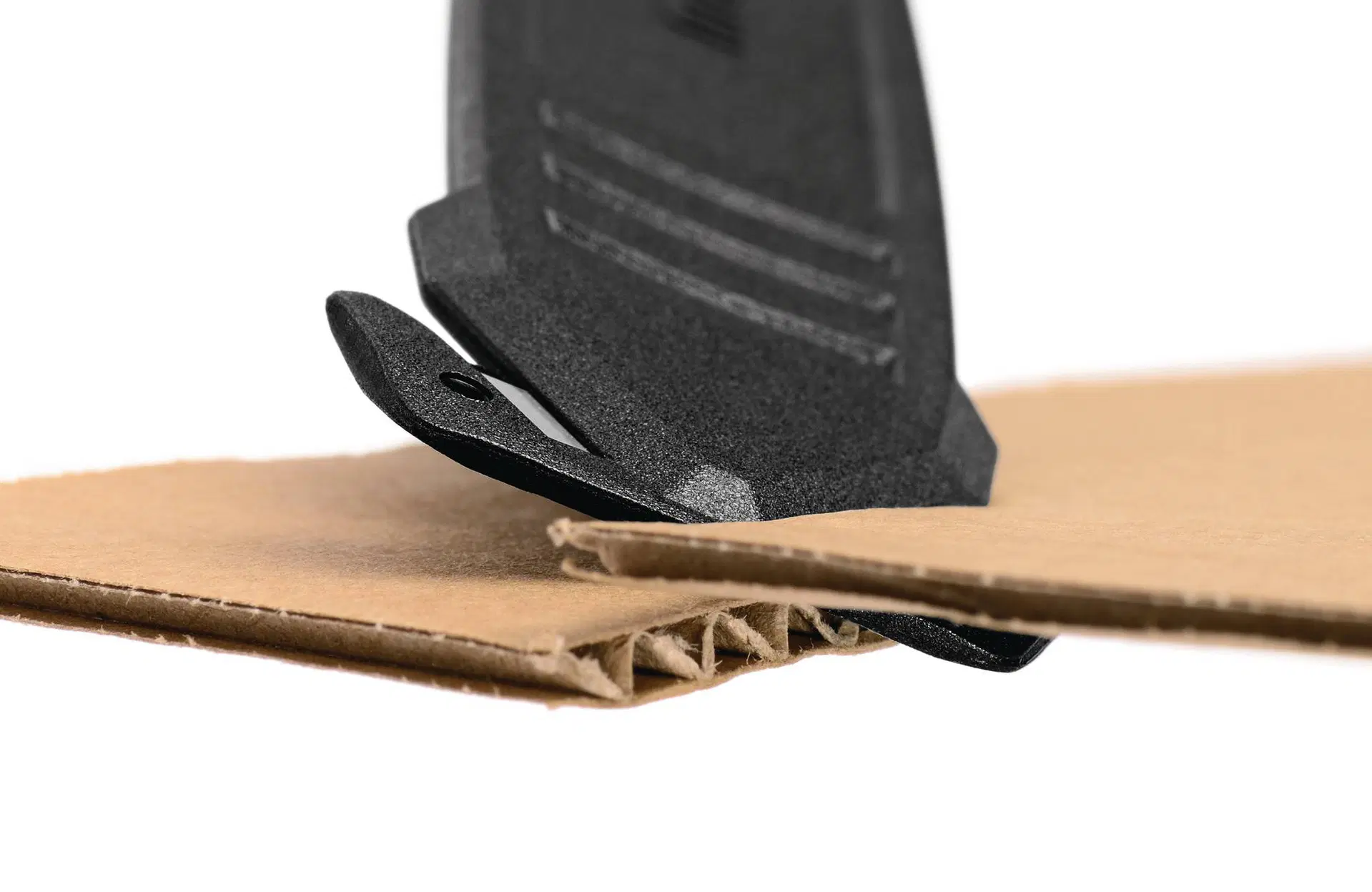
  • Level 3 — Concealed blade / protective hook: The cutting edge lies inside the housing and is out of reach for hand and goods.
  • For cartons: occasionally Level 3 · a lot and changing materials Level 1 · a lot and mostly cartons Level 2.

The safety levels 0 to 3

Which carton knife is right?

Goods in the carton Material thickness max. 1.5 ×
max. 1.5 ×Material thickness as blade protrusionReference value · CURT test lab
03 · Protecting the goods

Only as much blade as necessary

A cut into the goods costs twice: the goods themselves and the time to report the damage, write it off and replace it.

  • For corrugated board 4 mm thick, that is at most 6 mm of blade.
  • With knives with a concealed blade (Level 3), the cutting edge does not reach the goods.
Cartons

Opening and working on cartons

Corrugated cartons are the most common transport packaging. Five techniques for work in the warehouse and in order picking.

Safety knife cutting corrugated board at an angle
up to 30 %less forceReference value · CURT test lab
04 · 45° angle

Start at an angle, use less force

A knife guided vertically compresses the corrugated board. Started at an angle, the blade cuts into it. Less force means less fatigue with many cartons a day and less slipping.

  1. 1

    Place the blade vertically.

  2. 2

    Tilt the knife about 45° to the side.

  3. 3

    Pull through evenly.

Window Picking single items from the shelf
max. 6 mmCutting depth with an open bladeReference value · CURT test lab
05 · Window cut

Cut a window into the carton

In logistics centres the goods often stay in the carton and the carton on the shelf. To pick individual items, an opening is cut into one side, the “window”.

  • Knives with a concealed blade (Level 3) or a short cutting depth are suitable.
  • With an open blade, a cutting depth of 6 mm at most.
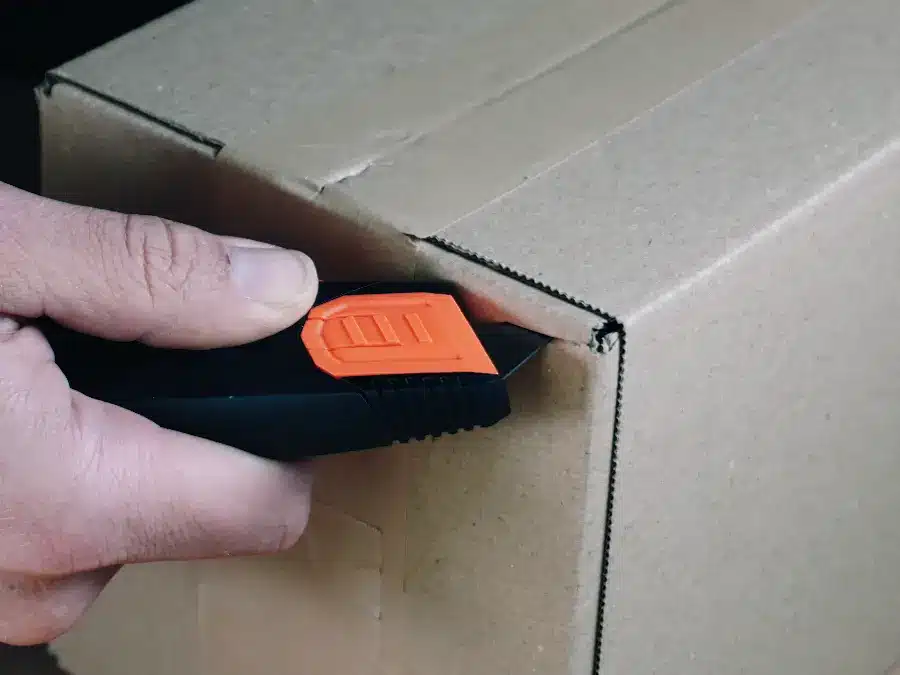
Safety knife with protective hook cutting off the flap of a carton
under 9 sper cartonReference value · CURT test lab
06 · Flap removal

Cut off flaps without hitting the goods

When picking into smaller units, the four top flaps are cut off. The goods lie directly beneath.

  1. 1

    Open the adhesive tape.

  2. 2

    Cut the flaps off from the inside outwards.

  • A concealed blade (Level 3) does not reach the goods underneath.
  • With practice, flap removal takes less than 9 seconds per carton.
Tortoris ES44 cutting off the lid of a carton
under 4 sper cartonReference value · CURT test lab
07 · Lid removal

Cut off the lid in one pull

As with flap removal, the goods are taken out from above. Here the whole top is cut off all the way round in one cut.

  1. 1

    Place the blade at a 45° angle towards the lid.

  2. 2

    Cut all the way round in one pull.

  • With practice, lid removal takes less than 4 seconds.
  • The work is monotonous and attention drops. That is why a safety knife belongs in the hand here, Level 2 if there are many cartons.
score about 1 mm Lift a corner
approx. 1 mmScoring depthReference value · CURT test lab
08 · Releasing labels

Peel labels off instead of cutting them out

For internal processing, labels often have to come off the carton without cutting a hole into it.

  1. 1

    Score the carton about 1 mm deep along the edge of the label.

  2. 2

    Lift the label slightly at a corner with the knife.

  3. 3

    Peel the label off together with the top paper layer of the corrugated board.

Strapping and reels

Strapping and reels

Two jobs that involve tension and force.

light tension flat angle short, firm cut
over 0.5 mmBlade thickness for thick strapsReference value · CURT test lab
09 · Strapping

Strap under tension, knife flat

Strapping is under tension and has sharp edges after the cut.

  1. 1

    Pull the strap with the free hand to a light tension.

  2. 2

    Place the knife at a flat angle.

  3. 3

    Cut with a short, firm movement.

  • Wear gloves: the strap ends are sharp-edged.
  • Cut thick straps (usually green) only with blades over 0.5 mm thick. Thinner blades can break.
  • Cut only with a sharp blade. A dull blade slips.

Film knife for film and strapping

Cutting depth max. 12 mm Cut layers off the reel
max. 12 mmCutting depthReference value · CURT test lab
10 · Reel stripping

Cut layers off the reel

In the paper and film industry, layers are cut off reels. These are heavy-force cuts with a high risk of injury.

  • Use only robust knives built for heavy-force cuts.
  • Work with a short cutting depth, 12 mm at most. This way the blade breaks less often.
  • Use only knives with automatic blade retraction (from Level 1).
FAQ

Frequently asked questions

What does “line of fire” mean when cutting?

The line of fire is the imaginary extension of the cutting direction. If the blade slips, it travels there. That is why the rule is: cut away from the body, and where that is not possible, no part of the body may lie in that line.

Why is the knife placed at an angle on cartons?

Placed at an angle, the blade cuts into the corrugated board instead of compressing it. In the CURT test lab, an angle of about 45° saves up to 30 % of the force.

How far may the blade protrude when opening cartons?

At most 1.5 times as far as the material is thick. With 4 mm corrugated board that is 6 mm. Knives with a concealed blade (Level 3) do not reach the goods at all.

How do you cut strapping safely?

Tension the strap lightly with the free hand, place the knife flat, cut short and firm. Wear gloves. Cut thick straps only with blades over 0.5 mm thick.

Which knife is suitable for opening cartons?

A safety knife. If you open cartons occasionally, take Level 3. For a lot of cartons we recommend Level 2, for a lot and changing materials Level 1.

Tips right at your workplace?

We come to you, look at the workplaces together with your employees and check which knives are in use. You receive a recommendation for each workplace.