
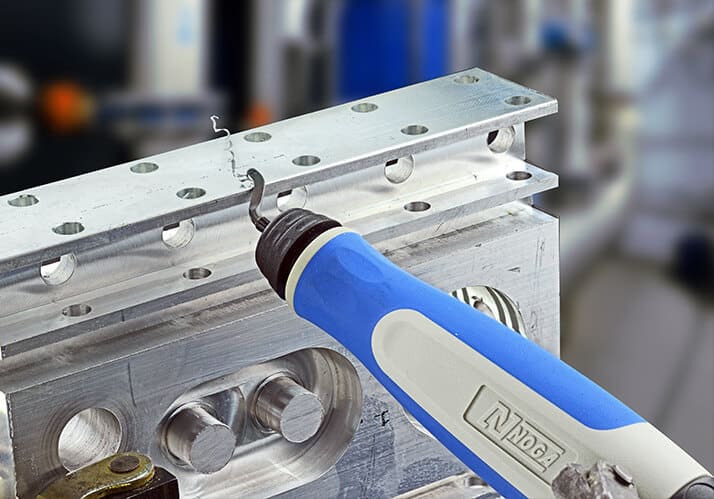
Scalpels & craft knives
Craft knives, deburring tools and ceramic safety scalpels for fine cuts – for commercial use, not for medicine.
Scalpels by type
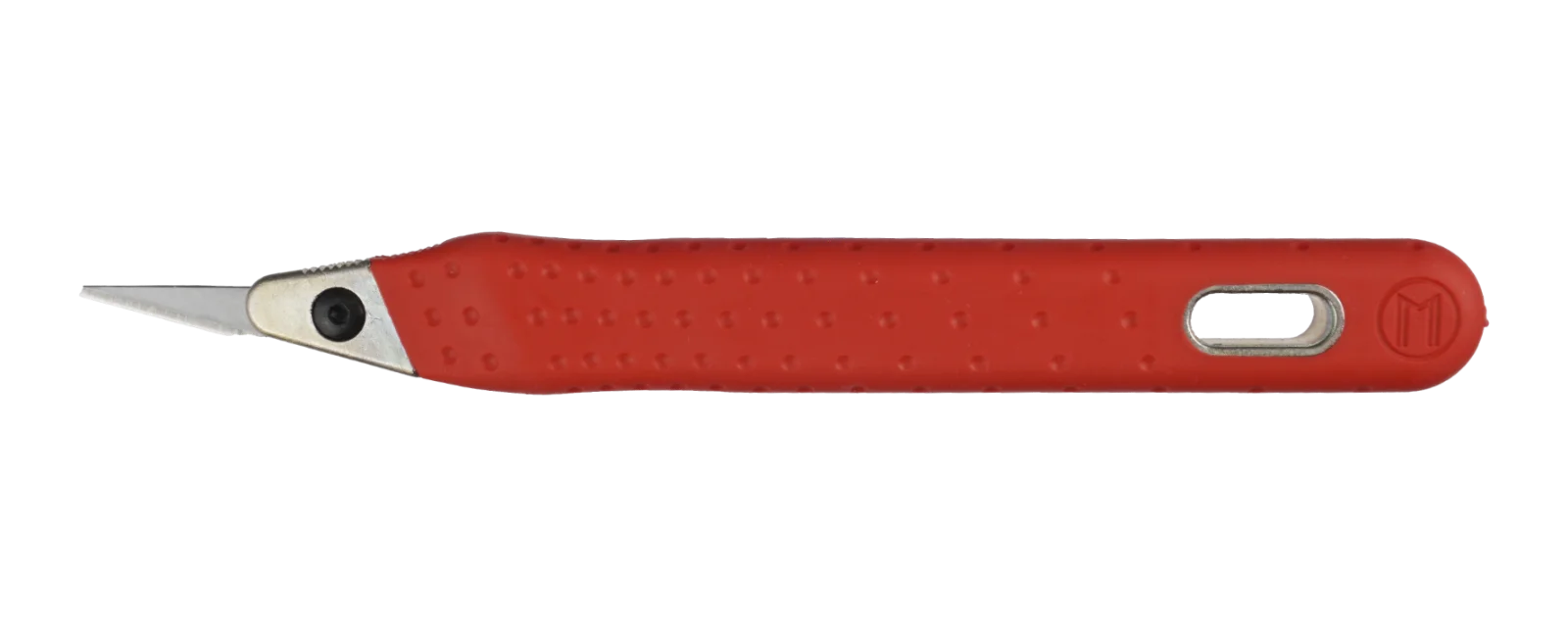 Scalpel grippyBlade change possible€7.16 excl. VAT
 View S071
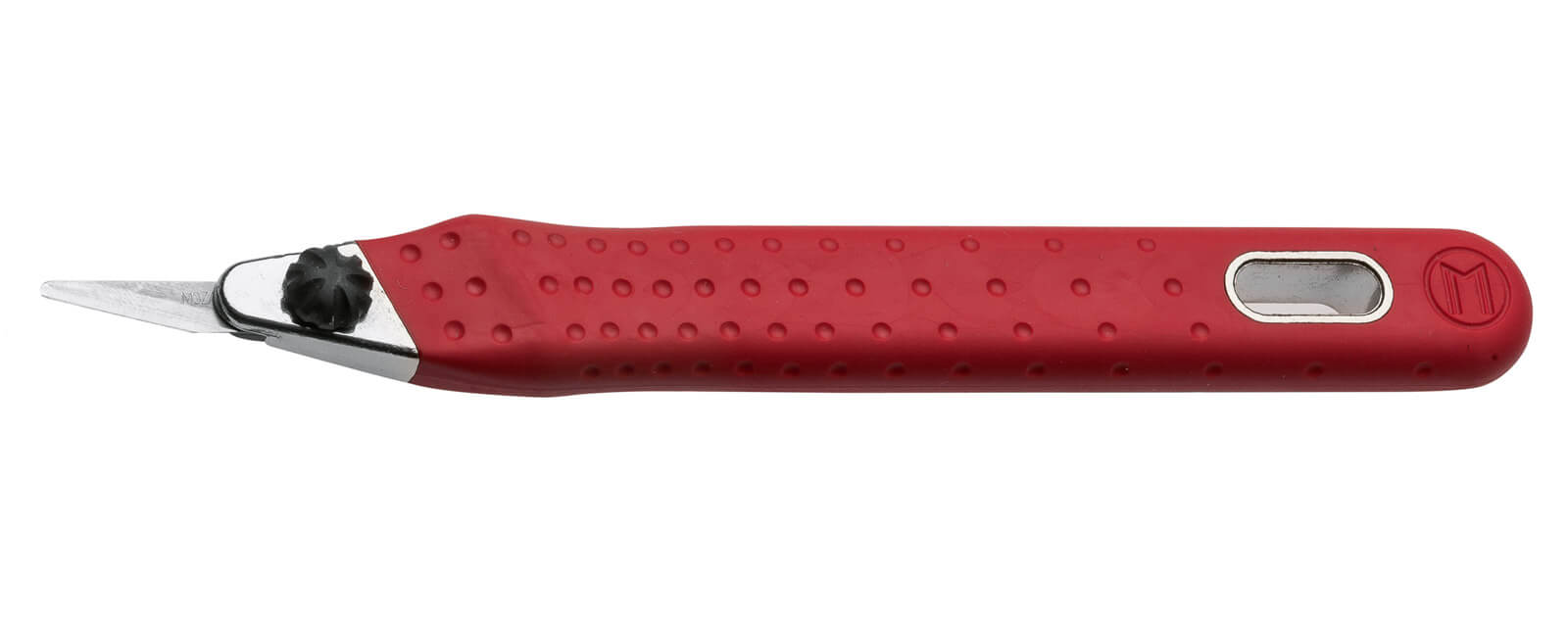 Scalpel grippy knurled wheelBlade change possible€8.18 excl. VATView S071A
 Scalpel flatBlade change possible€6.85 excl. VATView S070
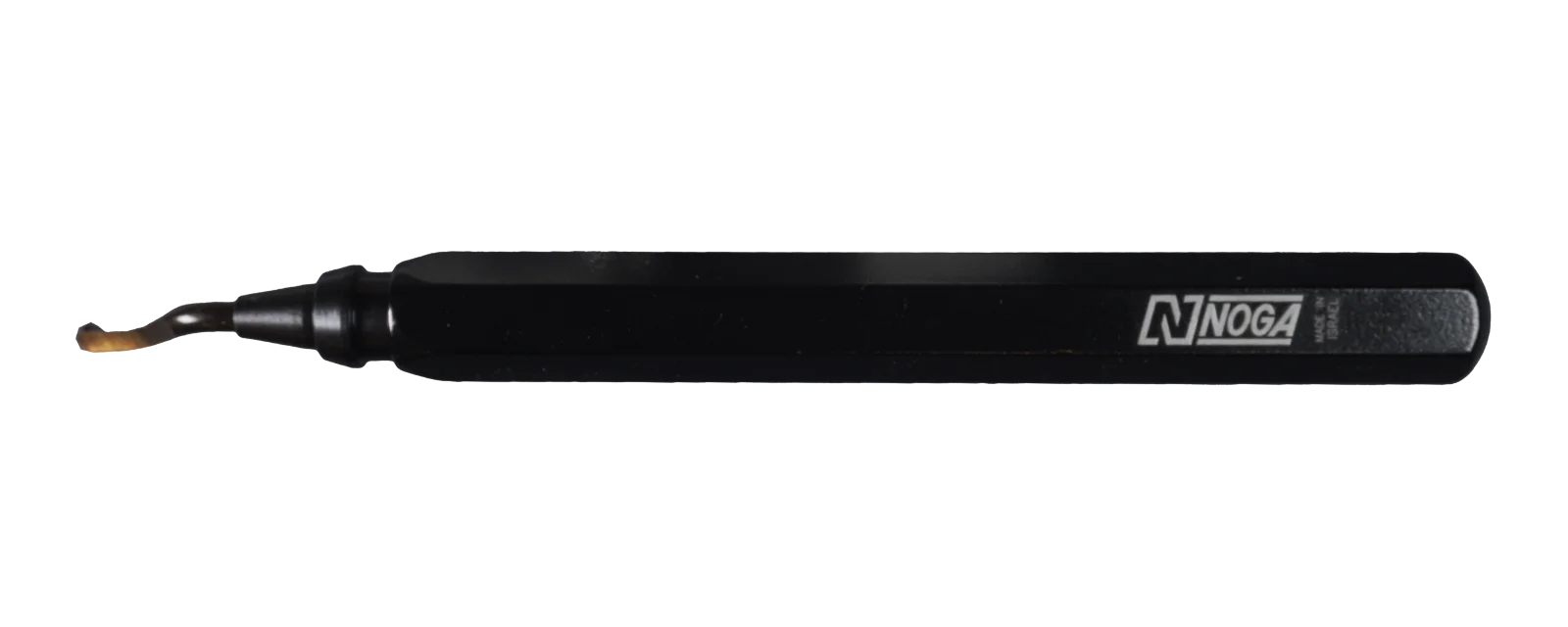 RB1000Blade change possible€10.58 excl. VATNogaView S078
 NG1003Blade change possible€16.79 excl. VATNogaView S079
 Ceramic deburring toolconcealed bladeBlade change possible€19.99 excl. VAT
 View S10482
 Deburring tool with blade retractionBlade retracted manuallyCutting depth 18 mmBlade change possible€11.99 excl. VAT
 View SMR100

 Pen Cutter manualBlade retracted manuallyCutting depth 11 mmBlade change possible€13.29 excl. VATView U011
 Pen Cutter automaticautomatic blade retractionCutting depth 11 mmBlade change possible€12.98 excl. VATView U008
 Safety Cutter 00200Safety blade made of ceramicCutting depth 2 mmDisposable – no blade change€5.99 excl. VATView S072
 Micro ceramic knifeSafety blade made of ceramicCutting depth 2 mmDisposable – no blade change€4.79 excl. VATView SO400
 Seam ripper 10596Blade retracted manuallyBlade change possible€15.00 excl. VATView S10596


 universalPremium carbon steelplain, double-bevelfrom €6.65 excl. VATView K091
 pointed, shape F3Carbon steel C125 (high quality)plain, single-bevel, 2 facetsfrom €5.50 excl. VATView K097
 rounded, shape F4Carbon steel C125 (high quality)plain, single-bevel, 2 facets€24.37 excl. VATView K098
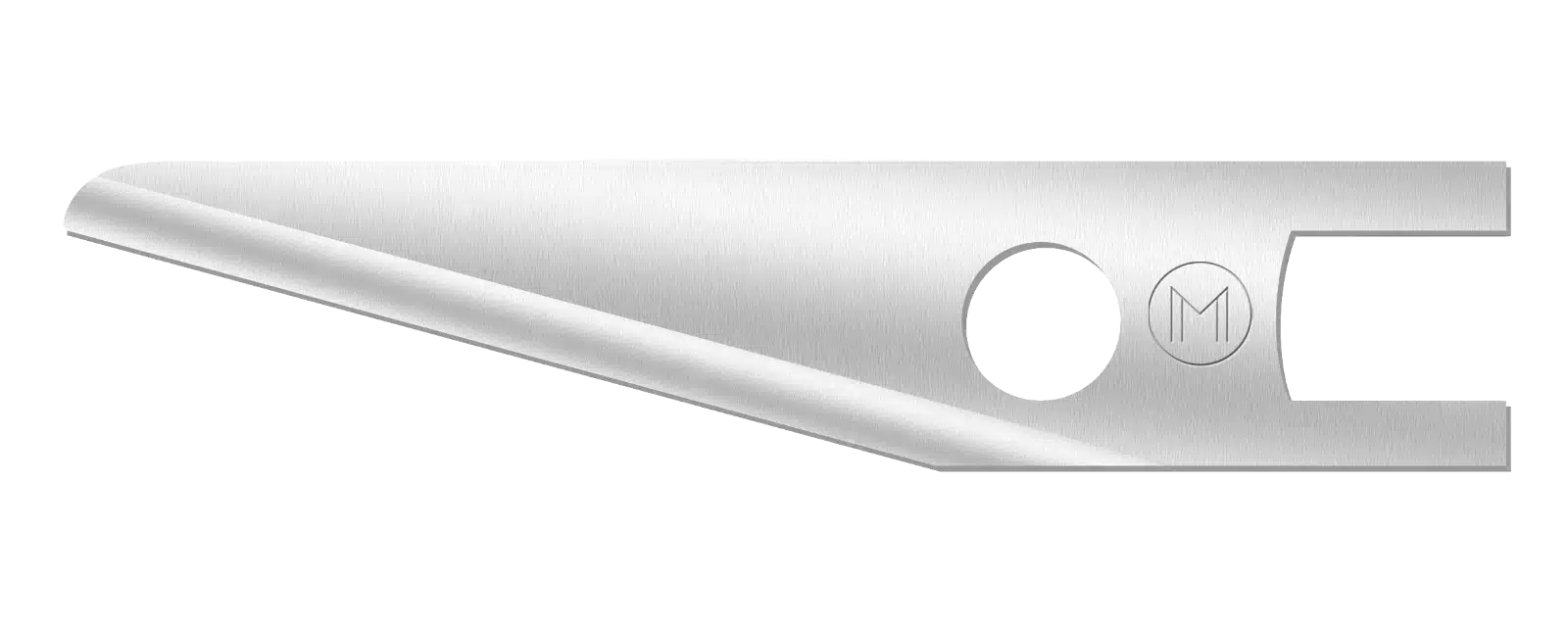 short, shape PB1Carbon steel C125 (high quality)plain, single-bevel, 2 facets€24.37 excl. VATView K099
 Hook shape F18Premium carbon steelplain, double-bevel€30.62 excl. VATView K096
 Shape KB4-SPremium carbon steelplain, double-bevel€3.62 excl. VAT
 View K092
 Convex KB4-RPremium carbon steelplain, double-bevel€4.09 excl. VATView K094
 Chisel shape KB4-FPremium carbon steelplain, double-bevel€3.74 excl. VATView K095
Scalpels | Guide – comparison – tests
Medical scalpels, craft knives and deburring tools: differences, blade shapes and buying criteria.
For particularly precise cutting work, a scalpel is used in professional activities. Besides the large field of medical scalpels these are often also deburring knives, craft knives and hobby knives.
Note: CURT sells scalpels for commercial applications, not for medical use. The sections on medical scalpels serve as orientation.
Medical scalpels
Medical scalpels for making clean and smooth cuts are used above all in the following areas:
Surgical scalpels
Used in operations for cutting or severing skin, muscle tissue and fat.
For many years scalpel blades have no longer been resharpened for reuse here. Instead either disposable scalpels or replacement blades are used. The cost of replacement blades has become so low that cleaning, sterilising and resharpening no longer pay off. Disposable scalpel means that either the blade is firmly connected to a plastic handle and both are properly disposed of after use, or only the blade is disposed of accordingly after use. The handle is then reprocessed and can be used again with a new scalpel blade.
Dissection instruments
In the study of human and veterinary medicine the dissection course is among the things on the schedule. A set of dissection instruments is also needed for this. Besides tweezers, scissors, dissecting needles and clamps, above all a scalpel or several scalpels are necessary. Reusable scalpels, i.e. scalpels with a replacement blade, are mostly used here.
Autopsies
Scalpels are also used for autopsies. In contrast to operations, however, mostly reusable scalpels rather than disposable scalpels.
Scalpels for foot care and podiatry
For scraping off callus, removing corns etc., scalpels, mostly with a belly-shaped replacement blade, are used in addition to callus planers.
What should you look for when buying a medical scalpel?
We recommend proceeding as follows when choosing:
Disposable or reusable scalpel
Disposable handle + fixed blade
With the classic disposable scalpel the blade is firmly connected to the handle, so that both are safely disposed of after use.

Disposable safety scalpel
A special form of the disposable scalpel is the safety scalpel. Here either the blade is spring-loaded and can be retracted into the handle after use, or a carriage moves forward over the blade and safely covers it when not in use.

Reusable handle + disposable blade
The most common variant is the scalpel with a stainless steel metal handle and replaceable scalpel blades. While in the non-medical field the blades are mostly used until they are dull, in the medical field the blades are disposed of after use for hygienic reasons.

Blade shape / blade figures – overview
After choosing the handle, the right blade shape has to be chosen. For medical scalpels the shapes are standardised or harmonised across manufacturers.
The different shapes (figures) come in two different sizes (volume of the blade or height of about 7 mm or about 9 mm).
- The smaller size includes all blade figures numbered 10–16, 27–29 and 40.
- The larger version includes the blade figures no. 18–26 and 36.
The most common figures are:
- Figure 10 (small volume) / 20 (large volume): a belly-shaped scalpel blade for long, mostly straight cuts.
- Figure 11 (small blade volume) / 25 (large volume): a straight, pointed blade for precise and fine cuts in tight spaces.
- Figure 12 is shaped like a hook and serves mainly as a thread opener.
For these three shapes there are then various variants with
- different lengths of the cutting edge (11, 11a, 11b, 25),
- different radii of the curved figure 10 (figures 13, 15, 18, 19, 40 and 42).

Blade mount / manufacturer / brand
The standard blade shape is offered by the three big brand manufacturers. With these the blade mount and the shape are exactly the same, so that they are compatible with each other (blade to handle):
- Aesculap (Germany)
- Swann-Morton (United Kingdom)
- Feather (Japan)

This blade mount is also used by other manufacturers such as Heiko Wild, Dahlhausen, Mey, Tegler or Heinz Herenz.
Since especially blade mounting and blade changing can be dangerous with this design, some innovative companies such as Otto Rüttgers (Solingen) and Bayha have made improvements here. With the handles of these manufacturers the blade can be changed more easily and more safely. However, only the scalpel blades of these manufacturers fit the respective handles.
Stainless steel or carbon as material
Next you have to decide on the blade material.
Stainless steel blades
- do not rust
- are somewhat softer in the material
Carbon steel
- is not stainless
- is harder and can therefore be ground sharper
Since the blades in the medical field are almost always used as disposable blades, rust is not an issue. Carbon blades are harder because of the material composition (higher Rockwell number) and can therefore be ground sharper. That is more relevant for medical scalpels. The choice therefore mostly falls on carbon scalpel blades.
Sterile or non-sterile
To rule out any contamination or cross-contamination, most medical scalpel blades are sterilised and individually packed.
Quality of the scalpel blade
While with cutter knife blades it is mainly about blade life, i.e. how long the blade can hold a certain sharpness, with scalpel blades it is mostly about a very high initial sharpness.
Craft knives
Applications for the craft knife
The scalpel for crafts or the craft knife is used for various applications, for example for:
- Model making
- Restoration
- Paper work
- Car detailing
- cutting out stencils
- cutting vinyl film
- Foam cuts
- Jewellery work
- making Christmas decorations
- Gardening
While a cutter knife with a snap-off blade is suitable for coarser cuts when crafting, a knife with the following is recommended for very precise cutting tasks:
- a slim and very ergonomic handle (similar to a pen),
- a short, very firmly seated blade,
- a very pointed blade and
- a very sharp blade.
And the craft knife is the ideal tool for that.
Since, unlike a medical scalpel, a craft knife does not have to be sterile, it usually has a round, fluted handle and very often also a 2K soft component (“SoftGrip”) for a more pleasant hand position.
At 0.5 mm or 0.6 mm the blades are also somewhat thicker and thus more stable than surgical scalpel blades, which are only 0.38 mm thin.
With craft knife blades, too, there is a large selection of blade shapes or figures. Unlike medical scalpel blades, however, these are not standardised and not uniform in their designation.
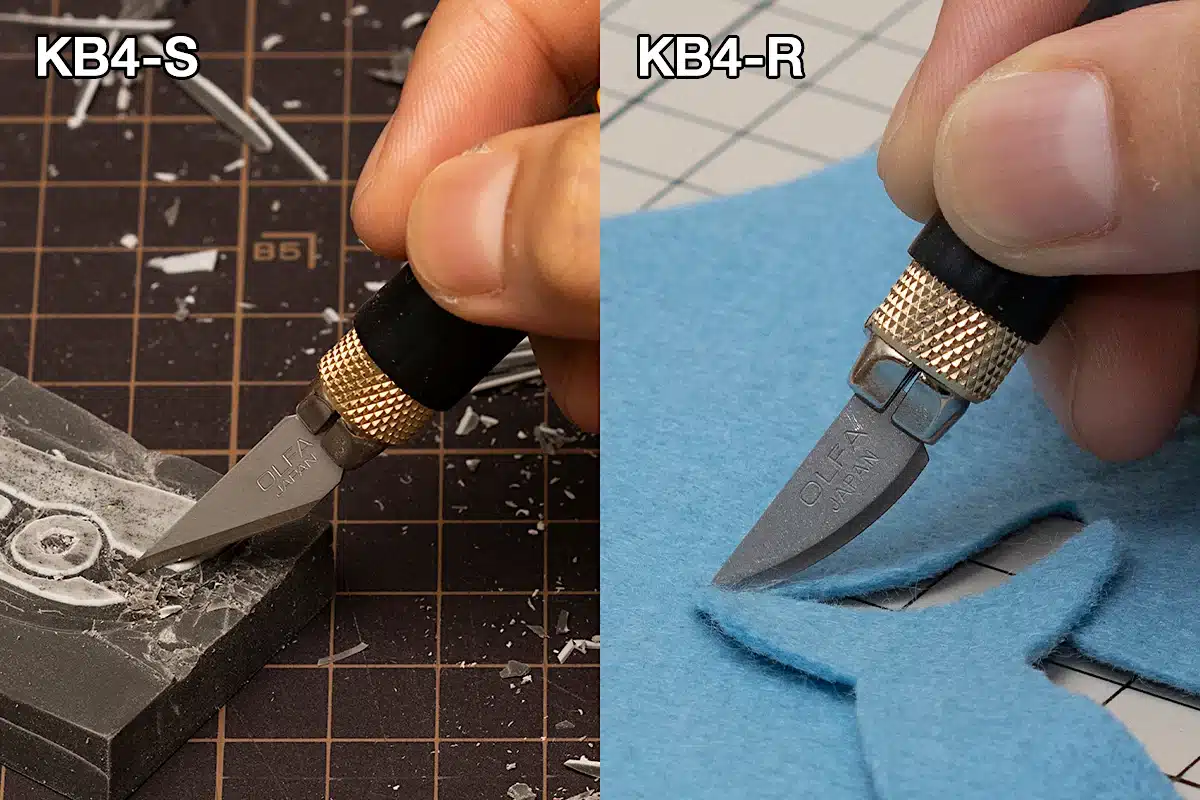
What matters with the craft knife blade?
Blade shapes on craft knives
By far the most commonly used shape is the small blade with a long, straight cutting edge and a pointed angle at the tip. In shape it resembles figure 11 of the medical scalpel blades.
Other shapes are blades with:
- different angles and lengths of the straight cutting edge,
- belly shapes and
- chisel shape.
Blade size on craft knives
What is important for you when choosing is the blade mount, i.e. the part of the blade that is pushed into the handle to be locked there. With craft blades, too, there are two different sizes:
Standard
- 5.8 mm high
- 0.5 mm thick
Large
- 8.8 mm high
- 0.6 mm thick
The large blades are even more stable and thus the right choice for stronger cuts, for example in woodworking or in restoration work on masonry.
Blade material
There are essentially three materials for craft knife blades.
Carbon steel (standard)
- particularly sharp, depending on quality (carbon content, heat treatment or manufacturing process)
- high blade life, i.e. the time the blade stays sharp
Stainless steel
- rustproof
- somewhat softer than carbon steel
- only sensible for special applications on craft knives
Ceramic
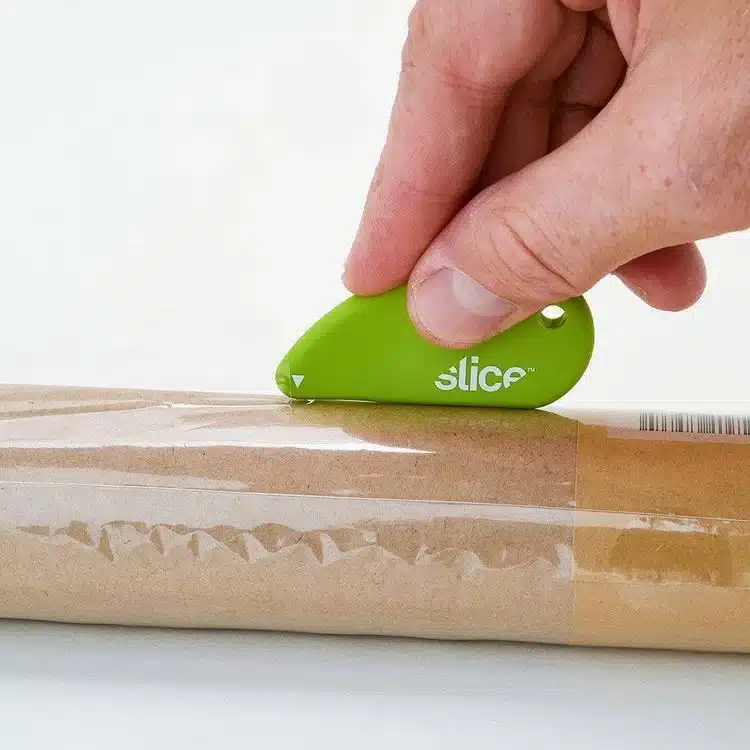
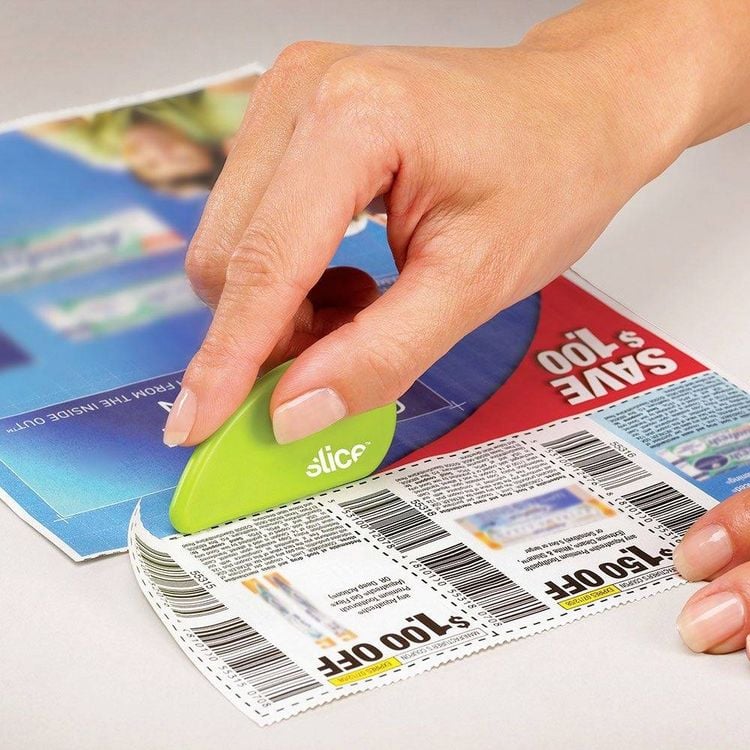
- There are two kinds: sharply ground blades and Slice ceramic safety blades.
- Sharply ground ceramic blades can be even sharper than carbon steel blades, but break very easily under side forces or “chopping” movements.
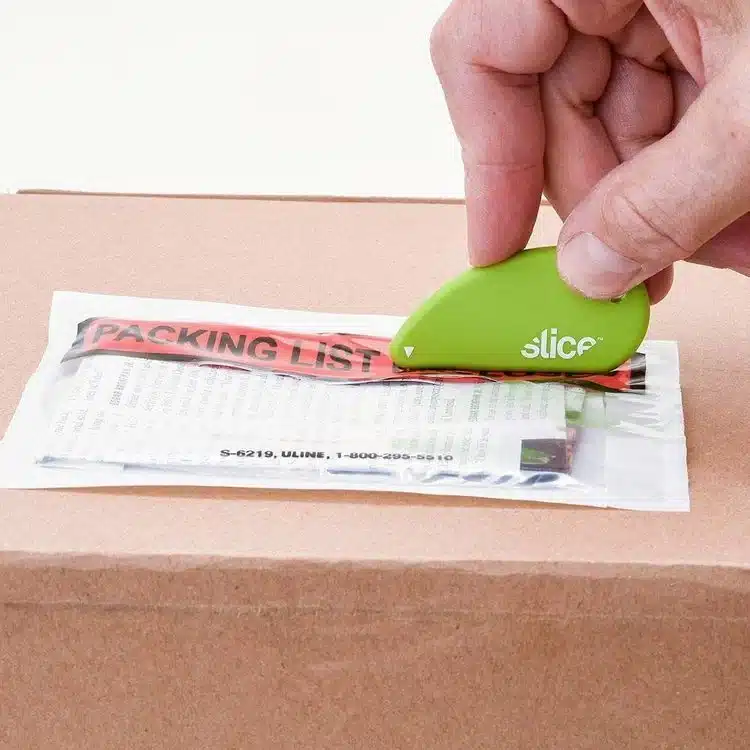
- Slice ceramic safety blades offer the great advantage that they protect against cuts, for example also with children. In theory ceramic blades from Slice also stay sharp much longer than carbon steel blades. In return they are considerably more expensive.
Blade selection – our CURT recommendation
For the broad mass of all applications a small, pointed blade made of carbon steel is the best choice. There is a very big difference here between cheap no-name blades and high-quality brand blades, for example from OLFA. They are all sharp at the start, but cheap blades lose sharpness very quickly.
If cuts are a relevant topic for you, the Slice ceramic craft blades are very recommendable.
Handle of the craft knife
With the handle there are some technical points you should pay attention to. The main criterion, however, is design and ergonomics, and here tastes are very individual.
Technical aspects of the handle
Handle material: Most craft knives are made of aluminium. That is very stable, light and inexpensive to manufacture. Since no great forces act on the handle, however, plastic handles are in no way inferior to metal handles in terms of stability or durability. Choose the handle that sits best in your hand. In our tests we did not have a single handle that gave us the impression of sitting noticeably badly in the hand.
Blade holder: There are two different blade sizes, 5.8 mm and 8.8 mm. Depending on the blade you of course need the matching handle, or the other way round. The smaller 5.8 mm blade is the one you find most often on the internet. The blade is clamped in a clip. These clips are mostly made of metal (aluminium). Make sure that no plastic is used here, as it wears more easily in the long run and the blade then no longer sits firmly. A few craft knives have a mechanism here that makes tightening the blade holder safe and easy. It is very important that the blade holder does not slowly loosen during work. Unfortunately that happens again and again with many of the cheap craft knives. The OLFA AK-4 was particularly positive in our test.
Roll-away protection: Most craft knives are round and therefore roll away easily. That can be annoying and even dangerous if the craft knife rolls off the table and you injure yourself on the blade. So look either for a holder for the handle or for a handle that has roll-away protection built in.
Cap: Only on very few craft knives can the blade be retracted into the handle. Almost all of them therefore have a protective cap, usually made of simple, transparent plastic. That is certainly not decisive when buying, but it is annoying if it does not sit firmly, comes off too easily or the blade even gets spiked in the cap.
Deburring knives
Besides the medical scalpel and the craft knife, the deburring knife is the third design of a scalpel knife. The deburring tool is used above all in manufacturing, in particular in plastic injection moulding. For removing plastic burrs or for cutting free individual injection-moulded parts or prototypes, the plastic deburring tool is the ideal tool. At 0.5 mm the blade is thicker and thus more stable than that of a medical scalpel. In addition, at about 19 mm the blade is even shorter than the blades of the other scalpel designs. That also has a reason: hardened plastic can be quite firm, and so larger forces act on the blade when deburring.
These professional deburring tools are used intensively and must therefore be high quality, ergonomic and durable.
The best models we know are the handles from Mozart and Martor, each from Solingen. Both manufacturers also have their own blades of the same high quality.
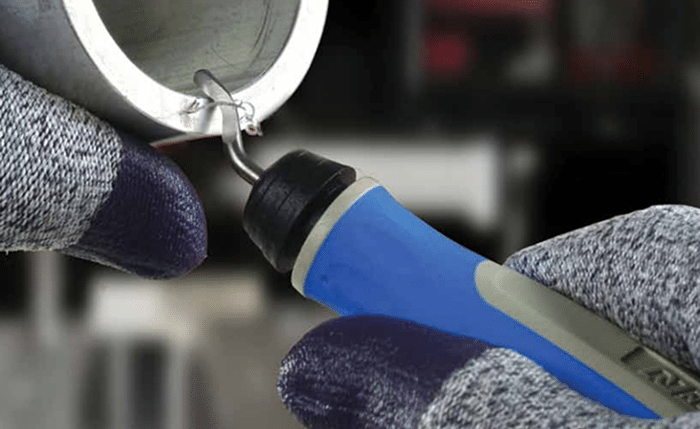
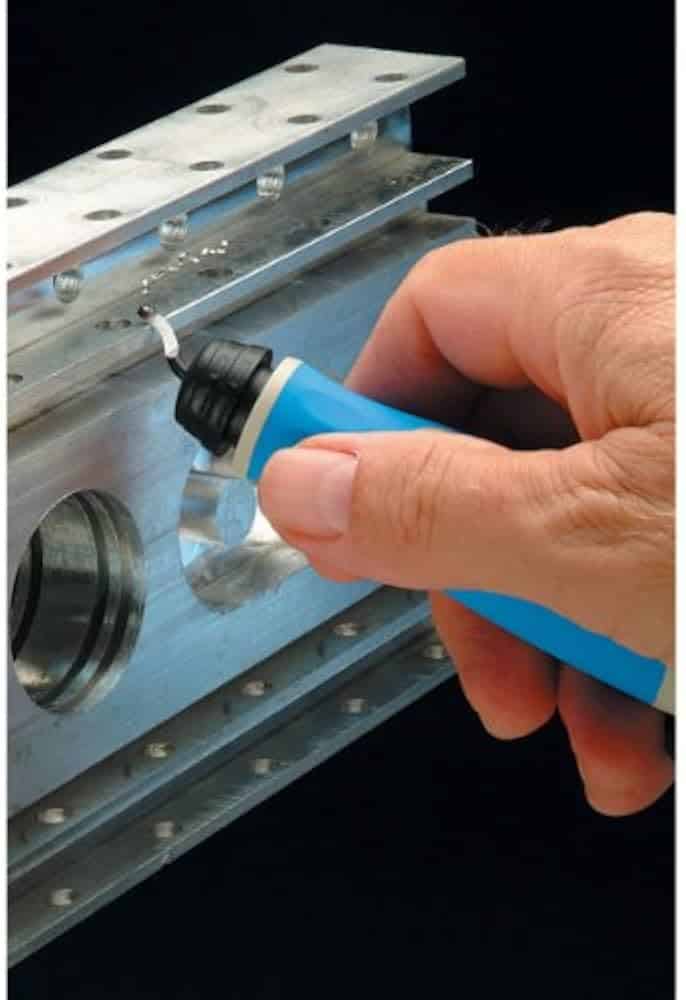
Of course these deburring knives can also be used as craft knives. Mozart offers different blade shapes for the deburring tools. The premium deburring tools from Mozart (S070 flat, S071 grippy, S071A grippy with knurled wheel) take scalpel blades. For deburring tools with a swivel blade Noga has its own range: Noga manufacturer page.
Which knife suits your task? We advise independently of manufacturers, by phone, by video or on site: 0211 – 97174619.
Scalpel manufacturers
 Manufacturer page
Mozart
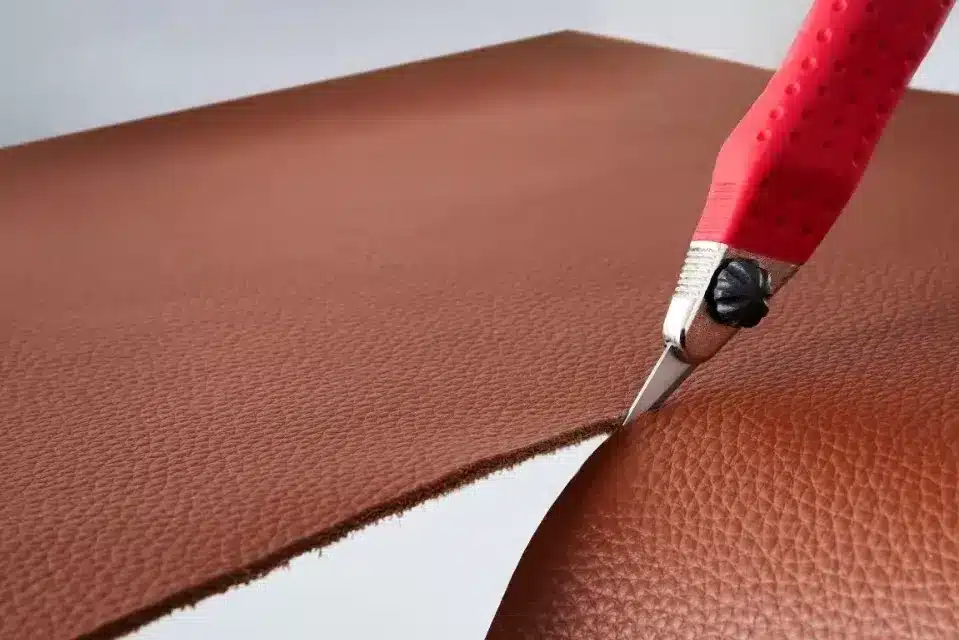
Mozart offers scalpels and scalpel blades in the classic figures.
To the manufacturer page →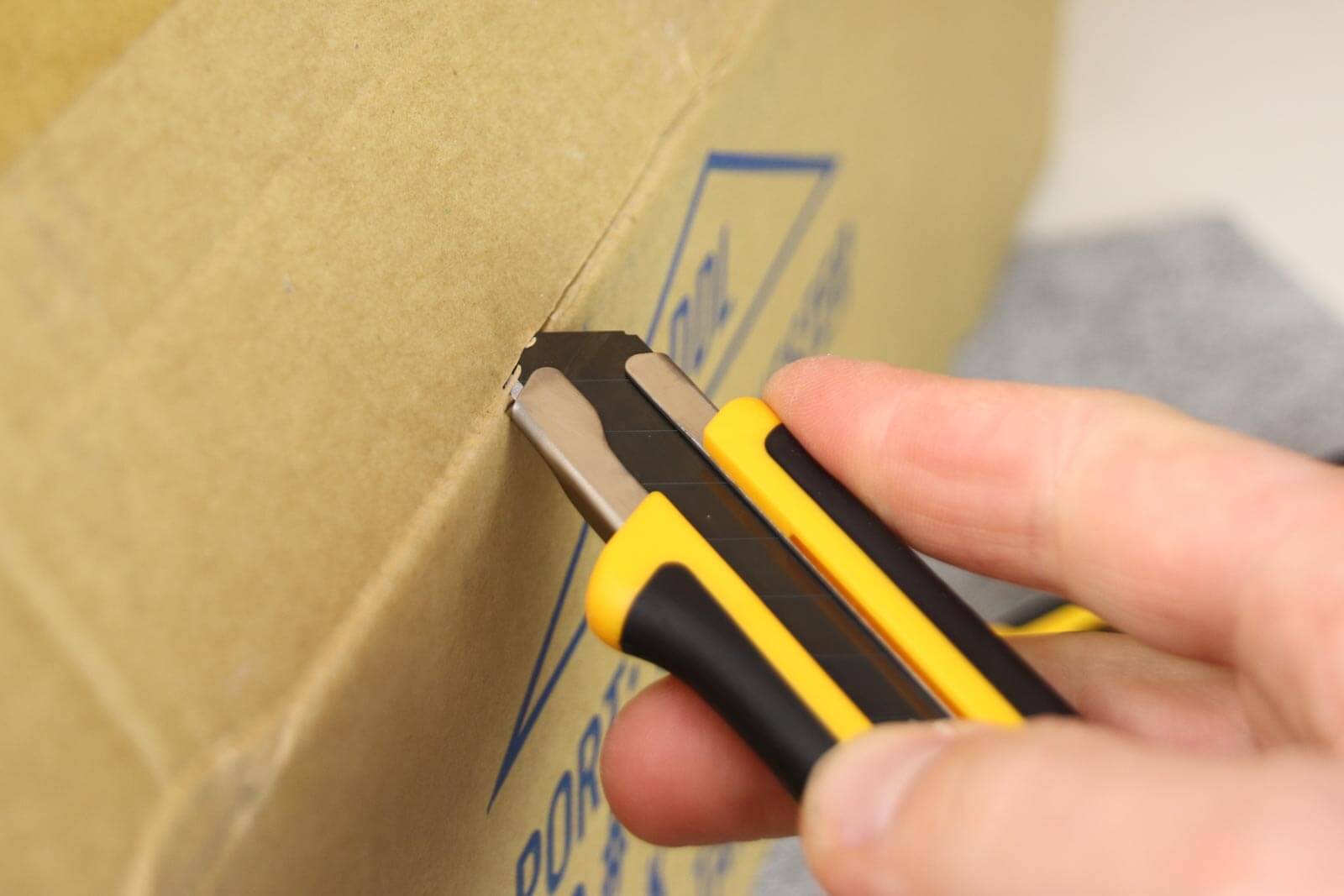
 Manufacturer page
OLFA
OLFA is the inventor of the cutter knife with a snap-off blade and also offers rotary cutters, craft knives and scalpels.
To the manufacturer page →
 Manufacturer page
Slice
Slice makes knives and scrapers with ceramic blades that are meant to protect against cuts.
To the manufacturer page →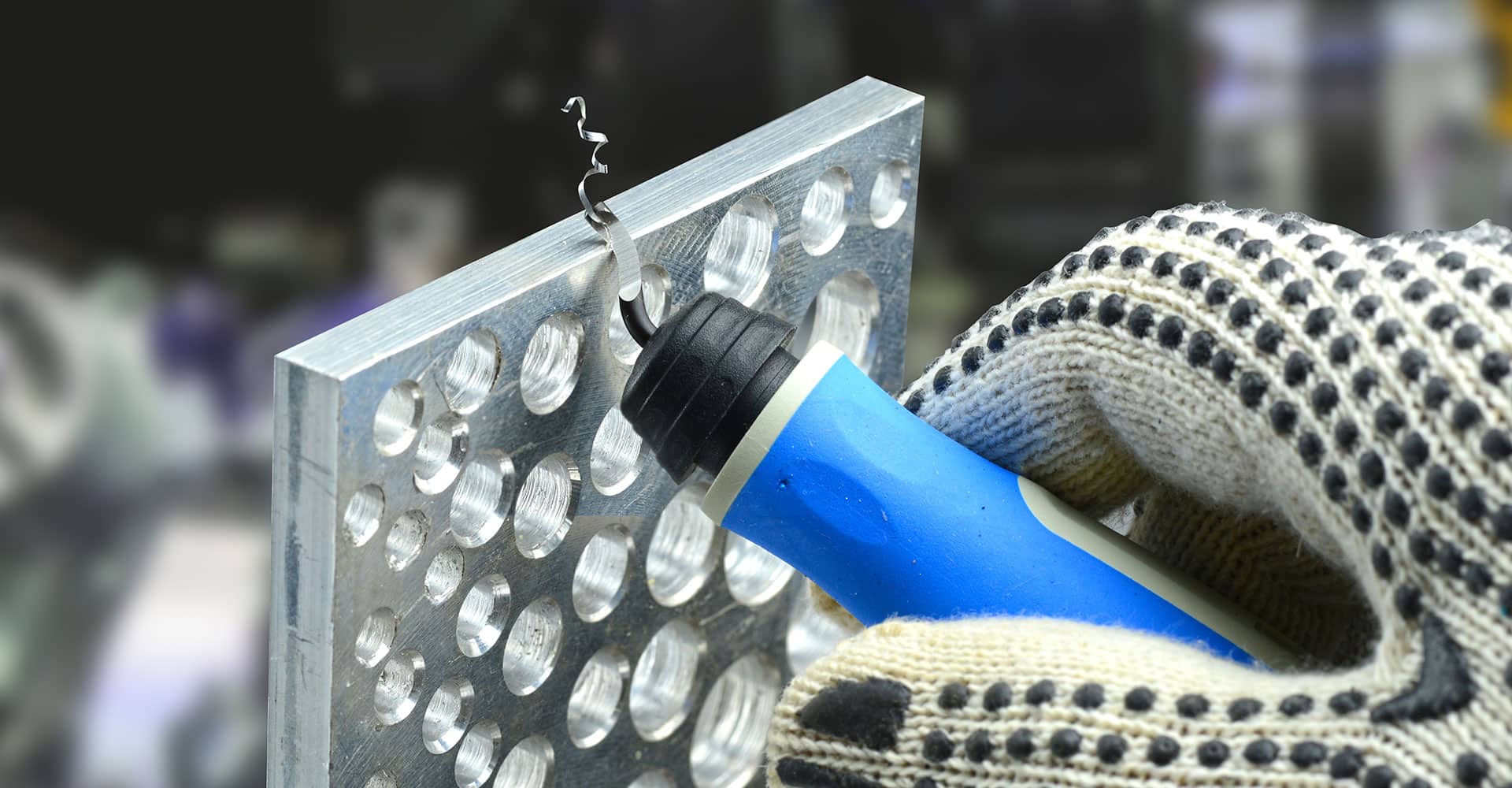
 Manufacturer page
Noga
Noga makes deburring tools with swivel blades.
To the manufacturer page →