

Carpet knives for professionals
Carpet knives with a trapezoid or hook blade for carpet, floor coverings, roofing felt and cardboard – with the differences from cutter knives, safety knives and scalpels, and the matching blade.
Carpet knives in our shop




 Hook blade€5.07 excl. VAT
 View K017
 very high initial sharpnessCarbon steel, black coatedsmooth, double-sided€4.04 excl. VATView K015
 very long edge lifePremium carbon steel, tungsten carbide coatedsmooth, double-sided€10.15 excl. VAT
 View K014
 universalPremium carbon steelsmooth, double-sided€2.66 excl. VATCURTView K011
 rounded tipsCarbon steelsmooth, double-sided€2.90 excl. VATView K013
Carpet knives – guide
Differences and buying advice: carpet knife, cutter knife, safety knife and scalpel compared, hook blade or trapezoid blade, and tips for cutting carpet.
A carpet knife makes sense whenever cutting takes a lot of force and the blade must not break off. In this guide we show
- how carpet knives, cutter knives, safety knives and scalpels differ,
- when a carpet knife with a hook blade and when one with a trapezoid blade is the right choice,
- how to cut carpet and
- what to look for when buying a carpet knife.

Handle types: carpet knife, cutter knife, safety knife, scalpel
There are many names for cutter knives, carpet knives and related knives. Here you can see at a glance how the four types differ and who mainly uses them. Which handle suits you best, however, always depends on your specific application. We are happy to advise you on the choice.

- Trapezoid or hook blade
- Sturdy metal handle
- For heavy work
- Who: floor layers, roofers, drywall fitters

- Snap-off blade, usually 9 or 18 mm wide
- Blade up to 8 cm long
- Who: tradespeople, home improvers, DIY

- Protection against cuts
- Automatic blade retraction
- Protects the goods when opening
- Who: retail, logistics, production, trades, industry

- Craft knives and deburring tools
- For precision work
- Who: plastics processing, model making, DIY
Carpet knife or cutter knife?
Some people also call a cutter knife with a snap-off blade a carpet knife. In our classification, a carpet knife is always fitted with a trapezoid blade or hook blade. Snap-off blades break off uncontrollably under excessive lateral forces and are therefore not suitable for heavy cutting work. The German dictionary Duden describes a carpet knife as a knife with a replaceable blade.
Carpet knives
- Trapezoid or hook blade without predetermined breaking points, therefore very sturdy
- Blade extends up to approx. 3 cm
- Blade with two cutting edges: turn it over, then replace it
- For carpet, floor coverings, roofing felt, thick cardboard
Cutter knife
- Snap-off blade with predetermined breaking points
- Blade extends 7–8 cm
- Snap off the dull segment and carry on working
- For wallpaper, film, paper, foam
Other names for this type of knife are trapezoid blade knife, carton knife, parcel knife, box opener, utility knife or – with blade retraction – safety knife. Which cutter knife suits your work is shown in the cutter knife guide (in German).
Carpet knife with a hook blade or a trapezoid blade?
The two main shapes of the carpet knife blade are the trapezoid blade and the hook blade. Both fit the same handle as long as the blade holder matches – so you can switch depending on the task.

- Straight cuts, also along a cutting ruler
- Double-seam cut with a new blade
- Scoring wallpaper and skirting boards
- Cardboard, roofing felt, film and paper on rolls

- Gets under the laid carpet
- Pull cut, fast and safe
- Removing old carpet, relief cuts at corners
- Cutting floor coverings to size

- With predetermined breaking points, breaks off under high lateral forces
- Not for carpet knives
- For wallpaper, film, paper, foam

- Extra high safety
- On request only, the handle has to be modified beforehand
The Tajima hook blade (K017) fits the Tajima VRex 102 carpet knife. Which hook blade or trapezoid blade fits your carpet knife is shown by the blade finder in the blade hub (in German).
Carpet knife trapezoid blade: shape, fit, choice
The trapezoid blade is the standard blade in a carpet knife. It has two cutting edges, so it can be used twice: when one side is dull, turn the blade over. Trapezoid blades are not standardised. Whether a blade fits depends on how the handle holds it: most manufacturers hold the blade at the notches on the blade back, but not all of them.
Fit: which blade fits your handle?
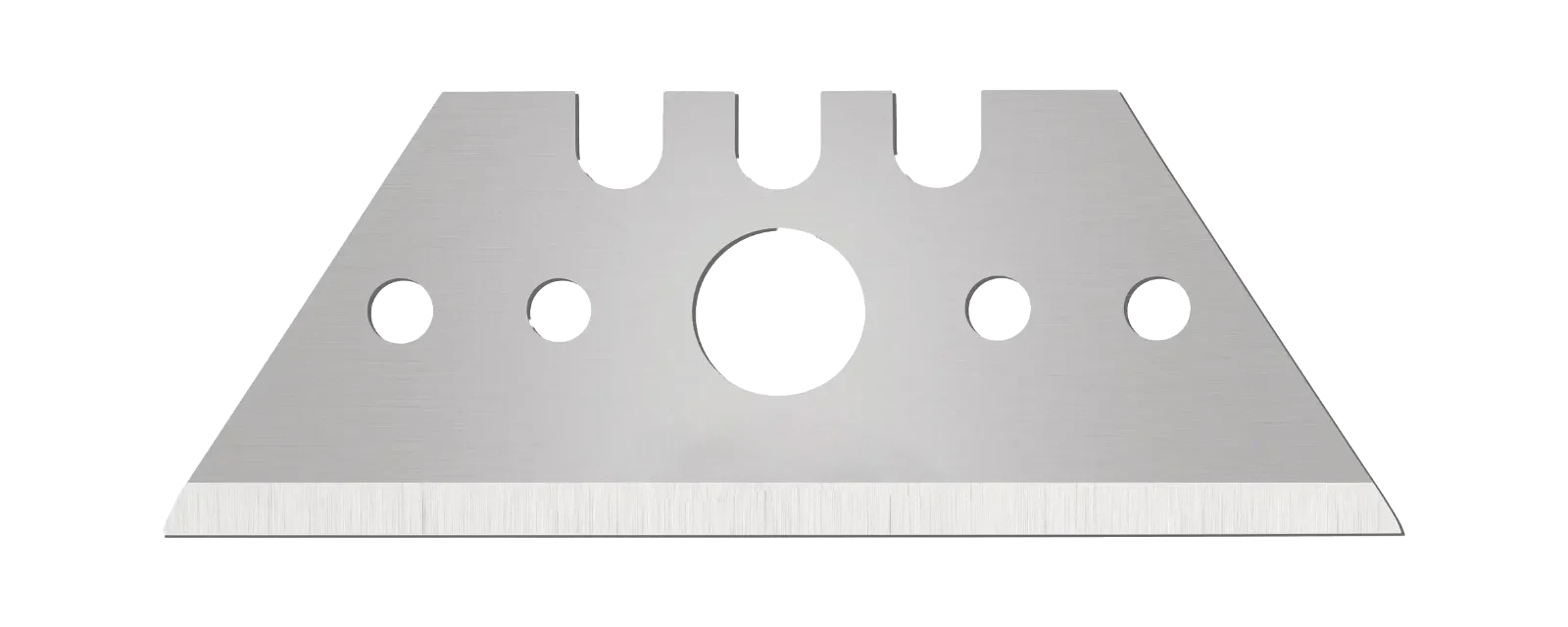
Trapezoid blades look alike – but they do not fit every handle. There is no standard for the hole pattern. The blade carrier holds the blade at notches in the blade back or at large holes in the middle. These are exactly what has to match the handle.
Notches on the back
What countsThe notches at the top of the blade back
Two notches are the most common; there are also blades with three or four. Most handles have enough play to take different notches.
99 hole pattern
What countsTwo large holes in the middle of the blade
Not an official name, but common in the trade – after the MARTOR blade no. 99. Handles that hold the blade at these holes only take blades with exactly this hole pattern. Blades no. 99 and no. 199 also have notches on the back and therefore fit many other handles; the newer no. 60099 has no notches.
52 mm blade with centre hole
What countsThe large hole in the middle, plus the notches on the back
Here too there is no standard; the illustration shows the MARTOR blade no. 5232 as an example. The small holes are irrelevant for the fit.
Choose a quality

- Fits almost all knives
- Brand: Sheffield (UK)
- Black = extra sharp
- Brand: Tajima
- Our best seller

- Hardened with tungsten carbide
- Up to five times longer lasting
- Brand: Stanley

- A little more safety
- Brand: Stanley
Carpet knife with a snap-off blade?
Some people look for a carpet knife with a snap-off blade. There is no such thing: a snap-off blade has predetermined breaking points and breaks off uncontrollably under high lateral forces, which is why it belongs in a cutter knife. For heavy cuts, use a trapezoid blade or hook blade. The section Carpet knife or cutter knife? shows the comparison; you will find all snap-off blades under cutter knife snap-off blades (in German).
All trapezoid blades at a glance: trapezoid blades and hook blades in the blade hub (in German).
Cutting carpet with a carpet knife
A carpet knife is called a carpet knife because this type of knife is best suited to cutting carpet. Cutting carpet takes a lot of force – hence a sturdy metal handle and a blade without predetermined breaking points. Here is how to proceed and which carpet knife blade is used for each step:
- 1
Scoring wallpaper so that it does not tear when the skirting boards are removed.
Trapezoid blade - 2
Removing old carpet. The hook blade gets under the carpet, and a pull cut slices through it quickly and safely.
Hook blade - 3
Relief cuts at the corners when the new carpet is laid.
Hook blade - 4
Trimming the overhang. Press the carpet into the corner with the blunt back of the blade, then cut.
Hook blade - 5
Double-seam cut along a stable cutting ruler.
Trapezoid blade - 6
Scoring skirting boards, finally trimming with the hook blade.
Trapezoid blade, then hook blade
The thicker the carpet, the more force the cut takes. For thick carpet, therefore, use a carpet knife with a metal handle and a fresh blade.
Carpet knives for floor layers, roofers and drywall fitters
Carpet knives are tradespeople’s knives. Which blade and which handle fit depends on the material to be cut:
Floor layers
- Cutting carpet and floor coverings, trimming overhangs
- Hook blade for pull cuts, trapezoid blade for double-seam cuts and skirting boards
- Metal handle and a fresh blade for thick coverings
Roofers
- Cutting roofing felt and membranes to size
- Trapezoid blade in a sturdy metal handle
- Turn and change blades often: roofing felt wears the edge down quickly
Drywall fitting
- Scoring and cutting cardboard, film and insulation
- Trapezoid blade, spare blades in the handle magazine
- Changing the blade without a screwdriver saves time
Warehouse and trades
- Cardboard, rubber, film and paper on rolls
- Here a safety knife with blade retraction is the better choice
- To the safety knives →
Carpet knife recommendation: which model for which job?
We specialise in safety knives, which is why we carry only a few carpet knives that we can recommend without reservation in terms of quality. This is how to place the models:
Heavy cuts, continuous use
- Tajima VRex 102: metal handle, takes trapezoid and hook blades
- To the carpet knives, metal →
Sturdy standard knife
- Carpet knife, metal: metal handle with trapezoid blade, manual blade retraction
- To the carpet knife, metal →
More cut protection
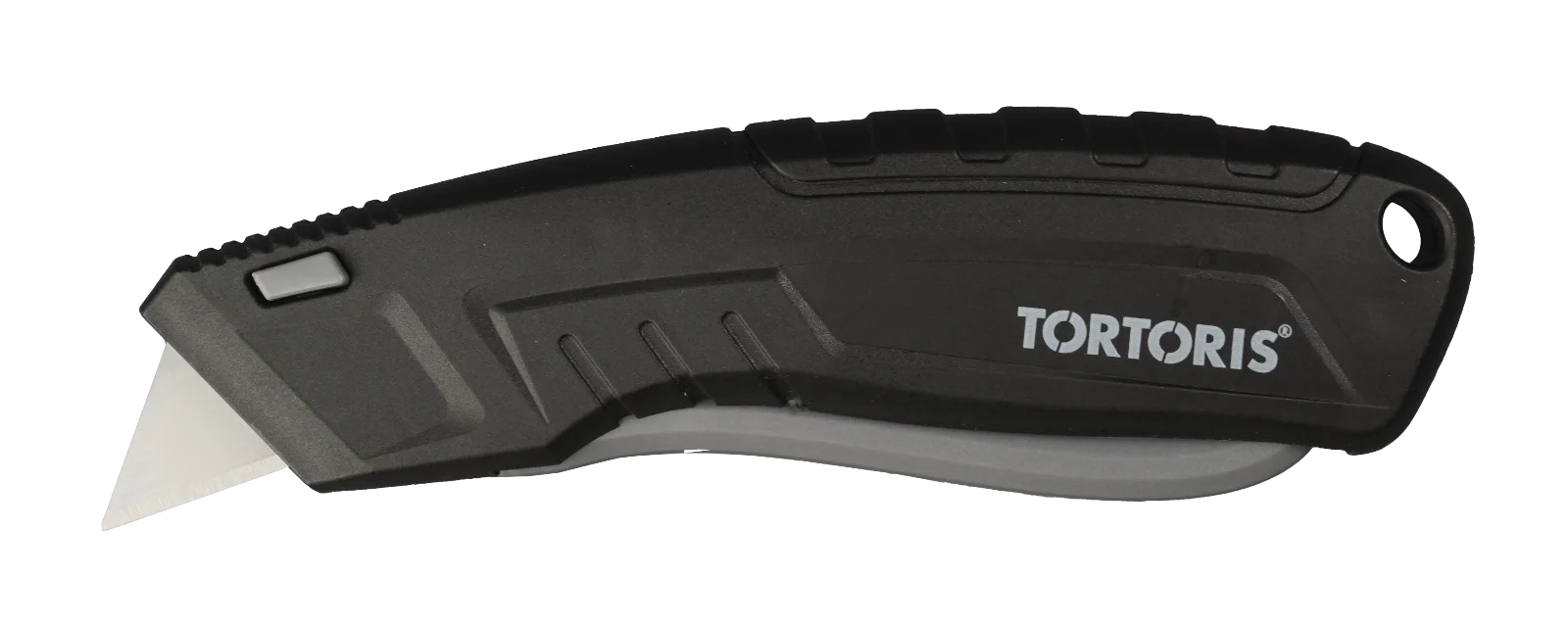
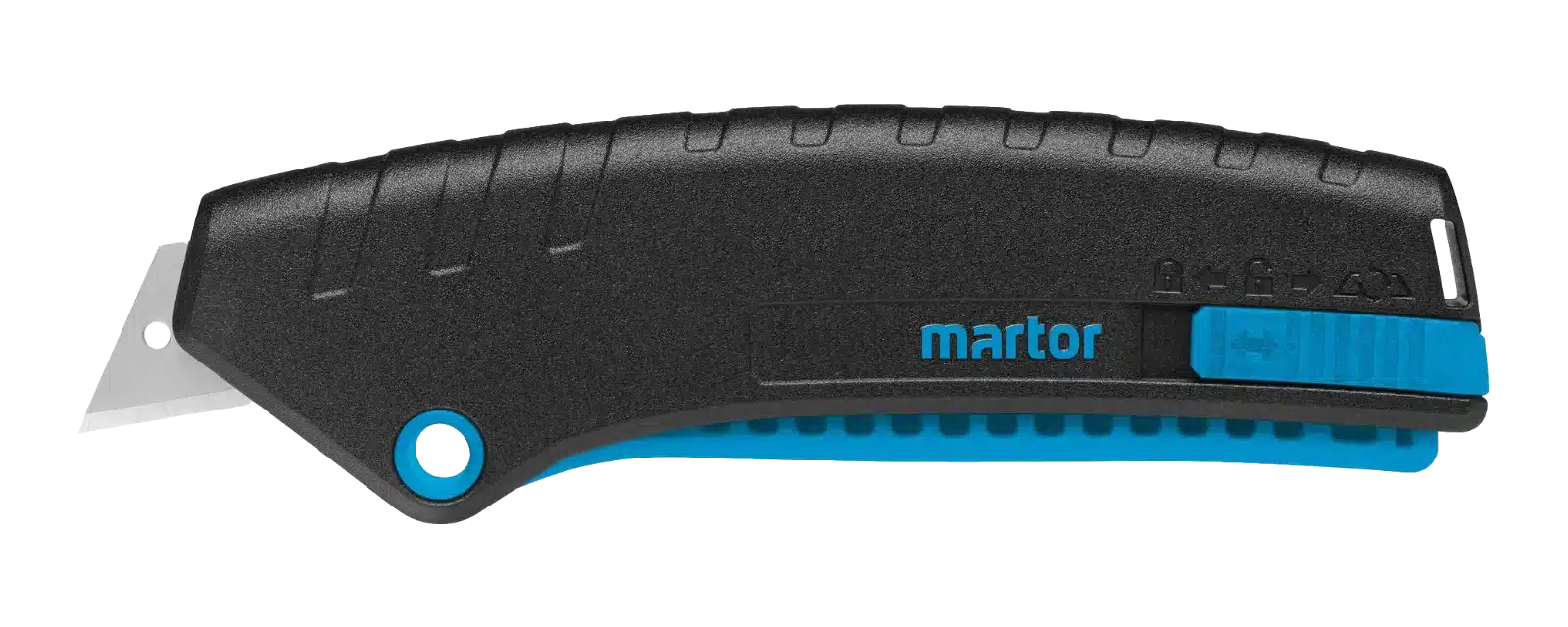
- Tortoris S24, Martor Secunorm Mizar: pliers grip, the blade extends only while you squeeze
- To the pliers-grip models →
Blade quality
- Edge life determines cost-effectiveness
- Our blade test shows the results (in German)
We are happy to clarify which carpet knife suits your work in a conversation: 0211 – 97174619.
What to look for when buying a carpet knife
Robustness
The handle should be made of metal, and so should the blade holder inside the handle – only then does the blade sit securely under heavy force. If the carpet knife has a slider to pull the blade back into the housing after the cut, that should be made of metal too.
There are big differences in robustness: from plastic that breaks quickly through thin sheet metal to sturdy aluminium. A metal handle survives a fall and cuts made with a lot of force. It also hardly wears. This matters at the front, because the housing constantly rubs over the material being cut while the blade is extended. Simple plastic wears down quickly here – at some point the blade protrudes even when retracted, which can lead to serious injuries. A soft grip is not necessary; it is more a matter of taste.
In shortMetal, metal, metal.
Ergonomics
The carpet knife should sit well in the hand so that you can work for a long time without fatigue. A grippy surface prevents it from slipping out of your hand during forceful cuts. If you like a soft grip, it should be where you hold the knife – in our experience, however, it is not a must for a secure hold.
With a professional carpet knife, the blade change works without a screwdriver, simply and quickly. Almost all high-quality carpet knives have space in the handle for spare blades (internal blade magazine).
In shortNon-slip and fatigue-free.
Blade quality
The quality of the carpet knife blade is almost the most important point. It should not only be sharp but also stay sharp for a long time, that is, have a long edge life. Unfortunately, manufacturers do not publish figures for this. We go into detail in our blade test (in German).
Also make sure that the blade fits your carpet knife, that is, that the hole pattern matches the blade holder. Most manufacturers use the notches on the blade back for locking – but not all of them.
In shortEdge life = how long the blade stays sharp.
Carpet knife blades
Trapezoid blades and hook blades come in different qualities in terms of sharpness and edge life. You will find a selection above, under the matching replacement blades; all blades are in the blade hub (in German).
Carpet knife blade | material
Silver
The standard for all carpet knife blades. There are big differences in quality between manufacturers. If you have had good experiences with a brand, stay with it.
Black
Black blades were introduced by various manufacturers some years ago, mainly to set themselves apart from cheap imitations. They are now widespread. They are advertised as particularly sharp, that is, with a higher initial sharpness.
Gold (TiN)
One way to improve edge life is a harder edge: as one of the last production steps, a titanium nitride (TiN) layer is vapour-deposited onto the edge. We cannot recommend this coating as an improvement for carpet knife blades. For soft materials such as film or adhesive tape it makes a lot of sense, and edge life can almost double. With carpet, roofing felt or cardboard, however, the coating wears off quickly and then no longer extends edge life.
Ceramic
Ceramic trapezoid blades with a safety grind (Slice) are also available for carpet knives – from us only on request, because the handle has to be modified beforehand.
Carpet knife blade | changing
When the carpet knife blade becomes dull, it has to be changed. This is possible with almost all carpet knives, and with high-quality ones also without a screwdriver and much faster. If one side of the blade is dull, turn it over first. Only when the second side is dull as well do you fit a new blade. Snap-off blades belong in a cutter knife, not in a carpet knife – use only trapezoid blades or hook blades whose hole pattern matches your carpet knife. Dispose of old, dull blades safely, ideally in a collection box.
Safety carpet knives
In the past, the blade of a carpet knife was fixed in the cutting position and could not be retracted into the handle. For several decades, versions with automatic blade retraction have become established in the workplace: the blade is connected to the housing by one or more springs and snaps back after the cut to prevent cuts. As part of accident prevention, the German statutory accident insurance bodies recommend using at least this kind of safety knife.
Among tradespeople, besides the fixed blade, the manually retractable version is common, in which the trapezoid or hook blade can usually be adjusted to three cutting depths. These knives are often also called tradesman’s knives.
Carpet knife with a pliers grip
- Blade extends only while the handle is squeezed
- Sturdy design with a trapezoid blade
- Tortoris S24 and Martor Mizar
Safety knife
- Automatic blade retraction in several safety levels
- Many models with a trapezoid blade
- For the food industry also metal-detectable (in German)
- To the safety knife hub
Carpet knife | Wiki
The advantages of carpet knives are:
- The blade has no predetermined breaking points and is therefore very sturdy – even if you cut round a curve or cut hard materials such as thick cardboard, rubber, film or paper on rolls.
- Carpet knives are available in many variants as safety knives with automatic blade retraction. This contributes considerably to safety at work.
- With good carpet knives you change the blade in a few seconds without a screwdriver.
- You can use trapezoid blades and hook blades in the same handle.
The disadvantages of carpet knives are:
- There are hardly any disadvantages – which is why this type of knife is the standard version in most companies.
- The cost is slightly higher than for cutter knives with a snap-off blade, because the blade can only be used twice instead of seven times.
- The blade extends a maximum of approx. 3 cm instead of 7–8 cm with a cutter knife with a snap-off blade.
Frequently asked questions – FAQ
What is a carpet knife?
A carpet knife is a work knife with a replaceable trapezoid or hook blade and usually a sturdy metal handle. It is intended for heavy cutting work where a snap-off blade would break.
Which knife is best for cutting carpet?
A carpet knife with a trapezoid or hook blade is sturdier than a cutter knife with a snap-off blade. Cutting carpet takes a lot of force; hook blades are mostly used here.
Which blade fits my carpet knife?
That depends on how the handle holds the blade, because trapezoid blades are not standardised. Most manufacturers hold the blade at the notches on the blade back. Which blade fits which handle is shown by the blade finder (in German).
Is there a carpet knife with a snap-off blade?
No. Snap-off blades have predetermined breaking points and belong in a cutter knife. Carpet knives take trapezoid blades or hook blades.
What else is a carpet knife called?
Many names are in use for work knives with a replaceable blade: carpet knife, cutter knife, scalpel, Japanese knife, safety knife or utility knife. For clearer distinction, we call only knives with a trapezoid blade or hook blade carpet knives.
How do you snap off a cutter knife blade?
A cutter knife has snap-off blades with 6–13 predetermined breaking points, depending on the blade size. You can break off the blade at these points, for example with a blade snapper, pliers or against a hard object. We explain this in more detail in the cutter knife guide (in German).
Which knife suits your task? We give manufacturer-independent advice by phone, by video or on site: 0211 – 97174619.
Manufacturers of carpet knives
 Manufacturer page
Tajima
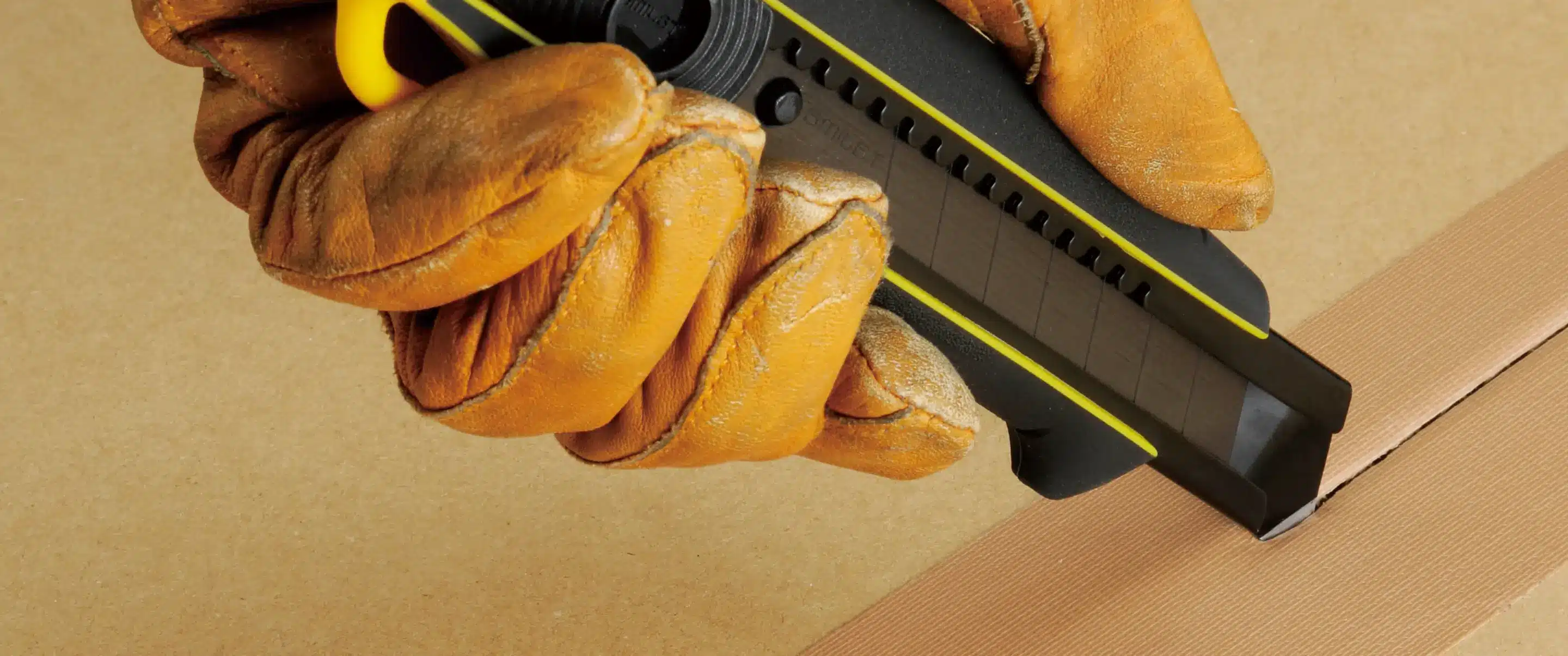
Tajima is a Japanese manufacturer of cutter knives, shown here with the VRex 102 carpet knife and the matching V-Rex blades.
To the manufacturer page →
 Manufacturer page
martor
Martor is the European market leader for safety knives, shown here with the Secunorm Mizar with a pliers grip.
To the manufacturer page →