This page is an automatic translation of the German original. The German text is the binding version. View German original
Guide · Decision aid

BoxCutter Test 2025: Small, safe, sharp – the ranking from the comparison

Which safety box cutter is really recommendable? In our big BoxCutter Test 2025 we tested 19 current mini disposable models from industry, retail and the online market under real conditions. We tested sharpness, blade life, ergonomics, safety and handling – with partly surprising results. Some box cutters impress with excellent workmanship and cut quality, others fail after only a few cuts.

What matters most to you?
Friedrich Weitzel
Friedrich WeitzelSafety knife expert · Updated: 7 October 2025

All 19 at a glance

Each row a knife, each cell a test result. Tapping a name jumps to the profile.

Tick knives and compare them side by side, up to 3.
KnifeGradeHookFingerCut qualityHandlingPiercingCuts
1Mozart U-CUT1.0safesafeoutstandinggoodgood1146
2OLFA SK151.3safesafevery goodvery goodvery good1030
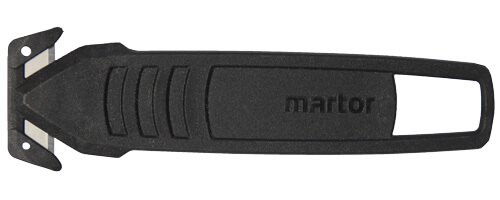
3Martor Secumax 1451.4safesafevery goodgoodvery good934
SCardinal DUO1.4 or 3.2safeunsafevery goodpoorpoor540
4Martor Secumax 1481.9safesafegoodvery goodvery good800
5Klever Koncept2.0safesafemediumvery goodgood980
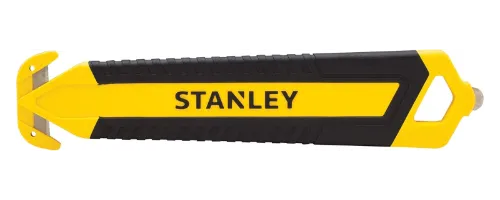
6Stanley STHT103593.0safesafegoodsatisfactorysatisfactory660
7Cardinal Cutter3.3safesafebadpoorpoor600
8XW BoxCutter3.9safesafebadcriticalcritical350
9Stanley STHT103604.0safesafegoodvery goodsatisfactory264
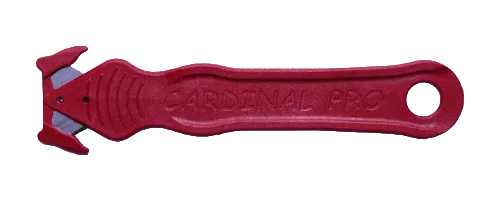
10Cardinal PRO4.1safesafegoodsatisfactoryvery good292
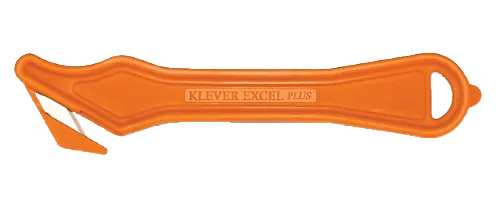
11Klever Excel Plus4.7safesafepoorsatisfactorysatisfactory45
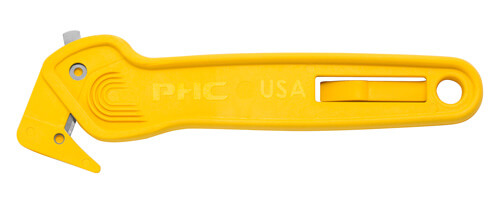
12PHC EBC 14.9safesafepoorvery goodvery good100
13Klever Excel5.0safeunsafepoorsatisfactoryvery good87
14Klever Kutter5.6unsafesafegoodgoodgood910
15ADCO Easycut 80005.6unsafeunsafegoodgoodvery good642
16Tovia BoxCutter6unsafeunsafegoodvery goodsatisfactory260
17XW 7846unsafeunsafebadvery goodgood150
18Noname BoxCutter6unsafesafepoorsatisfactorysatisfactory0

✓ safe / very good good satisfactory ✕ unsafe / poor

Profiles of all knives

1
1.0very good
Mozart U-CUT

Mozart U-CUT

Price€2.50
Cuts1146
Force20 N
Cutting channel5.4 mm
  • ✓Cuts (1146 – outstanding)
  • ✓Very clean cuts
  • ✓Low cutting resistance
  • ✓Good ergonomics
  • ●Hook blade
To the product
2
1.3very good
OLFA SK15

OLFA SK15

Price€2.00
Cuts1030
Force25 N
Cutting channel4.1 mm
  • ✓Cuts (1030 – outstanding)
  • ✓Low cutting resistance
  • ✓Comfortable handle
  • ●Stainless steel blade
To the product
3
1.4very good
Martor Secumax 145

Martor Secumax 145

Price€1.97
Cuts934
Force27 N
Cutting channel3.8 mm
  • ▸Cuts (934 – very many)
  • ✓Very clean cuts
  • ✓Safest knife
  • ▲Tape slitter hardly usable
To the product
Special
1.4 or 3.2n/v
Cardinal DUO

Cardinal DUO

Price€1.99
Cuts540
Force25 N
Cutting channel4.4 mm
  • ▸Cuts (540 – many)
  • ✓Very clean cuts
  • ✕Unsafe in the finger test
  • ✕Very small handle
  • ●Single-sided blade (pull & push cut)
4
1.9good
Martor Secumax 148

Martor Secumax 148

Price€2.36
Cuts800
Force26 N
Cutting channel6.2 mm
  • ▸Cuts (800 – many)
  • ✓Good ergonomics
  • ✕No tape slitter present
5
2.0good
Klever Koncept

Klever Koncept

Price€2.55
Cuts980
Force32 N
Cutting channel4.1 mm
  • ▸Cuts (980 – very many)
  • ✓Good ergonomics
  • ▲Higher cutting resistance
  • ●Large handle
To the product
6
3.0satisfactory
Stanley STHT10359

Stanley STHT10359

Pricen/v
Cuts660
Force30 N
Cutting channel4.3 mm
  • ▸Cuts (660 – many)
  • ✕Sharp-edged grooves
  • ●Large handle
  • ▲Not available in Europe
7
3.3satisfactory
Cardinal Cutter

Cardinal Cutter

Price€2.09
Cuts600
Force34 N
Cutting channel4.8 mm
  • ▸Cuts (600 – many)
  • ▲High cutting resistance
  • ▲Many ragged cuts
  • ✕Uncomfortably thin handle
  • ✕Difficult piercing
  • ●Best tape slitter
8
3.9adequate
XW BoxCutter

XW BoxCutter

Price€2.30
Cuts350
Force31 N
Cutting channel4.1 mm
  • ▸Cuts (350 – few)
  • ✕Sharp-edged grooves
9
4.0adequate
Stanley STHT10360

Stanley STHT10360

Price€2.29
Cuts264
Force30 N
Cutting channel4.3 mm
  • ▸Cuts (264 – few)
  • ✓2K soft grip
  • ✕Many ragged cuts when cutting
  • ●Bimetal blade
  • ●Metal tape slitter
10
4.1adequate
Cardinal PRO

Cardinal PRO

Price€2.19
Cuts292
Force32 N
Cutting channel5.9 mm
  • ▸Cuts (292 – few)
  • ▲High cutting resistance
  • ✕Blade dulls quickly
11
4.7poor
Klever Excel Plus

Klever Excel Plus

Price€4.33
Cuts45
Force28 N
Cutting channel6.0 mm
  • ✕Cuts (45 – bad)
  • ✓Very high initial sharpness
  • ▲Uncomfortable handle shape
  • ✕Blade dulls very quickly
12
4.9poor
PHC EBC 1

PHC EBC 1

Price€3.28
Cuts100
Force47 N
Cutting channel5.2 mm
  • ▸Cuts (100 – few)
  • ✕Very high cutting resistance
  • ✕Blade dulls quickly
  • ●Single-sided blade
  • ●Large handle
  • ●Metal tape slitter
  • ●Clip for attaching
To the product
13
5.0poor
Klever Excel

Klever Excel

Price€2.90
Cuts87
Force38 N
Cutting channel6.9 mm
  • ✕Cuts (87 – bad)
  • ✕High cutting resistance
  • ✕Uncomfortable handle shape
  • ●Single-sided blade
  • ●Large handle
14
5.6failed
Klever Kutter

Klever Kutter

Price€2.00
Cuts910
Force35 N
Cutting channel3.6 mm
  • ▸Cuts (910 – very many)
  • ✓Very narrow cutting channel
  • ▲Protective hook deformable
  • ▲High cutting resistance
  • ✕No tape slitter
To the product
15
5.6failed
ADCO Easycut 8000

ADCO Easycut 8000

Price€2.90
Cuts642
Force26 N
Cutting channel5.5 mm
  • ▸Cuts (642 – many)
  • ✓Very low cutting resistance
  • ▲Protective hook unstable
  • ✕Unsafe in the finger test
  • ●Two tape slitters
16
6adequate
Tovia BoxCutter

Tovia BoxCutter

Price€0.99
Cuts260
Force26 N
Cutting channel5.0 mm
  • ▸Cuts (260 – few)
  • ✓Good ergonomics
  • ✓Very inexpensive
  • ▲Protective hooks too pointed
  • ▲Protective hook slightly deformable
  • ✕Unsafe in the finger test
  • ●Stainless steel blade
  • ✕Manufacturer unknown
17
6failed
XW 784

XW 784

Pricen/v
Cuts150
Force29 N
Cutting channel5.9 mm
  • ▸Cuts (150 – few)
  • ▲Fingers very close to blade
  • ✕Protective hook breaks off
  • ●Single-sided blade
18
6failed
Noname BoxCutter

Noname BoxCutter

Price€0.18
Cuts0
Force50 N
Cutting channel3.9 mm
  • ✕Cuts (0 – bad)
  • ✓Very inexpensive
  • ✕Protective hooks break off
  • ✕Manufacturer unknown
  • ✕No tape slitter

How we tested

About the author: Friedrich-W. Weitzel. For over 14 years one of the world’s leading experts in the development and assessment of safety knives. Owner and founder of the company CURT-tools. “I accompany users in logistics & production on site, observe real cutting tasks (e.g. cardboard, film, adhesive tape) and systematically collect feedback. Combined with my own expertise, I talk to manufacturers about improvements or develop my own safety knives under the Tortoris brand.” This test is a practice-oriented comparison – not a laboratory study – that reflects the typical requirements of everyday work.

  1. 1Finger test (contact protection)Safety
  2. 2Stability of protective hook (load/nose breakage)Safety
  3. 3Cutting force / cutting resistance (10 cm test)Cutting performance
  4. 4Blade life (continuous load)Cutting performance
  5. 5Cut quality / ragged-cut score (weighted cleanliness)Cutting performance
  6. 6Piercing testErgonomics and special features
  7. 7Handle comfortErgonomics and special features
  8. 8Tape slitter (tape opener)Ergonomics and special features
  9. 9Special featuresErgonomics and special features

Aim & framework

  • Aim: A comprehensible, application-oriented orientation for B2B users (safety, performance, handling).
  • Material consistency: Throughout the same cardboard (same manufacturer/batch) and repeatable procedures.
  • Documentation: Measured values, photos and videos for each knife – verifiability and traceability are the focus.
  • Weighting of the overall grade: safety 40 %, cutting performance 35 %, handling 25 % (details below for each test).

Transparency

All assessments relate exclusively to this test field and the methods described. Where measurements are made manually, I secure them through standardised procedures, repetitions and video/photo documentation. Deviations due to manual guidance are marked in the text (subjective parts); objective measurements and criteria are named separately.

Tests: Safety

1Finger test (contact protection)Can a fingertip reach the blade? Central safety criterion.

Aim: Can a fingertip reach the blade? Central safety criterion.

Objective: Measurement of the cutting channel (distance between protective hook and handle) at the narrowest point in mm; this point is named for each knife.

Subjective, but documented: Practical test with a small finger (photo for each knife online) to see whether blade contact is possible at typical angles/slight tilting.

Classification: “safe” (no contact), “marginal” (only with pressure/sharp angle), “unsafe” (contact without much effort).

Rating: school grades, high weighting within “Safety” (part of the 40 %).

Note: A larger gap width outside the narrowest point allows thicker material to be guided – the narrowest point is decisive for finger contact.

2Stability of protective hook (load/nose breakage)Does the protective hook withstand mechanical load permanently?

Aim: Does the protective hook withstand mechanical load permanently?

Setup: Uniform cardboard; per knife a defined number of piercing/tilting cycles (video for each knife).

Objective: Visual inspection for deformation/loosening/breakage; photographic documentation of the result.

Subjective, but standardised: Cycles carried out by hand – same sequence; possible slight deviations are made transparent by video evidence.

Rating: school grades (1 = stable to 6 = critical failure), high relevance in “Safety” (part of the 40 %).

Tests: Cutting performance

3Cutting force / cutting resistance (10 cm test)How much force (N) is needed for a 10 cm cut through double-wall cardboard?

Aim: How much force (N) is needed for a 10 cm cut through double-wall cardboard?

Objective: Digital force gauge; three measurements per knife, the mean value in newtons (N) is used.

Procedure: Cardboard fixed; standardised cutting action.

Documentation: One cut is shown representatively in the video; all measured values are logged.

Rating: The lower the value, the better; high relevance within “Cutting performance” (part of the 35 %).

4Blade life (continuous load)How many cuts are possible until the knife no longer cuts cleanly in typical practice?

Aim: How many cuts are possible until the knife no longer cuts cleanly in typical practice?

Setup: Several cycles of 20 cm cardboard cut per knife, with defined cuts of plastic strapping in between (edge stability).

Guidance: Auxiliary device for repeatability; manual cutting action for practical relevance.

Termination criteria (objective): 4 ragged cuts in a row (cut not continuous over 20 cm) – immediate termination.

Special case termination (transparent): With disproportionately high force and in addition ≥ 30 % ragged cuts in the last 20 cuts – termination; justified in the video for each knife.

Result: Absolute number of cuts (total, including double-sided use if possible); highest relevance within “Cutting performance” (part of the 35 %).

5Cut quality / ragged-cut score (weighted cleanliness)Not just “how many” but “how clean”: quality of the cuts over the period of use.

Aim: Not just “how many” but “how clean”: quality of the cuts over the period of use.

Calculation per blade side: clean cuts per block of 100 × weighting factor; summation of all blocks.

Weighting factors: 0–100 = 1.5 • 100–200 = 1.25 • 200–300 = 1.0 • 300–400 = 0.7 • 400–500 = 0.5 • >500 = 0.25.

Double-sided use: Multiplication of the side score by the number of usable blade sides.

Example: Mozart: 48 points per side → × 2 sides = 96 total points (best value in the field).

Rating: Feeds into “Cutting performance” (part of the 35 %).

Tests: Ergonomics and special features

6Piercing testHow well does the protective hook penetrate cardboard without jamming or excessive force?

Aim: How well does the protective hook penetrate cardboard without jamming or excessive force?

Setup: Uniform cardboard, identical procedure and angle.

Subjective, but documented: Assessment of the piercing feel (ease/jamming) with video documentation and audio track (justification for each knife).

Rating: school grades, moderate weighting in “Handling” (part of the 25 %).

7Handle comfortDoes the knife sit securely and comfortably in the hand even in longer jobs?

Aim: Does the knife sit securely and comfortably in the hand even in longer jobs?

Subjective, but standardised: Assessment during the blade life test (handle contour, material, slip behaviour, edges, balance); video commentary for each knife.

Negative criteria: sharp-edged grooves, unnatural tapering, handles that are too short/narrow.

Positive criteria: balanced contour, anti-slip materials (e.g. 2K soft grip).

Rating: school grades; relevant part of “Handling” (part of the 25 %).

8Tape slitter (tape opener)Is a tape slitter present and positioned for practical use?

Aim: Is a tape slitter present and positioned for practical use?

Objective: Presence/position (e.g. at the end of the handle, on the head), type (metal/plastic).

Subjective: Handling and reachability in typical workflows.

Rating: low weighting (comfort feature), reported separately – affects the overall grade only marginally.

9Special featuresRecording additional functions or design features that go beyond the basic requirements of a safety knife.

Aim: Recording additional functions or design features that go beyond the basic requirements of a safety knife.

Objective: All integrated special features were recorded, such as special blade shapes, material properties (e.g. stainless steel or recycled blades), hook blades, double-sided edges, tape slitters or other functional extensions. The assessment was purely descriptive – without influence on the overall grade.

Subjective: In the practical test we checked whether the respective special function offers a recognisable added value for the user (e.g. easier handling, additional cutting variants, environmental aspect).

Rating: Neutral, since special features are not necessarily related to the core function “safe cutting”. The results are reported separately to ensure the comparability of the knives.

Notes on evaluation & legal information

  • Ratings apply to this test field and the methods/materials described here.
  • Objective measurements (distances, newtons, number of cuts, score calculation) are logged; subjective impressions are justified comprehensibly in the video/photo material.
  • Product features (e.g. hook blade, stainless steel blade, tape slitter) are reported neutrally unless they demonstrably created advantages/disadvantages in the test.
  • Brand/model mentions serve solely for factual information and comparability – without disparagement or exploitation of reputation.
  • Status of the tests: current version as of the publication date of this page. Improvements or model changes by the manufacturers may lead to different results.

Our quality & service promises

  • Independent of the manufacturer, we advise you individually. Only the best solution for you counts.
  • Specialist retailer for safety knives
  • For commerce, industry and public authorities
  • High quality and durable
Mozart U-CUT
1st place

Mozart U-CUT

1.0very good
Price€2.50
Cuts1146
Force20 N
Cutting channel5.4 mm

The Mozart U-Cut is a real new discovery and proved itself in our test as overall winner. At a price of 2.50 euros it delivers a performance far above this price class. Let us look at where this box cutter showed its clear strengths in our test.

Safety

In terms of safety the Mozart U-Cut convinces across the board. Both the protective hook and the finger protection are rated “safe”. The protective hook proves exceptionally stable and reliable in the test, without any weaknesses. The design of the cutting channel is particularly clever: it is deliberately made somewhat wider. The finger remains fully protected, but at the same time you can also guide thicker material without problems. Mozart has created an intelligent balance between protection and performance here – a well-thought-out concept that convinces in practice.

Protective hook in the load test✓The protective hook stayed stable even under heavy load and showed no deformation.
Finger test: can the blade be touched?, Mozart U-CUT
Finger test: can the blade be touched?✓Safe: no finger contact with the blade possible. Distance between protective hook and handle: 5.4 mm.

Cutting performance

Here the Mozart U-Cut shows its true strength. With only 20 newtons of cutting resistance this box cutter needs the least force of all safety knives tested – meaning effortless, fatigue-free work. With 1,146 cuts the Mozart reaches the highest blade life in the entire test field – grade “very good”. For comparison: the runner-up manages only 1,030 cuts. And in cut quality, too, it had the best quality of all knives in the test: the grade “very good” shows that quantity and quality are right here. Every cut is precise and clean – cutting performance at the highest level.

Force when cutting✓Very low cutting resistance: 20 N – by far the lowest value in the entire test field.
Cutting performance in the endurance test✓1,146 cuts (2 sides) – 1st place. First 100 very clean, evenly precise and clean over the entire duration.

Ergonomics and special features

Piercing gets the grade “good” – the safety knife works here without problems. Ergonomics is also rated “good”: the box cutter sits decently in the hand, without unpleasant edges. It is optimised more functionally than ergonomically – a reliable working tool without ergonomic refinements. As a special feature the Mozart has a tape slitter at the lower end, rated “okay”, as well as a hook blade, which opens up additional uses.

Ergonomics in the practical test, Mozart U-CUT
Ergonomics in the practical test✓Compact build, sits securely in the hand. Finger rests are far forward, however, so it takes some getting used to.
Additional functions & extras, Mozart U-CUT
Additional functions & extras✓Large attachment eyelet and functionally mounted tape slitter on the handle – practical and ergonomically sensible.

Verdict & recommendation

The Mozart U-Cut is the test winner of the CURT BoxCutter Test above all in the cutting performance section. Anyone who wants to combine maximum cutting performance with high safety cannot get past this model. The combination of lowest force, highest blade life and cleanest cuts makes it the perfect working tool. A clear buying tip and deserved test winner!

Summary from the measurement log
Safety

The blade is fully concealed – no contact was possible in the finger test. The protective hook withstood even heavy load without deforming. The distance between handle and blade is 5.4 mm and is therefore safe, if not extremely narrow.

👉 Result: Very high safety, reliable in all tests.

Cutting performance

Cutting performance is the clear strength of this model:

Cutting resistance: 20 N – lowest value of all knives in the test.

Blade life: 573 cuts until wear – top value in the field.

Tear behaviour: Only after more than 500 cuts did anomalies occur.

👉 Result: Best cutting performance in the entire test, very economical.

Ergonomics

Ergonomics is good overall, but the design takes some getting used to: the finger rests sit relatively far forward, so the hand lies either very close to the cutting channel or further back on the handle. The large eyelet and the functional tape slitter stand out positively. The compact design is well suited to precise work.

👉 Result: Practical, if not perfectly balanced.

OLFA SK15
2nd place

OLFA SK15

1.3very good
Price€2.00
Cuts1030
Force25 N
Cutting channel4.1 mm

The Olfa SK-15 takes second place and offers an impressively balanced overall performance. At only 2 euros it is even cheaper than the test winner and still delivers top quality. This safety knife is among the absolute top recommendations.

Safety

In terms of safety the Olfa SK-15 convinces fully. Both protective hook and finger protection receive the rating “safe”. The safety mechanism effectively prevents any contact of the fingers with the blade; even in the load test no weaknesses showed. The safety focus is designed somewhat more strictly than with the Mozart: the cutting channel is less wide, which guarantees maximum safety. Thicker material is therefore not quite as easy to cut. The Olfa SK-15 is thus a successful middle way between highest safety and solid cutting performance.

Protective hook in the load test✓The protective hook stayed stable in the load test and showed no deformation.
Finger test: can the blade be touched?, OLFA SK15
Finger test: can the blade be touched?✓Safe: no finger contact with the blade possible. Distance between protective hook and handle: 4.1 mm.

Cutting performance

In cutting performance the Olfa SK-15 plays in the top class. With 25 newtons of cutting resistance it needs very little force – grade “very good”. This means fatigue-free work over long periods. With 1,030 cuts the safety knife reaches an excellent blade life – grade “very good”. There is one limitation in cut quality: the grade “medium” reflects that occasional unclean cuts occurred. Nevertheless, cutting performance is clearly superior to almost all other box cutters.

Force when cutting✓Very low cutting resistance: 25 N – second-best value and almost at the level of the test winner.
Cutting performance in the endurance test✓1,030 cuts (2 sides) – 2nd place. Very clean first 100, slight ragged cuts over time, but still above average.

Ergonomics and special features

Piercing is rated “very good” – the box cutter can easily be guided sideways into the material. Ergonomics also receives “very good”: thanks to its rounded edges the SK-15 sits particularly comfortably in the hand and is comfortable to use even for longer jobs. The tape slitter on the head is ergonomically impractical: to use it you have to turn the knife, which strains the wrist. A highlight is the stainless steel blade – ideal for damp working environments.

Ergonomics in the practical test, OLFA SK15
Ergonomics in the practical test✓Sits comfortably in the hand. Large eyelet and functional handle design ensure secure handling even during longer use.
Additional functions & extras, OLFA SK15
Additional functions & extras✓Stainless steel blade and large attachment eyelet – robust and versatile.

Verdict & recommendation

The Olfa SK-15 is one of the three top recommendations of our test. It is the safety knife that represents the successful middle way between high safety and very good cutting performance. For 2 euros you get excellent overall performance with an attractive price-performance ratio. The stainless steel blade in particular makes it the ideal choice for damp working environments. A clear buying recommendation!

Summary from the measurement log
Safety

The OLFA SK15 convinces with the highest safety. The blade is fully shielded by a very narrow gap – contact with the skin is ruled out. The protective hook also stays stable in the load test and shows no deformation at all.

Cutting performance

In the corrugated board test the knife needs only minimal force – a very good value in comparison. The blade shows excellent blade life: even after hundreds of cuts it stays fit to cut. Thanks to double-sided use the service life is extended further. Notable above all is that this performance is achieved with a stainless steel blade.

Ergonomics

The SK15 sits very well in the hand and allows controlled, fatigue-free working. The integrated tape slitter is positioned for practical use. The generous eyelet allows secure guidance with the little finger. The protective hook pierces cleanly into the material. Compact build – ideal for tight cutting spaces.

Martor Secumax 145
3rd place

Martor Secumax 145

1.4very good
Price€1.97
Cuts934
Force27 N
Cutting channel3.8 mm

The Martor Secumax 145 takes third place in our test. At 1.97 euros it is the cheapest model among the top 3 and offers in our test a convincing combination of high safety and very good cutting performance.

Safety

In terms of safety the Secumax 145 reaches top values in our test. The small distance between protective hook and handle, combined with a stable construction, contributes to this result. In the load test the protective hook showed no deformation. This design, however, limits the maximum thickness of material that can be cut: thicker materials cannot be processed, and for cartons the knife is primarily suited to single-layer cardboard. For users who mainly cut thin materials this design offers advantages.

Protective hook in the load test✓The protective hook stayed stable and showed no abnormalities even under load.
Finger test: can the blade be touched?, Martor Secumax 145
Finger test: can the blade be touched?✓No finger contact possible. At 3.8 mm distance the Secumax 145 is among the safest knives in the test.

Cutting performance

With 27 newtons of cutting resistance the Secumax 145 reaches a very good value in our test – grade “very good”. This allows fatigue-free work over longer periods. With 934 cuts the safety knife reaches a very good blade life – grade “very good”. In cut quality it receives the grade “good” – a solid result in our test procedure. Only the Mozart U-CUT and the OLFA SK15 achieved even more cuts or even cleaner ones in the tests, above all with less force.

Force when cutting✓Cutting resistance: 27 N – very good value, cut easily and efficiently through the cardboard.
Cutting performance in the endurance test✓934 cuts (2 sides) – 3rd place. First 100 clean, constant and very good cut quality over the entire duration.

Ergonomics and special features

Piercing behaviour receives the grade “very good” – in our test the knife can easily be pierced sideways into the material. Ergonomics is rated “good”: the compact knife is particularly suitable for normal or smaller hands. Users with larger hands might prefer larger models such as the Secumax 148. A tape slitter is present on the cutting head, but it is so small and, with its positioning, difficult to use.

Ergonomics in the practical test, Martor Secumax 145
Ergonomics in the practical test✓Good handling, sits comfortably in the hand. Practical large eyelet; finger rests relatively far forward.
Additional functions & extras, Martor Secumax 145
Additional functions & extras▲Small tape slitter on the head present, but hardly usable in practice.

Verdict & recommendation

The Martor Secumax 145 is among the three top recommendations in our test. It offers high safety values and very good cutting performance. For under 2 euros you get a safety knife that achieved convincing results in our test. It is very well suited especially for working environments with high safety requirements and thin materials.

Summary from the measurement log
Safety

In the finger test the Secumax 145, with 3.8 mm distance between protective hook and handle, showed the second-narrowest cutting channel in the test. The blade is thus very safely concealed, and the protective hook stayed stable in the load test. This combination makes it one of the best models in terms of safety.

Cutting performance

The cutting performance of the Secumax 145 is at a very high level. With a total of 934 cuts (both sides) it reached the fourth-best value in the test and impressed with almost consistently clean cuts. Cutting resistance was 27 N and thus slightly above the top models, but performance in everyday use remains excellent and economical.

Ergonomics

The Secumax 145 is one of the smallest knives in the test and sits well ergonomically in the hand. The eyelet is large enough for finger guidance and any kind of lanyard is easy to attach. The tape slitter at the corners of the blade head did not convince us, since in use half the blade head quickly sinks into the cutting material.

Cardinal DUO
Special rating

Cardinal DUO

1.4 or 3.2n/v
Price€1.99
Cuts540
Force25 N
Cutting channel4.4 mm

The Cardinal Duo occupies an absolute special position in the test field and is therefore rated separately. At a price of 1.99 euros it is among the inexpensive safety knives. Its special feature lies in its unique construction: the blade is inserted on one side but ground on both sides. It is thus the only knife in the entire test that allows both pull and push cuts – a real unique selling point.

Safety

With the protective hook the Cardinal Duo shows its strength: it is extremely stable and survived even the extreme load test without weaknesses – the rating “safe” is absolutely justified. The finger protection, however, is problematic and rated only “unsafe”: the large distance between protective hook and handle means there is a risk that fingers can touch the blade. In classic standard situations that is a clear limitation of safety. If the knife is used for push cuts, however, it can be very safe, since cutting is done away from the body – the safety rating therefore depends strongly on how it is used.

Protective hook in the load test✓The protective hook stayed stable, no deformation even under heavy load.
Finger test: can the blade be touched?, Cardinal DUO
Finger test: can the blade be touched?✕Distance protective hook–handle: 4.4 mm. Finger can easily touch the blade – unsafe.

Cutting performance

With only 25 newtons of cutting resistance the Cardinal Duo reaches an excellent value – grade “very good”. That is one of the best values in the entire test and means almost effortless work. With the standard pull cuts the safety knife reached 540 cuts – at first glance a very good value, in fact even the second-highest in the test. Since only one blade side is usable, however, performance does not double compared with knives with two blade sides. In the overall ranking it therefore receives the grade “medium”. Cut quality, on the other hand, was excellent – grade “very good”, all cuts were clean and at the level of the test winner Mozart.

Force when cutting✓Cutting resistance: 25 N – good value, easy and efficient in the cutting test.
Cutting performance in the endurance test▲540 cuts (1 side). Very clean at first, constant to the end. Good cutting performance despite the single-sided blade.

Ergonomics and special features

Piercing behaviour is very good and receives the grade “very good”. The knife can be guided into the material from the side without problems – the Cardinal Duo clearly scores here. Ergonomics, however, is clearly negative and rated only “poor”: the handle is too thin and too narrow, so you have to squeeze the knife permanently firmly so that it does not slip out of the hand. That quickly leads to fatigue and makes continuous use unpleasant – a considerable weakness. The tape slitter on the head is present, but rated “impractical”.

Ergonomics in the practical test, Cardinal DUO
Ergonomics in the practical test✕Handle far too small, sits very uncomfortably in the hand and is hardly practical.
Additional functions & extras, Cardinal DUO
Additional functions & extras✓Double-sided sharp blade – allows normal pull cuts and, in addition, push cuts.

Verdict & recommendation (special rating)

The Cardinal Duo is a special case in the test and is rated separately because of its unique construction. It offers a concept that no other safety knife in the test field offers: the possibility of also making push cuts away from the body. For users who are specifically looking for this property, it is the only choice for lack of alternatives and, with its excellent cutting performance, can be an excellent tool. For the classic use of cutting cartons, however, it is only of limited recommendation, since safety and ergonomics show clear weaknesses. A special tool for special requirements.

Summary from the measurement log
Safety

The nose/protective hook stays stable under load. Problematic, however, is the very wide-open cutting channel, which does not prevent the finger from touching the blade. As delivered, the DUO thus protects worst in the entire BoxCutter Test.

Cutting performance

The combination of a good blade and no plastic on the blade leads to a very low cutting resistance. The real surprise, however, was the blade life, because in the endurance test the Cardinal DUO reached with 540 cuts the absolute second-best result of all box cutters. And up to 500 cuts almost completely without ragged cuts! Impressive. The blade, however, can only be used on one side. A pity – with a double-sided blade the DUO would have achieved the second-best cutting result in the test.

Ergonomics

There are deductions for ergonomics, though, because the handle is too small and thin. It sits uncomfortably in the hand and you are constantly consciously squeezing tightly so that it does not slip out of the hand. Piercing performance is good. A tape slitter function is missing. The eyelet is present, but only suitable for the lanyard attachment.

Martor Secumax 148
4th place

Martor Secumax 148

1.9good
Price€2.36
Cuts800
Force26 N
Cutting channel6.2 mm

The Martor Secumax 148 takes fourth place in our test and is the larger model of the Secumax 145. The special feature of this model is the plastic, which consists of 80% recycled material. At 2.36 euros it offers an interesting combination of high safety, very good ergonomics and a special sustainability aspect.

Safety

In terms of safety the Secumax 148 reaches very good values in our test. Both protective hook and finger protection are rated “safe”. The protective hook proved stable in the load test. One difference from the smaller Secumax 145: thanks to the somewhat wider cutting channel, somewhat thicker materials can also be cut. The safety knife thus offers more flexibility in its possible uses.

Protective hook in the load test✓The protective hook stayed stable and showed no abnormalities even under load.
Finger test: can the blade be touched?, Martor Secumax 148
Finger test: can the blade be touched?✓Marginal: distance protective hook–handle 6.2 mm, fingers came very close to the blade.

Cutting performance

With 26 newtons of cutting resistance the Secumax 148 reaches a very good value in our test – grade “very good”. With 800 cuts it receives the grade “good”. Cut quality is rated “medium”, since from 200 cuts onward over 15% of the cuts were ragged/unclean cuts. In our test procedure the top models were somewhat higher in cutting performance and quality.

Force when cutting✓Cutting resistance: 26 N – good value, cut easily and efficiently through the cardboard.
Cutting performance in the endurance test✓800 cuts (2 sides). Clean at first, slightly unclean later. Overall performance stable and practical.

Ergonomics and special features

Piercing behaviour receives the grade “very good” – in our test the safety knife can be guided sideways into the material without problems. Ergonomics receives the grade “very good”: thanks to the larger build the knife sits particularly comfortably in the hand – an advantage especially for users with larger hands. Longer cutting jobs are also comfortably possible. The special feature: the housing consists of 80 % recycled plastic – a unique selling point in our test field.

Ergonomics in the practical test, Martor Secumax 148
Ergonomics in the practical test✓Sits comfortably in the hand, good balance. Finger rests designed for practical use.
Additional functions & extras, Martor Secumax 148
Additional functions & extras▲Tape slitter on the head present, small and somewhat sharp-edged, therefore usable only to a limited extent.

Verdict & recommendation

The Martor Secumax 148 is a safe, very ergonomic safety knife that is particularly suitable for users who prefer a larger model. In safety and ergonomics it reaches very good values in our test. Anyone who puts ergonomics and sustainability first will find a good choice in the Secumax 148. For 2.36 euros you get the safety knife with the best sustainability aspect in our test. This is an interesting aspect especially for companies with environmental goals.

Summary from the measurement log
Safety

On safety the Secumax 148 deliberately shows slight weaknesses. The cutting gap is somewhat wider than that of the Secumax 145, so that thicker materials can also be cut, but this increases the risk of narrow fingers reaching the blade. The nose proves stable in the load test, without signs of deformation.

Cutting performance

With 400 cuts in the blade life test it shows a convincing but not a top performance. Cutting resistance is noticeably higher than with the best knives in the test, but still in the green range. Double-sided use of the blade ensures solid efficiency in everyday work.

Ergonomics

The Secumax 148 is noticeably larger than the mini box cutters and therefore more comparable to the Klever Koncept. It sits excellently in the hand and piercing performance is very good. The eyelet is pleasantly large, but sits so far back that it cannot be used as an auxiliary finger holder. But with the size of the knife that is not necessary. The knife has no tape slitter.

Klever Koncept
5th place

Klever Koncept

2.0good
Price€2.55
Cuts980
Force32 N
Cutting channel4.1 mm

The Klever Koncept takes fifth place and, at 2.55 euros, is the most expensive model among the first five. This large, voluminous safety knife scores above all through its robust construction and ergonomic handle shape.

Safety

The Klever Koncept convinces completely on safety. Both protective hook and finger protection are rated “safe”. The finger can never touch the blade. The protective hook was particularly impressive in the load test: extremely stable and reliable. The Klever Koncept thus reaches a high safety level for safety-conscious users.

Protective hook in the load test✓The protective hook stayed stable, no deformation even under heavy load.
Finger test: can the blade be touched?, Klever Koncept
Finger test: can the blade be touched?✓Safe: no finger contact with the blade possible. Distance between protective hook and handle: 4.1 mm.

Cutting performance

With 32 newtons of cutting resistance the Klever Koncept needs clearly more force than the front-runners – grade “medium”. That is noticeable and can become tiring during longer cutting jobs. With 980 cuts the safety knife reaches a very good blade life – grade “very good”. However, cut quality drops to the grade “medium”: many cuts were unclean. The combination of higher force and unclean cuts shows that cutting performance overall is only good.

Force when cutting▲Cutting resistance: 32 N – acceptable, but higher effort than with the top knives.
Cutting performance in the endurance test✓980 cuts (2 sides) – 4th place. First 100 clean, increasing ragged cuts over time. Performance clearly above average.

Ergonomics and special features

Piercing is rated “good” – the safety knife can be guided sideways into the material without problems. Ergonomics receives the grade “very good”: thanks to the voluminous handle shape the Klever Koncept sits extremely comfortably in the hand, especially with larger hands. A real plus for users who prefer a larger working tool. As a special feature the knife has a tape slitter at the lower end – rated “okay”, usable without problems.

Ergonomics in the practical test, Klever Koncept
Ergonomics in the practical test✓Sits well in the hand, bulbous shape comfortable. Eyelet and handle designed for practical use.
Additional functions & extras, Klever Koncept
Additional functions & extras▲Tape slitter at the bottom of the handle well placed, but somewhat sharp-edged and therefore slightly uncomfortable.

Verdict & recommendation

The Klever Koncept is a safe, ergonomically strong safety knife for users who prefer a larger model with a voluminous handle. It offers good safety and solid cutting performance, but does not reach the level of the three top knives. For 2.55 euros you get a box cutter that scores above all through ergonomics. A recommendable choice for users with larger hands. Anyone who primarily values cutting performance or price-performance, however, should go for one of the top 3.

Summary from the measurement log
Safety

The Klever Koncept offers a high degree of safety. In the finger test it does fairly narrowly – the blade is only just shielded, even under greater pressure. The protective hook is stable, shows no weaknesses in the load test and conveys a consistently safe feeling.

Cutting performance

In cutting performance the Koncept convinces with a very good blade life. The blade lasts up to 500 cuts per side, with only slight loss of performance from about 350. Cutting resistance is low and almost at the level of the test winner. The blade can be used on both sides – a clear advantage in terms of economy.

Ergonomics

The Koncept sits comfortably in the hand – especially users with larger hands benefit from the wider handle. Piercing works reliably and with little force. The eyelet is quite small, but functional. The tape slitter on the handle is well placed, but very compact. Solidly built overall.

Stanley STHT10359
6th place

Stanley STHT10359

3.0satisfactory
Pricen/v
Cuts660
Force30 N
Cutting channel4.3 mm

The Stanley 10359 takes sixth place and proves to be a solid but unspectacular safety knife. It is reliable on safety, but falls noticeably behind the leading group in all other disciplines. The price could not be determined, and the model is currently only available in the USA.

Safety

In terms of safety the Stanley 10359 convinces completely. Both protective hook and finger protection are rated “safe”. Finger contact with the blade is ruled out, and the protective hook proved stable and reliable in the load test. It is thus at the safety level of the Olfa SK-15 and Mozart U-Cut. It does not come close to the Martor Secumax 145, however, since the cutting channel of the Stanley is designed somewhat wider – a deliberate compromise between safety and material thickness.

Protective hook in the load test✓The protective hook stayed stable and showed no abnormalities even under load.
Finger test: can the blade be touched?, Stanley STHT10359
Finger test: can the blade be touched?✓Safe: no finger contact with the blade possible. Distance between protective hook and handle: 4.3 mm.

Cutting performance

Cutting performance shows clear weaknesses. With 30 newtons of cutting resistance the force is relatively high and only just rated “good”. Compared with the top knives at 20–27 newtons that is noticeably more tiring. With 660 cuts the safety knife reaches only the grade “good” – upper midfield, but clearly behind the top 5. Cut quality drops further to the grade “medium”: about 15–20 % of the cuts were unclean and led to ragged cuts. Cutting performance thus stays clearly behind the top knives.

Force when cutting▲Cutting resistance: 30 N – acceptable, but requires more force than the top knives.
Cutting performance in the endurance test▲660 cuts (2 sides). Decent at first, but noticeably declining. Clearly below top level, but solid performance.

Ergonomics and special features

Piercing is the biggest weakness of this box cutter and receives the grade “bad”. Sideways piercing hardly works because the protective hook is not optimally shaped. You can only start sensibly at the edge of a carton. Ergonomics is rated “bad”: the knife is pleasantly large and sits basically well in the hand because of its dimensions, but the design grooves are sharp-edged. When squeezing it becomes uncomfortable – no risk of injury, but unpleasant. Longer work is little fun. As a special feature the Stanley has a tape slitter at the lower end, rated “okay”.

Ergonomics in the practical test, Stanley STHT10359
Ergonomics in the practical test✓Handle sits well in the hand, length suitable. Practical for longer jobs.
Additional functions & extras, Stanley STHT10359
Additional functions & extras✓Tape slitter at the bottom of the handle. Okay, no more, no less.

Verdict & recommendation

The Stanley 10359 is a midfield safety knife: safe, but convincing neither in cutting performance nor in ergonomics. It offers no clear advantage over other models and remains an average tool. The limited availability and the lack of unique selling points make it unattractive. It is usable if available – but there are numerous better alternatives. We cannot give a buying recommendation.

Summary from the measurement log
Safety

On safety the Stanley STHT10539 convinces throughout. The blade is fully shielded, the distance to the handle is generous but safe. In the finger test the blade remained untouched. Even under heavy load the protective hook stayed stable – no deformation, no risk of breakage. In this discipline the knife belongs to the top group.

Cutting performance

Cutting performance is average. Cutting resistance is higher than with the top models such as the SK15 or the Mozart U-Cut. Blade life is fine, but falls far short of the top results. Tear behaviour occurred earlier with this model than with many competitors. The blade can be used on both sides, which improves efficiency.

Ergonomics

The handle is large and sits securely in the hand overall, but the angular grooves are noticeably annoying in daily use. Especially during longer jobs they rub unpleasantly on the skin. The eyelet is functional, a tape slitter is expediently built into the underside. Piercing behaviour is solid, without peculiarities – the knife fulfils its purpose.

Cardinal Cutter
7th place

Cardinal Cutter

3.3satisfactory
Price€2.09
Cuts600
Force34 N
Cutting channel4.8 mm

The Cardinal Cutter takes eighth place in our test and, at a price of 2.09 euros, belongs to the inexpensive segment. At first glance it offers solid safety, but falls clearly behind in almost all other areas and thus belongs to the weaker box cutters in the test field.

Safety

In terms of safety the Cardinal Cutter does reliably. Both protective hook and finger protection are rated “safe”. The protective hook is stable and showed no weaknesses in the load test either. The finger protection also works as intended, so that no contact with the blade is possible. It thus reaches the level of the top knives in this discipline – the only really positive aspect of this safety knife.

Protective hook in the load test✓The protective hook stayed stable, no deformation even under heavy load.
Finger test: can the blade be touched?, Cardinal Cutter
Finger test: can the blade be touched?✓Safe: no finger contact with the blade possible. Distance between protective hook and handle: 4.8 mm.

Cutting performance

Here the biggest weakness of this model shows. With 34 newtons of cutting resistance the force is very high from the start and receives only the grade “bad”. Subjectively this was the most tiring knife in the entire test field, and the force rose noticeably further over time. With about 600 cuts the Cardinal Cutter reaches the grade “good” and is thus in the midfield, but cut quality was disappointing with the grade “bad”: about 20 % of the cuts were unclean and led to ragged cuts. Because of the combination of extremely high force and many unclean cuts the cutting test was even terminated early – a clear sign that the knife is overtaxed in longer jobs.

Force when cutting✓Cutting resistance: 34 N – still acceptable, but requires noticeably more force.
Cutting performance in the endurance test▲600 cuts (2 sides). Good at first, many ragged cuts later. Cutting force rises clearly, knife quickly unusable.

Ergonomics and special features

Piercing behaviour is poor and receives the grade “poor”: sideways piercing hardly works because the cutting head is clumsily shaped. A clear weakness in practice. Ergonomics, too, is weak with the grade “poor”: the handle is too small and too narrow, so you have to squeeze the knife permanently firmly so that it does not slip out of the hand. That makes handling unpleasant and tiring in the long run. The only bright spot is the tape slitter: it is mounted on the side of the cutting head, is rated “very good” and works excellently – the best in the entire test field. Tape can be opened very comfortably with it. Unfortunately this strength is not enough to compensate for the massive weaknesses.

Ergonomics in the practical test, Cardinal Cutter
Ergonomics in the practical test✕Handle too thin, sits uncomfortably in the hand and is hardly suitable for longer use.
Additional functions & extras, Cardinal Cutter
Additional functions & extras✓Tape slitter placed on the side of the head – best in the test, works excellently and is very practical.

Verdict & recommendation

The Cardinal Cutter offers solid safety and an exceptionally good tape slitter, but fails at its core task: cutting. High force, many unclean cuts and weak ergonomics make it unsuitable for practical use. For 2.09 euros you get a box cutter model here that disappoints in almost all relevant categories. Anyone looking for a reliable safety knife will find considerably better alternatives at similar prices among the top models such as Mozart U-Cut, Olfa SK-15 or Secumax 145.

Summary from the measurement log
Safety

The Cardinal Kutter is solidly built. The blade is only partly fully shielded; in the finger test the blade can clearly be touched with narrow fingers. The nose stays dimensionally stable under load. In the safety test the “Kutter” variant of the 3 Cardinal BoxCutters therefore cannot convince without reservation.

Cutting performance

In the cardboard test a relatively high cutting resistance shows, partly due to the large amount of plastic on the blade. With a cutting performance of about 300 cuts per side it is in the midfield. Thanks to double-sided use, economy is high.

Ergonomics

The handle is extremely thin and therefore sits uncomfortably in the hand. As a user you constantly feel the need to squeeze it excessively hard out of concern that it will slip forward out of the hand. Piercing performance is also not good, because the angles of the protective hooks are too flat, so you can hardly pierce into a cutting material. The tape slitter function is innovatively on the side of the cutting head, which we liked very much and which works extremely well. The eyelet is present, but too small for the finger – usable only as a lanyard attachment.

XW BoxCutter
8th place

XW BoxCutter

3.9adequate
Price€2.30
Cuts350
Force31 N
Cutting channel4.1 mm

The XW BoxCutter takes ninth place in our test and is a typical trade model from China that is sold under various brands and in different colours. At a price of 2.30 euros it belongs to the entry segment. At first glance it looks solid, but our test shows clear weaknesses in almost all categories.

Safety

In terms of safety the XW BoxCutter convinces completely. Both protective hook and finger protection are rated “safe” and work flawlessly. In the load test the protective hook stayed stable, and the finger cannot touch the blade. In safety this safety knife thus reaches the level of the best models in the test – the only really positive aspect of this box cutter.

Protective hook in the load test✓The protective hook stayed stable, no deformation even under heavy load.
Finger test: can the blade be touched?, XW BoxCutter
Finger test: can the blade be touched?✓Safe: no finger contact with the blade possible. Distance between protective hook and handle: 5.2 mm.

Cutting performance

Here the big weakness of the XW BoxCutter shows. With 31 newtons of cutting resistance the force is clearly higher than with the top models even at the start – grade “medium”. Over time it rose even further, making the work increasingly tiring. With only 350 cuts it is far below average and receives the grade “medium”. Cut quality is particularly critical with the grade “bad”: from about 100 cuts massively unclean cuts occurred. Over 40 % of the cuts were ragged cuts, which is not acceptable in practice. Cutting performance as a whole thus clearly fails and makes this box cutter unsuitable for serious work.

Force when cutting▲Cutting resistance: 31 N – acceptable, but stronger than with the top knives.
Cutting performance in the endurance test▲350 cuts (2 sides). Ragged cuts visible early, noticeable rise in force, overall performance clearly below average.

Ergonomics and special features

Piercing behaviour is rated “medium”: you can work with the knife, even if the angle is not optimal. Ergonomics is a big weakness and receives the grade “bad”: the cutter is small, light and flat and at first sits decently in the hand by shape. However, the plastic anti-slip edges are so sharp-edged that working quickly becomes unpleasant – similar to the Stanley 10359. With every cut it becomes clear that longer work with this knife becomes torture. The tape slitter sits on the head and is rated “impractical”: you have to turn the knife to use it, which makes hardly any sense in practice and looks more like a marketing gimmick.

Ergonomics in the practical test, XW BoxCutter
Ergonomics in the practical test✕Handle angular and uncomfortable, does not sit well in the hand and reduces working comfort.
Additional functions & extras, XW BoxCutter
Additional functions & extras▲Tape slitter present, but sharp-edged and badly placed, therefore not very practical.

Verdict & recommendation

The XW BoxCutter is safe, but weak in all other areas. Cutting performance with only 350 cuts and extremely many ragged cuts is clearly insufficient, ergonomics unpleasant and equipment not very practical. Even if it is inexpensive, buying it is not worthwhile: for similar money such as 2.30 euros you get considerably better safety knives with the Olfa SK-15 or the Martor models. The XW BoxCutter is not recommended.

Summary from the measurement log
Safety

The XW BoxCutter convinces formally with a good safety construction: the blade is fully concealed, the distance between handle and cutting edge sufficiently large. However, the tips of the protective hooks are strikingly pointed – in everyday use that can be unpleasant or even dangerous if you slip. Nevertheless: the finger test was passed.

Cutting performance

This is the knife’s biggest weakness. The blade was already dull after about 120 cuts per side. Tear behaviour occurred very early. The force required when cutting is also higher than with comparison models. The blade can be used on both sides, but that helps little if both sides perform weakly.

Ergonomics

The handle is angular and uncomfortable. The grooves at the back in particular are annoying during longer use. An eyelet is present, as is a tape slitter at the top of the head. The design seems simple and not well thought out – functional, but unpleasant.

Stanley STHT10360
9th place

Stanley STHT10360

4.0adequate
Price€2.29
Cuts264
Force30 N
Cutting channel4.3 mm

The Stanley 10360 takes tenth place and was positioned as the “premium version” of the Stanley 10359. At a price of 2.29 euros it is slightly more expensive than the base model. Could it meet expectations? Unfortunately not – ergonomic weaknesses were fixed, but cutting performance stayed clearly behind expectations.

Safety

In terms of safety the Stanley 10360 convinces completely. As with its sister model 10359, both protective hook and finger protection are rated “safe”. The protective hook is extremely stable, and the finger protection reliably prevents any contact with the blade. In this discipline the box cutter model is at a very good level and is in no way inferior to the top knives.

Protective hook in the load test✓The protective hook stayed stable, no deformation even under heavy load.
Finger test: can the blade be touched?, Stanley STHT10360
Finger test: can the blade be touched?✓Safe: no finger contact with the blade possible. Distance between protective hook and handle: 4.5 mm.

Cutting performance

Here the big weakness of this safety knife shows. With 30 newtons of cutting resistance it is on a par with the 10359 and receives the grade “good” – only just acceptable, but noticeably more tiring than the front-runners. With only 264 cuts the Stanley 10360 reaches merely the grade “bad” and is thus far in the lower midfield. Cut quality is particularly negative with the grade “medium”: very many unclean cuts and ragged cuts occur. The built-in bimetal blade could not meet expectations and brought no measurable advantage over conventional blades. A bitter disappointment for a supposed premium model.

Force when cutting▲Cutting resistance: 30 N – acceptable, but stronger than with the top knives.
Cutting performance in the endurance test✕264 cuts (2 sides). Acceptable at first, but declining quickly. Clearly below average.

Ergonomics and special features

Piercing behaviour receives the grade “bad” and is identical in construction to the 10359. Sideways starting works only poorly, which limits flexibility in use. Ergonomics, however, has been clearly improved compared with the 10359 and receives the grade “very good”. Thanks to the soft component on the handle the knife sits comfortably in the hand and can be guided comfortably. Here the Stanley 10360 is clearly superior to the 10359 and shows real further development. A striking detail is the metal tape slitter at the lower end – for a disposable knife this seems oversized, but at least offers particular durability.

Ergonomics in the practical test, Stanley STHT10360
Ergonomics in the practical test✓Only SoftGrip in the test – the soft handle sits very comfortably in the hand.
Additional functions & extras, Stanley STHT10360
Additional functions & extras▲Metal tape slitter at the bottom of the handle robust, but somewhat sharp-edged and therefore less pleasant.

Verdict & recommendation

The Stanley 10360 improves ergonomics clearly, but stays clearly below average in cutting performance. With only 264 cuts and many unclean results it is not a competitive safety knife. The combination of pleasant handling and solid safety is not enough to compensate for the massive performance weaknesses. Anyone who values ergonomics will find better alternatives among the top models – it is not enough for a recommendation.

Summary from the measurement log
Safety

The STHT10360 also delivers a strong performance on safety. The blade is fully shielded, and the distance between protective hook and handle allows no direct contact. The nose is robustly built and shows itself unimpressed in the load test. In terms of safety this model is in no way inferior to the STHT10539.

Cutting performance

Despite the built-in bimetal blade, cutting performance disappoints clearly. After only a few cuts a decline in sharpness is noticeable. Tear behaviour occurs early – clearly earlier than with the sister model STHT10539. The force for cutting cardboard is comparatively high. Blade life is among the weakest in the test field.

Ergonomics

The handle of the STHT10360 is equipped with a 2K soft grip, which in principle speaks for high comfort. A stable metal tape slitter is also built in – a plus for users who have to open a lot of packaging material. General handling is solid, the knife sits well in the hand and feels higher quality than the standard model.

Cardinal PRO
10th place

Cardinal PRO

4.1adequate
Price€2.19
Cuts292
Force32 N
Cutting channel5.9 mm

The Cardinal Pro takes eleventh place in our test and is positioned as the premium model of the Cardinal series. At a price of 2.19 euros it is in the middle price segment. But could it meet the expectations raised by the name “Pro”? Unfortunately not – despite stable construction and solid ergonomics it stays far behind expectations in cutting performance.

Safety

In terms of safety the Cardinal Pro convinces completely. Both protective hook and finger protection are rated “safe”. The protective hooks are stable and withstood the load test as well. The finger protection works reliably – finger contact with the blade is ruled out. The Cardinal Pro thus meets the basic requirements for a safe box cutter model and is at a good level here.

Protective hook in the load test✓The protective hook stayed stable, no deformation even under heavy load.
Finger test: can the blade be touched?, Cardinal PRO
Finger test: can the blade be touched?✓Safe: no finger contact with the blade possible. Distance between protective hook and handle: 5.0 mm.

Cutting performance

Here the big weakness of this safety knife shows. With 32 newtons of cutting resistance the force is high from the start and receives only the grade “medium”. That makes work noticeably more tiring than with the top knives. With only 292 cuts the Cardinal Pro reaches merely the grade “medium” and is thus clearly below the top models and even below many midfield knives. Cut quality is particularly problematic with the grade “medium”: numerous unclean cuts and ragged cuts occur, similar to the Cardinal Cutter. The combination of high force, low blade life and unclean cuts makes cutting performance one of the weakest in the entire test field.

Force when cutting▲Cutting resistance: 32 N – acceptable, but noticeably stronger than with the top knives.
Cutting performance in the endurance test✕292 cuts (2 sides). First 100 clean, then sharply declining performance, knife unusable after a short time.

Ergonomics and special features

Piercing behaviour receives the grade “very good” – the Cardinal Pro clearly scores here. Piercing from the side works without problems, the construction allows clean starting. Ergonomics is rated “medium”: unlike the smaller Cardinal models, the Pro sits better in the hand. The handle is built wider and higher, so the knife appears more stable and pleasant overall. It does not reach top level, but offers solid handling – progress compared with Cutter and Duo. The knife has two tape slitters on the head, rated “impractical”. In practice that is no advantage, since you have to turn the knife to cut, which strains the wrist. The double design seems more like a marketing argument.

Ergonomics in the practical test, Cardinal PRO
Ergonomics in the practical test▲Handle angular and less comfortable, suitable for longer use only to a limited extent.
Additional functions & extras, Cardinal PRO
Additional functions & extras▲Tape slitter placed at the bottom of the handle, sharp-edged and therefore not very pleasant to handle.

Verdict & recommendation

The Cardinal Pro is safe and ergonomically acceptable, but fails completely in cutting performance. High force, low blade life and many unclean cuts make it a knife without clear strengths. There are better and often cheaper alternatives in every respect. Despite its name the Cardinal Pro is therefore not a recommendable safety knife and stays far behind its premium positioning.

Summary from the measurement log
Safety

The Pro model offers good protection against accidental contact. The distance between handle and blade is narrow enough that a finger touching the blade is ruled out. In the load test the nose proves resilient, without any deductions.

Cutting performance

Blade life is the big problem of the Cardinal PRO, because in the blade life test it could make only 150 cuts per side, which is below average. From 100 cuts there were also constantly ragged cuts. Cutting resistance in the cardboard test is noticeably above average – the more voluminous blade head requires more force. A blade usable on both sides increases service life.

Ergonomics

The handle is somewhat wider than that of its Cardinal alternatives and therefore sits clearly better in the hand. The protective hook works well when piercing. The plastic corner on the blade head is presumably meant to be a tape slitter, but it cannot be recognised as such and cannot be used sensibly. The eyelet is, as with all Cardinal BoxCutters, suitable as a lanyard attachment but not for more.

Klever Excel Plus
11th place

Klever Excel Plus

4.7poor
Price€4.33
Cuts45
Force28 N
Cutting channel6.0 mm

The Klever Excel Plus takes twelfth place and, at a price of 4.33 euros, is among the most expensive safety knives in the entire test field. But the high price is deceptive: the knife could convince only on safety. In all other categories it falls clearly behind and is among the weakest box cutters in the field – a sobering result for this price class.

Safety

In terms of safety the Klever Excel Plus shows its best side. Both protective hook and finger protection are rated “safe”. The protective hook proved stable in the load test, and there were no weaknesses in finger protection either. In this discipline the Klever Excel Plus reaches a very good level and is in no way inferior to the top knives.

Protective hook in the load test✓The protective hook stayed stable, no deformation even under heavy load.
Finger test: can the blade be touched?, Klever Excel Plus
Finger test: can the blade be touched?✓Safe: no finger contact with the blade possible. Distance between protective hook and handle: 4.5 mm.

Cutting performance

Here the disaster of this safety knife is revealed. With 28 newtons of cutting resistance the force is relatively low and receives the grade “good” – but that is the only positive aspect. With only 45 cuts the Klever Excel Plus reaches the grade “poor” and by far the lowest value in the entire test field. For comparison: the test winner manages over 1,100 cuts. In addition only one side of the blade is usable, which further limits efficiency. Cut quality is also catastrophic with the grade “poor”. Number and quality of cuts are altogether completely insufficient – an unacceptable performance, especially at this price.

Force when cutting✓Cutting resistance: 28 N – good value, easy and efficient in the cutting test.
Cutting performance in the endurance test✕45 cuts (1 side). Dull after only a few cuts, unclean cuts, no practically relevant durability.

Ergonomics and special features

Piercing behaviour receives the grade “bad”. When starting from the side the knife has difficulty penetrating the cardboard. Other models do clearly better here. Ergonomics is rated “medium”: the knife is among the more voluminous models and at first sits “okay” in the hand. On closer inspection, however, a design problem shows: the handle is wider at the back than in the middle. This unnatural shape quickly leads to cramps when working – a clear weakness for a knife in this price class. A tape slitter at the lower end is present and functionally “okay”. The single-sided blade is more of a limitation than an advantage.

Ergonomics in the practical test, Klever Excel Plus
Ergonomics in the practical test▲Sits solidly in the hand, but without particular strengths. Suitable for longer use only to a limited extent.
Additional functions & extras, Klever Excel Plus
Additional functions & extras✓Tape slitter at the bottom of the knife present – functional and fine, without particular strengths.

Verdict & recommendation

The Klever Excel Plus is a safe but otherwise clearly weak safety knife. With extremely low blade life, mediocre piercing behaviour and problematic ergonomics there is no argument for a recommendation. Particularly annoying: at a price of 4.33 euros – the highest in our test – you can expect considerably more. Anyone looking for a reliable working tool should rely on one of the top models and even saves money. The Klever Excel Plus remains in the lower test field without any relevance.

Summary from the measurement log
Safety

The Klever Excel Plus meets the highest safety requirements. The blade is fully shielded, the cutting gap nevertheless wide, and the protective hooks stayed stable even under heavy load. In the finger test there was no risk of contact at all. In this category the knife is on a par with the best models in the test field.

Cutting performance

A prime example that high initial sharpness is no guarantee of good overall performance. The blade was extremely sharp at the start – one of the best in the test – but declined strongly after only a few cuts. With only about 70 cuts and high tear behaviour the knife ended up second to last in this category. Disappointing for a branded product.

Ergonomics

The handle shape is also a shortcoming. The handle is clearly wider at the rear end than in the middle, which forces the user to apply disproportionately much pressure in the middle area. With longer use this leads to noticeable strain on the hand and forearm muscles. The feel is unbalanced overall – not a tool for ergonomically demanding jobs.

PHC EBC 1
12th place

PHC EBC 1

4.9poor
Price€3.28
Cuts100
Force47 N
Cutting channel5.2 mm

The PHC EBC1 takes 13th place in our test and, at a price of 3.28 euros, is among the more expensive safety knives in the test field. The construction is striking: unlike most box cutters with two blades it has only a single-sided blade. Only pull cuts can therefore be made – similar to models such as Excel, Excel Plus or SX784.

Safety

In terms of safety the PHC EBC1 convinces completely. Both protective hook and finger protection are rated “safe”. The protective hook proved stable and reliable in the load test, the finger protection reliably prevents any contact with the blade. This box cutter model thus reaches a very good safety level – one of the few positive aspects.

Protective hook in the load test✓The protective hook stayed stable, no deformation even under heavy load.
Finger test: can the blade be touched?, PHC EBC 1
Finger test: can the blade be touched?✓Safe: no finger contact with the blade possible. Distance between protective hook and handle: 4.5 mm.

Cutting performance

Here the clear weakness of this safety knife shows. With 47 newtons of cutting resistance the force is extremely high and is rated with the catastrophic grade “poor”. Only one knife in the test did even worse. The EBC1 thus counts among the most tiring box cutters in the entire field – every cut becomes a strain. With only 100 cuts it reaches the grade “bad” and is far in the lower range. Cut quality receives the grade “very good” – a positive point. However, the benefit is limited by the single-blade construction, since the total blade life is considerably lower than with knives with two blades. The combination of extremely high force and minimal blade life makes cutting performance completely insufficient overall.

Force when cutting✕Cutting resistance: 47 N – extremely high, very tiring with every cut.
Cutting performance in the endurance test✕100 cuts (1 side). Very unclean results, many ragged cuts from the start, performance far below average.

Ergonomics and special features

Piercing behaviour receives the excellent grade “very good” – the knife can be started easily and safely from the side into the material. The PHC EBC1 clearly scores here. Ergonomics is also rated “very good”: the handle sits comfortably in the hand, rounded and comfortable. A clear plus in an otherwise weak overall picture. The tape slitter on the head is present and rated “okay”. The single-sided blade is a special feature, but is more of a limitation.

Ergonomics in the practical test, PHC EBC 1
Ergonomics in the practical test✓Despite its large build the knife sits well in the hand and is not sharp-edged.
Additional functions & extras, PHC EBC 1
Additional functions & extras▲Metal tape slitter placed on the back – robust, but awkward in use.

Verdict & recommendation

The PHC EBC1 is a safe and ergonomically good safety knife, but clearly fails in cutting performance. The extremely high force of 47 newtons and the low blade life of only 100 cuts make it unattractive in everyday use. At 3.28 euros it is also in a price range where considerably better alternatives exist. We know of no application where the EBC1 really convinces. If you want to cut cartons, there are considerably better knives among box cutters at lower prices.

Summary from the measurement log
Safety

The PHC EBC 1 meets the safety requirements. The blade is fully shielded, and no contact occurred in the finger test. The nose (protective hook) is solid, showed no critical weaknesses in the load test. On safety there is no criticism from our side.

Cutting performance

Here the EBC 1 shows serious weaknesses. Cutting resistance is by far the highest in the test – caused by the massive plastic share on the blade guide. Every cut requires above-average force. Blade life, at about 100 cuts, is also in the lower range. In addition: the blade can only be used on one side. A clear disadvantage in everyday use.

Ergonomics

The handle is large and basically sits well in the hand – an advantage especially for users with larger hands. A stable metal tape slitter and a clip for attaching are practical additional functions. Handling, however, suffers from the high force required when cutting. The hand therefore tires faster than with better-tuned models.

Klever Excel
13th place

Klever Excel

5.0poor
Price€2.90
Cuts87
Force38 N
Cutting channel6.9 mm

The Klever Excel is a safety knife with a single-sided blade. The model is available in two variants: with a double-sided and with a single-sided blade. In our test we had the variant with the single-sided blade. At a price of 2.90 euros it is in the middle price segment.

Safety

In terms of safety the Klever Excel meets all requirements. The protective hook is absolutely stable, even under extreme loads in the test. The finger cannot touch the blade – the finger protection is therefore flawless. There is no criticism on safety.

Protective hook in the load test✓The protective hook stayed stable, no deformation even under heavy load.
Finger test: can the blade be touched?, Klever Excel
Finger test: can the blade be touched?✓Safe: no finger contact with the blade possible. Distance between protective hook and handle: 4.7 mm.

Cutting performance

This is the very big weakness of this knife. With only 87 cuts it is one of the worst models in the entire test – an extremely low value. Force was already very high at the start at 38 newtons, i.e. in the red range. Cut quality was also bad over the few 87 cuts: it produced 21 ragged cuts – that means about every fourth cut was unclean. As far as cutting performance is concerned, the knife failed and is practically unusable.

Force when cutting✕Cutting resistance: 38 N – high, clearly more force needed than with the top knives.
Cutting performance in the endurance test✕87 cuts (1 side). Barely usable blade life, unclean cuts, knife non-functional after a short time.

Ergonomics and special features

Piercing behaviour works very well. The knife is very well built at the front in terms of construction and cutting angle – it clearly scores here. Ergonomics, how it sits in the hand, is only okay. It has no sharp edges and a voluminous handle that is well rounded. However, the handle is narrow in the middle and has a rounding towards the back, which in turn sits uncomfortably in the hand. This construction is not comprehensible and cannot be recommended. As special equipment the knife has a tape slitter at the bottom of the handle, which is fine and well usable. It also has an eyelet, otherwise no further equipment features.

Ergonomics in the practical test, Klever Excel
Ergonomics in the practical test▲Clumsily built: handle narrower at the back than in the middle, sits uncomfortably in the hand.
Additional functions & extras, Klever Excel
Additional functions & extras✓Simple tape slitter at the back of the knife – functional and fine.

Verdict & recommendation

The Klever Excel is safe but clearly insufficient in all other areas. With only 87 cuts, extremely high force of 38 newtons and about 25 % unclean cuts, cutting performance is completely inadequate. Ergonomics is also weak because of the unfortunate handle shape. Despite the middle price of 2.90 euros the knife is not recommendable – there are considerably better and often even cheaper alternatives such as the Olfa SK-15 or the Martor models.

Summary from the measurement log
Safety

In the safety category the Klever Excel shows weaknesses in the finger test, since the finger can narrowly touch the blade. The blade is thus not fully shielded, the distance to the handle large in order to be able to cut thicker materials. In the load test the protective hook stayed stable and free of deformation.

Cutting performance

Cutting performance is disappointing. After fewer than 100 cuts the blade was dull – with high tear behaviour from the first runs. The cutting channel is wide, the cutting edge strongly surrounded by plastic, which leads to increased resistance. In addition there was regularly material build-up in the corner between handle and blade – a practically relevant shortcoming.

Ergonomics

At almost 18 cm in length the Klever Excel is the longest knife in the test. The handle becomes thinner towards the middle and therefore sits badly in the hand – the user constantly has to apply additional pressure to guide the knife safely. That strains tendons and muscles unnecessarily. Single-sided blade use aggravates the disappointing picture.

Klever Kutter
14th place

Klever Kutter

5.6failed
Price€2.00
Cuts910
Force35 N
Cutting channel3.6 mm

The Klever Kutter takes 15th place in our test and is a special knife of historical significance: it was the first box cutter in the world that could also cut cartons in a small format with a concealed blade. At a price of 2 euros it belongs to the inexpensive segment. A very good model at first and sold millions of times, it has noticeably declined over time – as our test also clearly showed.

Safety

Here the first big disappointment shows: the protective hook receives the rating “unsafe” – the Klever Kutter failed the stability test. The hook visibly bent, unlike almost all other knives in the test. That alone leads to considerable deductions and disqualifies the safety knife in the safety test. Positive, on the other hand, is the finger protection, which is rated “safe”: the very narrow distance between protective hook and handle means a finger absolutely cannot reach the blade. If the protective hook were stable, the Klever Kutter would probably be the safest knife in the entire test. Since it does not meet this basic requirement, the Secumax 145 takes on the role of the safest box cutter.

Protective hook in the load test✕In the load test the nose deformed clearly – test not passed.
Finger test: can the blade be touched?, Klever Kutter
Finger test: can the blade be touched?✓Absolutely safe: at only 3.3 mm distance the Kutter is the safest knife in the test.

Cutting performance

Performance is mixed. With 35 newtons of cutting resistance the force is already high at the start – grade “bad”. From about 200 cuts the force rose clearly further, which made handling increasingly unpleasant and was considerably more force-intensive compared with the top 3 knives. With 910 cuts the Klever Kutter reaches the grade “very good” – a high value that shows that blade life is quite good. Cut quality receives the grade “good”: it was solid overall, but with 5–8 % unclean cuts not at top level. The combination of high force and only good cut quality makes clear that cutting performance overall lags behind the front-runners.

Force when cutting▲Cutting resistance: 35 N – acceptable, but clearly stronger than the top knives.
Cutting performance in the endurance test✓910 cuts (2 sides). Good performance with occasional ragged cuts, overall above-average durability.

Ergonomics and special features

Piercing is rated “good”: sideways piercing basically works, but not with the tip of the nose itself. You have to grip the handle differently for that, which makes operation somewhat impractical. Ergonomics receives the grade “good”: the ergonomic design with the characteristic wave shape is a recognition feature. The Klever Kutter is small, light, flat and, thanks to its width and wave shape, sits securely in the hand – a positive aspect of this box cutter. Special features are completely missing: neither a tape slitter nor other additional functions are present. Only an eyelet is integrated. After almost 15 years on the market an update would be more than overdue.

Ergonomics in the practical test, Klever Kutter
Ergonomics in the practical test✓Striking shape, but sits very well in the hand and allows safe working.
Additional functions & extras, Klever Kutter
Additional functions & extras●No extras: The Kutter is built very simply and has no additional tape slitter.

Verdict & recommendation

The Klever Kutter could be a good knife, but quality has declined. While blade quality had already declined in the past, a clear weakness is now also visible in the plastic: the bent protective hook in the load test was a seriously negative surprise and a safety risk. In its current form the Klever Kutter is, in our subjective expert opinion, no longer competitive and we will no longer recommend it. In this price class other models did better in the test on safety and blade life (see table).

Summary from the measurement log
Safety

With 3.6 mm the Klever Kutter has the narrowest distance in the test – in the finger test thus the safest knife. In the load test, however, the protective hook deformed clearly, which represents a considerable risk. Recommendation: anyone looking for maximum safety should rather go for the Secumax 145.

Cutting performance

With 35 N cutting resistance the Kutter needs clearly more force than the top models. It reached about 910 cuts in total (both sides), but showed increasing ragged cuts from about 300. Blade life thus stays decent, cut quality however limited.

Ergonomics

The striking wave shape of the handle sits surprisingly well in the hand, but offers no real advantage over other models. A tape slitter function is missing. The small eyelet is suitable only for a lanyard, not for finger guidance.

ADCO Easycut 8000
15th place

ADCO Easycut 8000

5.6failed
Price€2.90
Cuts642
Force26 N
Cutting channel5.5 mm

The Easycut 8000 is a relatively voluminous safety knife with a price of 2.90 euros and has a blade on both sides. The special feature: it is the only knife in the test in which the protective hook is made of metal instead of plastic. This design feature proved problematic in our test, however.

Safety

The safety test showed considerable shortcomings. After a single piercing and slight sideways turning, the metal protective hook deformed clearly. This was not observed to this extent with any other test model. The protective hook therefore receives the rating “unsafe”. In addition the finger can touch the blade in the as-delivered state – the finger protection is also “unsafe”. Particularly problematic: the metal protective hooks are very pointed and thus themselves represent a potential risk of injury. With skin contact during work there is a risk of injury from the protective hook itself. Moreover, the blade is exposed faster because of the protective hook’s tendency to deform. In our safety test the knife does not meet the required standards.

Protective hook in the load test✕Protective hooks bent very quickly in the test – insufficient stability.
Finger test: can the blade be touched?, ADCO Easycut 8000
Finger test: can the blade be touched?✕Unsafe: finger can touch the blade directly – safety risk.

Cutting performance

Cutting performance is in the middle range. With 642 cuts the knife reached a good value. Force was very low at first at 26 newtons and stayed constantly low – a positive aspect. Cut quality also developed solidly and declined only slightly. A design peculiarity: the blade angle is positioned differently with over 90 degrees than on most other models, so that the blade goes away in the cutting direction. Despite this construction the number of cuts stayed behind expectations. Cutting performance itself, however, is not the primary problem of this model.

Force when cutting✓Cutting resistance: 26 N – very low, cut easily and efficiently.
Cutting performance in the endurance test▲642 cuts (2 sides). First 100 clean, performance constantly average, practical and solid result.

Ergonomics and special features

The knife sits well in the hand. The relatively large build for a disposable knife makes handling pleasant. Piercing behaviour works very well: the pointed metal protective hook allows easy penetration into materials – but that also means increased risk with skin contact. In extras the knife offers two tape slitters – one at the top and one at the bottom of the handle. They can be used as needed. It also has an eyelet.

Ergonomics in the practical test, ADCO Easycut 8000
Ergonomics in the practical test✓Sits well in the hand. Particularly practical: straight cutting and resting surface.
Additional functions & extras, ADCO Easycut 8000
Additional functions & extras✓Two tape slitters at the top and bottom of the handle – functional and well placed.

Verdict & recommendation

The Easycut 8000 offers solid values in cutting performance and good ergonomics. In our safety test, however, considerable shortcomings show: the metal protective hook deforms easily and itself represents a risk of injury. Because of these safety problems found we cannot recommend this model. Users should consider alternative safety knives with a more stable protective hook.

Summary from the measurement log
Safety

The Easycut 8000 shows the most serious safety deficiencies in the entire test field. The protective hooks are sharply pronounced, tapering to a point and downright invite slipping. In the finger test the blade was not sufficiently shielded. Under load the noses (protective hooks) bend quickly – a break is only a matter of time. No recommendation for safety-critical applications.

Cutting performance

On cutting resistance the Easycut convinces: cardboard and film can be cut with very little force. The blade lasts about 300–350 cuts, with the first ragged cuts occurring from 100 cuts, which corresponds to the midfield. The blade can be used on both sides. Solid overall, but by no means outstanding.

Ergonomics

Despite its clunky appearance the Easycut sits stable in the hand. The handle is chunky but not uncomfortable and provides good control in the cut. Piercing works without problems. The eyelet is so badly placed that it cannot be used in practice as a holder for a lanyard. A tape slitter is at the rear end of the handle and has an expedient size.

Tovia BoxCutter
16th place

Tovia BoxCutter

6adequate
Price€0.99
Cuts260
Force26 N
Cutting channel5.0 mm

The Tovia is a Chinese product with a price of only 0.99 euros and thus the second-cheapest safety knife in the test. The design is strongly modelled on the Olfa SK-15 and shows some similarities to the Martor Secumax 150. In our test, however, it did not reach the performance level of these reference models.

Safety

In terms of safety clear weaknesses showed in the test. The protective hook showed a deformation in the load test. It was only slight, but clearly recognisable. The protective hook therefore receives the rating “unsafe”. In finger protection the test also showed deficits: the finger can touch the blade. The knife thus does not meet the requirements of our safety test.

Protective hook in the load test▲Slight deformation of the hook tip in the load test – stability limited.
Finger test: can the blade be touched?, Tovia BoxCutter
Finger test: can the blade be touched?✕Unsafe: finger can touch the blade. Distance protective hook–handle: 5.2 mm.

Cutting performance

In cutting performance the knife is in the lower range of our test field. With 260 cuts it reached a below-average value. Positive is the force: at 26 newtons it is in the good range. Cut quality developed problematically over the course of the test: while the first 100 cuts were clean, the number of unclean cuts rose clearly afterwards – in the second half about 50 % of the cuts were ragged cuts. For longer jobs this performance is not sufficient.

Force when cutting✓Cutting resistance: 26 N – good value, cut easily and efficiently.
Cutting performance in the endurance test✕260 cuts (2 sides). Acceptable at first, but declining quickly. Clearly below average.

Ergonomics and special features

Piercing behaviour worked well in the test. Sideways piercing into the material is possible without problems – the model scores here. Ergonomics receives a good rating: the knife sits comfortably in the hand. The shape with the characteristic curvature is reminiscent of the Secumax 150 and gives a good grip. In extras the knife is decently equipped: it has a stainless steel blade that can also be used in damp environments. A tape slitter on the head and an eyelet are also present.

Ergonomics in the practical test, Tovia BoxCutter
Ergonomics in the practical test✓Ergonomics fine – knife sits solidly in the hand, no disturbing edges.
Additional functions & extras, Tovia BoxCutter
Additional functions & extras▲Tape slitter at the front on the head – impractically placed. Built-in stainless steel blade, rustproof.

Verdict & recommendation

The Tovia offers a mixed performance at a very inexpensive price of 0.99 euros. While ergonomics and equipment (stainless steel blade) are positive aspects, the knife does not meet the requirements of our safety test. Cutting performance with 50 % ragged cuts after 100 cuts is clearly below the average of our test field. Because of the safety shortcomings found we cannot give a recommendation for this model.

Summary from the measurement log
Safety

On safety the Tovia shows clear weaknesses. In the finger test the blade was directly touchable – a clear knockout criterion for professional applications. The protective hooks are also very pointed, which represents a risk of injury if you slip. The blade is shielded, but not sufficiently – overall one of the weaker ratings in the test.

Cutting performance

Cutting resistance is pleasantly low, but the blade loses sharpness extremely quickly. After about 240 cuts it was hardly usable any more. Tear behaviour occurred early, which massively limits efficiency. The stainless steel blade also brought no advantages. The Tovia is among the tail-enders in blade life – despite good starting values.

Ergonomics

The shape is surprisingly pleasant: compact, with balanced proportions and a practical tape slitter on the top. The knife sits well in the hand and can be guided safely – at least as long as there are no safety-critical requirements. The eyelet is functional and large. Handle contour and weight are convincing.

XW 784
17th place

XW 784

6failed
Pricen/v
Cuts150
Force29 N
Cutting channel5.9 mm

The SX784 is a China model that is not available on the market. We could not repurchase it anywhere and were only able to track down a sample. It was also not findable in online shops such as Alibaba. A price could therefore not be determined. The knife has a single-sided blade.

Safety

Safety is the first big weakness of this knife. In the load test the plastic protective hook bent – that alone is a reason for failing our test. The protective hook therefore receives the rating “unsafe”. Positive is that the finger cannot touch the blade itself – the finger protection is “safe”. Overall, however, the knife failed the load test and does not meet the safety requirements.

Protective hook in the load test✕Protective hook deformed clearly and very quickly – test not passed.
Finger test: can the blade be touched?, XW 784
Finger test: can the blade be touched?✓Safe: no finger contact with the blade possible. Distance between protective hook and handle: 4.6 mm.

Cutting performance

Cutting performance is also the big problem with this knife. With only 150 cuts in total it is far in the lower range. The first 100 cuts were fairly clean, after that the knife declined dramatically: in the last 50 cuts alone it produced 32 unclean cuts, i.e. ragged cuts. That is a completely unacceptable rate. In force, at 29 newtons at the start, it is in the upper middle range – it could also maintain this value. Overall cut quality receives only the grade “good” for the first 100 cuts, but deteriorated massively afterwards.

Force when cutting✓Cutting resistance: 29 N – good value, cut easily and efficiently.
Cutting performance in the endurance test✕150 cuts (1 side). Many ragged cuts early, clear rise in force, knife usable only briefly.

Ergonomics and special features

Piercing behaviour was very good. The single-sided blade is optimally shaped so that you get into everything without problems – the SX784 clearly scores here. Ergonomics is really convincing on this knife. The large volume ensures very pleasant handling, although comparatively much plastic is used for a disposable knife. The handle is somewhat bulbous, larger and pleasantly shaped. It really sits very well in the hand – a clear plus. As special equipment the knife has a tape slitter at the bottom of the handle that is reasonably usable. It has an eyelet, otherwise no further equipment features.

Ergonomics in the practical test, XW 784
Ergonomics in the practical test✓Sits very well in the hand, but the knife is very large and unwieldy overall.
Additional functions & extras, XW 784
Additional functions & extras✓Simple tape slitter at the end of the handle present – functional and usable.

Verdict & recommendation

The SX784 failed the safety test because of the bent protective hook. Even if it had passed there, cutting performance with only 150 cuts and over 60 % ragged cuts in the second half is simply very bad. Despite good ergonomics and good piercing behaviour this knife cannot be recommended. In addition it is not available on the market anyway.

Summary from the measurement log
Safety

The XW 784 clearly fails the safety assessment. In the finger test the distance to the blade was critical – the finger came dangerously close to the cutting edge. Even more serious: the protective hook visibly deformed after only a few cuts. It is thus among the few models in the test where a break of the nose realistically threatens – a clear exclusion criterion.

Cutting performance

Cutting resistance is surprisingly low – only 29 N in the 10 cm test –, which points to a good start performance. But the blade can only be used on one side and blade life is very limited: after about 150 cuts it was over, accompanied by increasing tear behaviour. For more demanding or frequent use that is clearly far too little.

Ergonomics

Handle quality is solid, the knife sits comfortably in the hand. The comparatively high cutting depth of 6 mm also allows use on thicker materials. Nevertheless, handling is overshadowed by the poor sense of safety – the proximity to the blade and the unstable hook reduce confidence considerably.

Noname BoxCutter
18th place

Noname BoxCutter

6failed
Price€0.18
Cuts0
Force50 N
Cutting channel3.9 mm

The Chinese no-name BoxCutter is, at a price of only 0.18 euros, by far the cheapest safety knife in the test. A special feature is that we could determine neither a manufacturer nor a product designation. For a repurchase you depend exclusively on visual features. The model is available in various colours in Chinese online shops, but without a clear designation.

Safety

In terms of safety considerable shortcomings showed in the test. The protective hook deformed clearly to the side after only a few piercing attempts. The protective hook therefore receives the rating “unsafe” and is among the weakest in the test field. Positive is that the finger cannot touch the blade – here the model receives the rating “safe”. Because of the deformation of the protective hook, however, the knife overall does not meet the requirements of our safety test.

Protective hook in the load test✕Protective hook deformed clearly and very quickly – test not passed.
Finger test: can the blade be touched?, Noname BoxCutter
Finger test: can the blade be touched?✓Safe: no finger contact with the blade possible. Distance between protective hook and handle: 4.6 mm.

Cutting performance

In cutting performance an exceptionally bad result showed: the knife achieved zero usable cuts in our test. Ragged cuts occurred already with the first cutting attempt, and further attempts with different samples showed the same picture. The test had to be terminated after zero successful cuts. Force is at 50 newtons at the upper end of our measuring scale – the knife could not cut through the cardboard in our test. Cutting performance receives the grade “poor”.

Force when cutting✕Cutting resistance: 50 N – extremely high, very tiring with every cut.
Cutting performance in the endurance test✕0 cuts (2 sides). No usable cutting performance, knife immediately unusable, worst result.

Ergonomics and special features

Sideways piercing behaviour is functional – starting from the side is possible. This is the only aspect that worked satisfactorily in the test. Ergonomics receives the grade “medium”: the knife is somewhat wider than comparable inexpensive models, which makes it minimally better in the hand. However, any ergonomic features such as grooves, markings or retaining devices are missing. Workmanship seems simple, in line with the price class. In equipment only an eyelet is present, a tape slitter is missing.

Ergonomics in the practical test, Noname BoxCutter
Ergonomics in the practical test▲Very narrow handle, no anti-slip grooves, only limited handiness.
Additional functions & extras, Noname BoxCutter
Additional functions & extras✕No extras present – neither tape slitter nor further functions.

Verdict & recommendation

The Chinese no-name BoxCutter shows clear weaknesses in our test in almost all categories. Only sideways piercing and finger protection worked satisfactorily. The protective hook deforms easily, and cutting performance, with zero successful cuts and 50 newtons of force, is at the lower end of our test field. Despite the very low price of 0.18 euros we cannot give a recommendation for this model because of the shortcomings found. Users should invest in a more capable safety knife.

Summary from the measurement log
Safety

Although the blade was not reachable in the finger test, the protective hook proved safety-critical in the practical test. After only a few cuts a clear deformation showed – the break was only a matter of time. The knife thus does not meet the basic requirements for safe work equipment and fails in this category.

Cutting performance

A total failure: the knife was dull after the fourth cut. Tear behaviour occurred immediately, and the force measured at the first cut was over 50 N – among the highest values in the entire test field. The knife is thus functionally unusable and represents by far the worst value we have ever tested.

Ergonomics

The handle is plain and without any ergonomic design. No tape slitter, no contour – a cheaply produced basic body with minimal functionality. The knife is light and handy, but already on first contact it feels unstable and unreliable. Workmanship is of the lowest quality.